
Singapore tertiary institutions, international academies, and private education institutes manage demanding curriculum schedules. Every academic semester, faculty administrators, department heads, and module coordinators must organise hundreds of course packs, laboratory manuals, and lecture readers. Producing these educational materials requires balancing durability, readable typography, pen-friendly paper stocks, and coordinated delivery across campus faculties.
Course book printing in Singapore starts with how students use the book. Unlike marketing brochures designed for brief perusal, course books endure intensive daily wear. Students annotate margins, highlight key passages, fold books backward in lecture theatres, and carry volumes in backpacks across campus grounds. Choosing the right binding mechanics, paper finishes, and prepress configurations ensures course books remain intact and functional throughout the academic term.
This guide provides an end-to-end technical overview of course book production in Singapore, comparing binding formats, detailing paper selection, establishing prepress checklists, and outlining semester delivery planning. For broader curriculum printing, visit our dedicated /education-printing-singapore/ hub.
Which Binding Method Suits University and Polytechnic Course Packs?
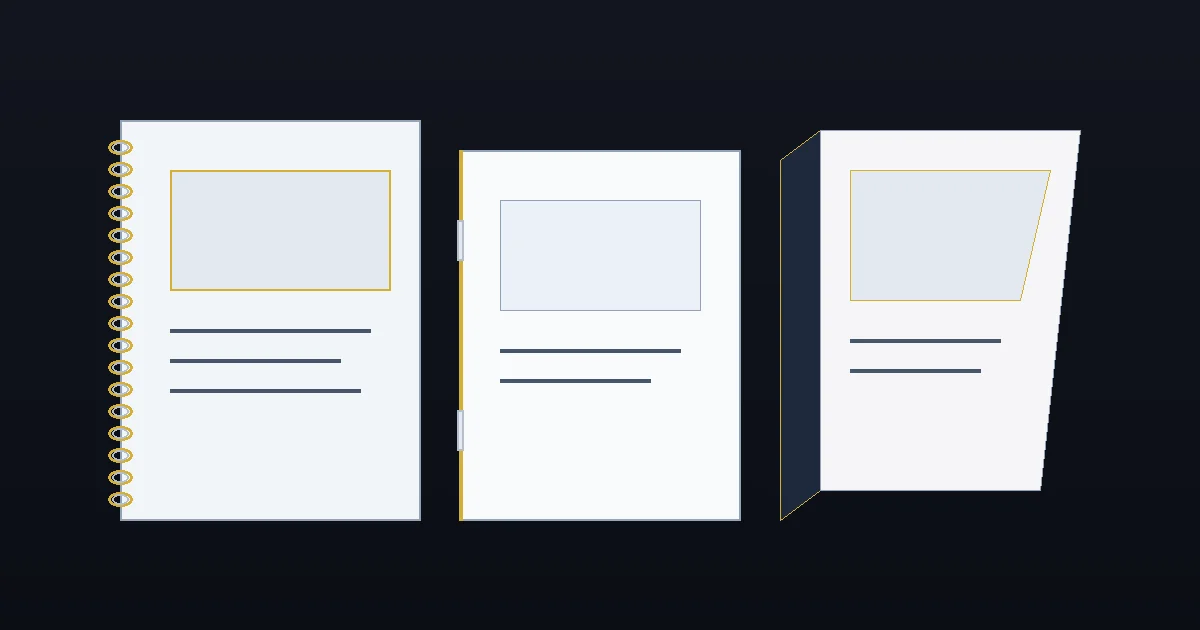
Selecting the optimal binding for course books depends on page count and student usage. Wire-O twin-loop binding opens a full 360 degrees and lies completely flat on lecture hall desks. Saddle stitching offers a lightweight format for syllabi of 8 to about 64 pages in multiples of four. Perfect binding provides a clean square printable spine for comprehensive academic readers from 40 pages.
Selecting the correct binding method depends on total page volume and how students interact with the material during class. Tertiary course packs typically adopt one of three primary binding architectures:
1. Wire-O Twin-Loop Metal Binding
Wire-O binding is punched along the binding edge and closed with twin-loop metal wire.
- 360-Degree Rotation: Students can fold covers completely back on themselves, occupying half the desk space in compact lecture hall seating.
- True Flat-Lay: The open pages remain completely flat without hand pressure, allowing seamless writing with pens and rulers during laboratory and computational exercises.
- Page Flexibility: Accommodates any page count, from slim laboratory modules to full semester readers. For full mechanical details, see our guide on wire-o bound training manuals.
2. 2-Wire Saddle Stitching
Saddle stitching folds the sheets and stitches them with two wire staples through the spine fold.
- Compact & Lightweight: Slim profile allows multiple tutorial booklets to fit easily into student backpacks.
- Opens Nearly Flat: Saddle stitching is the binding that opens nearly flat, though it has no printable spine. For paper and packing on stitched notes, see our guide to saddle-stitched course notes.
- Pagination Constraint: Total page count must be divisible by four, from 8 to about 64 pages. For short syllabi, review our guide to express course notes printing.
3. Perfect Binding
Perfect binding glues the text block into a wraparound card cover, giving a square spine.
- Square Printable Spine: Enables volume titles, module codes, and semester years to be printed clearly along the spine for bookshelf archiving.
- High Page Capacities: Suitable for thicker course readers from 40 pages and up.
- Curing Requirement: The glue cures before the book can be trimmed, and that cure sits inside the standard 7–14 working days.
Which Paper Stocks Balance Writability, Opacity, and Pack Thickness?
Course packs that students write in run on 80gsm to 100gsm uncoated woodfree paper; simili is the trade name for this light uncoated text paper. Uncoated stock absorbs ballpoint pen, gel ink and highlighter without smudging or bleeding through to the reverse page. Covers run on 260gsm or 310gsm art card, or a 0.4mm frosted PP front with a 300gsm art card back on Wire-O.
Paper selection for educational materials requires balancing pen writability, text show-through, and pack handling weight:
Educational Substrate Comparison Matrix
| Stock | Takes pen and highlighter? | Use in a course pack |
|---|---|---|
| 80gsm simili paper | Yes (uncoated) | Text pages; the simili option on our booklet and handbook quote forms |
| 100gsm uncoated woodfree | Yes (uncoated) | Text pages for double-sided notes and diagrams |
| 128gsm or 157gsm gloss art paper | No: the coating resists pen ink | Colour plates and image-led sections only |
| 260gsm or 310gsm art card | Cover only | Covers for saddle-stitched and perfect-bound packs |
| 0.4mm frosted PP front + 300gsm art card back | Cover only | Wire-O workbook covers |
Text Block Writability vs Coated Paper
Commercial brochures usually run on coated art papers (128gsm or 157gsm) to keep photographs sharp. However, coated papers resist water-based pen inks, causing ballpoint ink to skip and highlighters to smudge across facing pages. For academic courseware where students take active handwritten notes, uncoated woodfree paper is the right specification.
Cover Protection & Lamination Choices
Course books endure repeated handling over a full semester. To prevent edge dog-earing and spine tearing, course packs use:
- 0.4mm Frosted Polypropylene (PP) Front Cover: Paired with Wire-O binding, a translucent plastic front sheet protects the title page while letting it show through.
- Laminated Art Card Covers: For perfect-bound and saddle-stitched books, 260gsm to 310gsm art card covers laminated with exterior matt or gloss film prevent scuffing. On a perfect-bound book, laminate the outside face only: glue does not key to film, so a laminated inside face lets the text block pull away from the spine.
What Page-Count Rules and Spine Margins Govern Each Binding Method?
Every binding method imposes strict geometrical layout rules. Saddle-stitched booklets require page counts divisible by four because each parent sheet folds into four numbered pages. Wire-O accepts any page count. The spine margin differs by binding: 12 mm on saddle stitch, 15 mm on perfect binding and wider again on Wire-O, as set out on the booklets page.
Prepress errors in educational files frequently stem from misunderstanding mechanical binding geometry:
1. The Rule of Four in Saddle-Stitching
Each physical sheet folded in half forms two leaves, which equal four numbered pages. If a syllabus document contains 22 pages, it cannot be stitched without adding two blank pages to produce a 24-page signature. Planning course content in multiples of four (e.g., 16, 20, 24, 28, 32, 36, 40, 44, or 48 pages) ensures intentional use of every printed page.
2. Spine Safe Margin Allowances
- Saddle Stitch: Keep 12 mm clear of the spine.
- Wire-O Punch Clearance: The holes are punched along the binding edge, so Wire-O needs the widest spine margin of the three; take the figure from the booklets page linked below and keep formulas and chart legends out of it.
- Perfect Binding: Keep running headers, page numbers and diagram labels 15 mm clear of the spine. Perfect binding swallows several millimetres into the glue and the rest disappears into the curve.
- Bleed Allowance: When diagrams or colour section headers extend to the paper trim, provide 3mm external bleed beyond the finished A4 (210 × 297 mm) or A5 (148 × 210 mm) trim dimensions.
Explore complete binding specifications on our commercial booklet printing service page.
Decision Checklist: What to Verify Before Ordering Semester Course Books
Before ordering semester course packs, administrators should verify page counts, spine margins, paper stock suitability, cover durability, and delivery access points. Following a structured prepress verification checklist prevents print defects, binding misalignment, missing figures, and delivery delays across Singapore tertiary academic faculties.
- Binding Type Matched to Page Count: Wire-O selected for flat-lay manuals of any length; saddle stitch for compact booklets of 8 to about 64 pages (divisible by 4); perfect bound for thick texts of 40 pages and up.
- Spine Margin Verified: Margin set for the binding on every page: 12 mm on saddle stitch, 15 mm on perfect binding, wider on Wire-O.
- Paper Writability Selected: 80gsm or 100gsm uncoated woodfree simili paper specified for notes, calculations, and active highlighter use.
- Bleed and Trim Correctly Set: 3mm bleed added to all outer edges for full-bleed covers, dividers, or background tints.
- File Format Checked: PDF/X-4, single pages in reading order, with placed images at 300 dpi at final size.
- Cover Durability Configured: 0.4mm frosted PP front with 300gsm art card back for Wire-O; 260gsm or 310gsm single-side laminated art card for stitched or perfect-bound volumes.
- Enrolment Quantities Finalised: Cohort numbers confirmed with 10 to 20 additional copies allocated for instructors, teaching assistants, and archive sets.
- Campus Delivery Instructions Confirmed: Specific faculty building, block, level, room number, contact name, and mobile number provided for scheduled courier delivery.
Common Mistakes to Avoid in Course Book Production
Common prepress mistakes in course book production include selecting coated art paper that repels student handwriting, neglecting the spine margin for the binding, omitting 3mm external bleed on full-bleed divider tabs, and planning saddle-stitched booklets with page counts not divisible by four. Eliminating these defects ensures reliable execution.
Mistake 1: Choosing Gloss Art Paper for Lecture Notes
Coated gloss and silk papers look sharp for marketing collateral, but they resist ballpoint and gel pen inks. Highlighter pools on the surface and smears when pages are turned.
- Solution: Standardise on 80gsm to 100gsm uncoated woodfree paper for all interactive student materials.
Mistake 2: Insufficient Inside Margin Clearance
Placing text, table columns, or page numbers close to the binding edge puts them where the Wire-O holes are punched.
- Solution: Build the spine margin for the chosen binding into the master template before it goes to faculty authors: 12 mm for saddle stitch, 15 mm for perfect binding, wider for Wire-O.
Mistake 3: Non-Divisible Page Counts in Saddle Stitching
Submitting an odd-page document (such as 37 pages) for saddle-stitched booklet production requires either shrinking layout margins or inserting three awkward blank pages at the back.
- Solution: Plan content in multiples of 4 pages (e.g., 36, 40, 44 pages). Fill supplementary pages with useful formula sheets, campus maps, or lined notes pages.
Mistake 4: Missing Bleed on Tabbed Section Dividers
Coloured divider tabs that extend to the outer sheet edge without 3mm external bleed will show thin white hairline borders after trimming.
- Solution: Pull all background colour blocks, bleeding photos, and divider tab artwork 3mm past the trim line in the source document.
Worked Example: Producing 250 Engineering Lab Manuals for a Local University
Producing engineering laboratory manuals means matching the binding, paper and covers to how the manual is used in the lab. For a university engineering cohort of 250 students, selecting 100gsm uncoated woodfree paper with a frosted polypropylene front cover provides durable flat-lay handling throughout semester laboratory practicals and computational coursework.
Hypothetical planning example. Actual production timing, paper availability, and logistics are confirmed individually upon artwork and specification review.
A mechanical engineering faculty coordinator at a Singapore university prepares laboratory manuals for a cohort of 240 second-year undergraduates, plus 10 copies for instructors and teaching assistants (total print run: 250 copies).
Document Specifications
- Trim Size: A4 portrait (210 × 297 mm).
- Page Count: 88 pages (44 leaves printed double-sided).
- Inner Paper Stock: 100gsm uncoated woodfree simili paper (mono text with technical wiring diagrams).
- Binding Style: Twin-loop Wire-O metal binding along the long 297mm edge (black wire).
- Cover Configuration: Front: 0.4mm frosted translucent polypropylene; Back: 300gsm black art card.
- Spine Margin: Set to the Wire-O figure in the booklets artwork specification, so no diagram sits where the holes are punched.
Production and Delivery Steps
- Files: The coordinator exports the approved lab sheets as a PDF/X-4 file, single pages in reading order, with placed images at 300 dpi at final size. Artwork is checked before production.
- Production: The text block is printed on 100gsm uncoated woodfree paper, punched with the covers and bound with twin-loop wire, then packed in cartons of 25 copies.
- Campus Delivery: Cartons go to the engineering faculty general office, with the room and contact person given on the order. Standard turnaround is 7–14 working days. Delivery included for course book and course material orders. Same-day and urgent printing available. Subject to artwork approval, payment, print type and production availability. Timing confirmed per job.
Frequently Asked Questions About Course Book Printing in Singapore
What is the most practical binding method for university course packs in Singapore?
Wire-O (twin-loop metal) binding is widely considered the most functional method because it opens 360 degrees and lies completely flat on compact lecture hall desks. For thinner syllabi of 8 to about 64 pages, 2-wire saddle stitching provides a lightweight alternative.
Which paper stock allows students to write and highlight notes without ink smudging?
We recommend 80gsm to 100gsm premium uncoated woodfree paper. Unlike coated glossy paper, uncoated stock absorbs ballpoint pen, gel ink, and highlighter without smudging or bleeding through to the reverse page.
How are course materials delivered to university and polytechnic campuses across Singapore?
Delivery included for course book and course material orders. EZ Print coordinates scheduled courier delivery directly to departmental general offices, academic faculty buildings, and campus loading bays throughout Singapore.
What is the standard production turnaround time for semester course books?
Standard turnaround is 7–14 working days. Same-day and urgent printing available. Subject to artwork approval, payment, print type and production availability. Timing confirmed per job.
Planning your upcoming semester course materials? Contact our team via our request a quote portal or learn more about custom binding options across our /education-printing-singapore/ resources.
Same-day and urgent printing available. Subject to artwork approval, payment, print type and production availability. Timing confirmed per job.