
Mid-semester academic life moves quickly across Singapore’s tertiary institutions. Even with careful advance curriculum planning, university departments, polytechnic faculties, and private academies frequently encounter urgent course pack reprint requirements. An elective module may attract an unexpected influx of late additions during add-drop periods, supplementary tutorial sections may open to meet enrolment demands, or physical laboratory manuals may require mid-term replacements following wear.
When additional student cohorts arrive without physical course notes, academic administrators and module leaders need rapid, disciplined solutions. Rushed printing can easily introduce pagination defects, missing formula symbols, or unreadable margin punch lines if file preparation rules are overlooked. Handling urgent course pack reprints in Singapore means knowing which bindings avoid a glue cure, how to submit print-ready PDF files without delay, and how to coordinate logistics across Singapore campuses.
This technical guide outlines the causes of mid-semester reprint emergencies, details the file requirements that keep a reprint moving, compares rapid binding options, and provides an actionable pre-submission checklist. For broader curriculum solutions, visit our dedicated /education-printing-singapore/ hub or consult our course book printing guide.
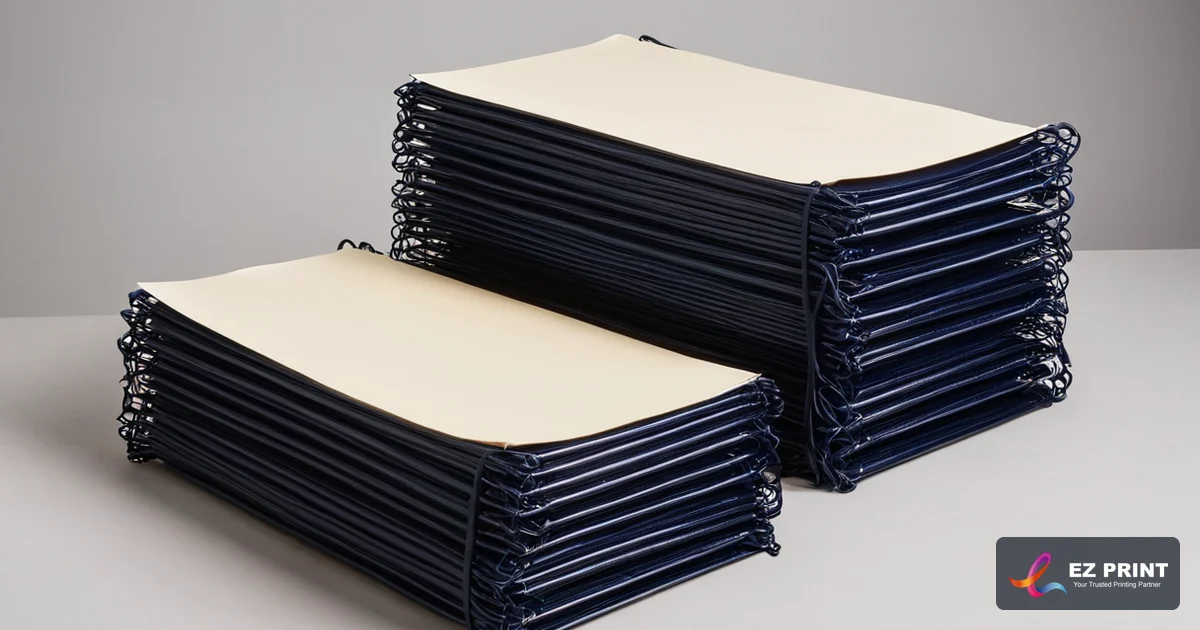
What causes mid-semester reprint emergencies and how can they be handled?
Mid-semester reprint emergencies typically stem from cohort expansion during university add-drop windows, unexpected tutorial section splits, or mid-term laboratory manual replacement demands. Handling these surges requires pre-approved digital PDF master files, standardised page specifications, and a direct line to the printer to confirm what can be scheduled.
Educational institutions experience enrolment shifts during the initial weeks of instruction:
- Add-Drop Registration Surges: During initial semester weeks, students finalise module timetables. When a popular elective raises its cohort cap, the department can suddenly be short of course packs.
- Supplemental Teaching Materials: Mid-way through a semester, professors frequently introduce supplementary revision packs, midterm practice examination booklets, or updated references that were not finalised during original prepress cycles.
- Physical Manual Attrition: In engineering, life sciences, and culinary arts, student laboratory manuals endure heavy practical wear, moisture spills, or chemical exposure, necessitating replacement copies for second-half laboratory practicals.
To prevent instructional downtime, module coordinators should archive approved single-page PDF masters and maintain active records of previously approved paper weights and binding dimensions. If advance semester milestones are being planned, review our timeline roadmap on planning semester course materials timeline.
What file specifications keep an urgent course pack moving?
To enter urgent digital production without prepress delays, files must be supplied as single-page PDF/X documents with vector text, embedded fonts, and exact 3 mm bleed. Text must stay clear of the spine margin for the binding. Supplying single pages with embedded fonts avoids a file being held for correction.
When turnaround is urgent, there is no time for iterative back-and-forth artwork revisions. Submitting files that already meet the production specification avoids a hold:
1. Single-Page Sequential PDF Structure
Never supply course packs as reader spreads or printer spreads (such as two A4 pages joined on a single A3 sheet). Imposition is worked out from the page count and the binding, so a file supplied as spreads has to be taken apart before it can be used.
2. Spine Gutter Punch Clearance
Wire-O holes are punched along the binding edge, and Wire-O needs a wider spine margin than the 12 mm used on saddle stitching; the booklets page linked below gives the figure for each binding. Ensure running headers, footnote citations, mathematical formulas, and code snippets remain outside this gutter zone to avoid punch perforation.
3. Font Outlines and High-Resolution Graphics
Ensure all custom fonts, LaTeX mathematical symbols, and linguistic scripts are completely embedded or converted to vector paths. Placed images and slide captures should be 300 dpi at final size.
For short tutorial sets, see the express course notes printing options. Complete prepress parameters are documented in our artwork preparation guide.
Which binding and paper configurations can be produced on urgent schedules?
Saddle stitching and Wire-O suit urgent academic reprints better than perfect binding, because neither has a glue cure to wait for. Text pages run on 80gsm to 100gsm uncoated woodfree paper; whether a given job can run same-day is confirmed per job.
Binding affects how much finishing an urgent job needs:
| Binding | Page Count | Glue Cure | Urgent-Job Note | Student Handling Benefit |
|---|---|---|---|---|
| Twin-Loop Wire-O | Any page count | None | No glue cure; punching and wiring are a separate finishing step | Lies completely flat; opens 360 degrees |
| 2-Wire Saddle Stitch | 8 to about 64 pages (multiples of 4) | None | No glue cure | Compact and light; opens nearly flat |
| Perfect Bound | 40 pages and up | Yes, before trimming | Less suitable for urgent jobs | Square printable spine |
Why Wire-O Suits Cohort Reprints
Wire-O is punched and wired, with no glue. Perfect binding needs the glue to cure before the book can be trimmed, and that cure is a fixed number of hours no schedule shortens. Wire-O also opens a full 360 degrees and lies completely flat on desks, which suits classroom study.
Inner Paper
We recommend 80gsm to 100gsm premium uncoated woodfree paper. Unlike coated glossy paper, uncoated stock absorbs ballpoint pen, gel ink, and highlighter without smudging or bleeding through to the reverse page. Confirm the paper with the quotation: simili text paper is ordered in by weight for the job, so an urgent reprint is simplest when it repeats the paper the first run used.
For more on twin-loop binding, read our guide on wire-o bound training manuals. Commercial booklet alternatives can also be explored on our booklet printing service page.
Decision checklist: what to verify before submitting an urgent reprint request
Before releasing an urgent mid-semester reprint request, administrators must verify artwork integrity, exact student counts, campus collection points, and payment arrangements. Verifying every item on this pre-flight checklist prevents avoidable production bottlenecks, binding format mismatches, and delivery delays across Singapore tertiary faculties.
- Master Artwork Verified: Exact approved single-page PDF/X document selected without missing figures or corrupted fonts.
- Spine Margin Matches the Binding: 12 mm for saddle stitch, wider for Wire-O, on every page.
- Exact Enrolment Quantity Counted: Specific number of required student packs determined (avoid rough approximations to ensure exact paper allocation).
- Pagination Divisibility Checked: If saddle-stitch binding is selected, total page count verified as a multiple of four (from 8 to about 64 pages, such as 16, 24, 32, 40, or 64 pages).
- Writing Paper Specified: 80gsm or 100gsm uncoated woodfree paper confirmed for inner text blocks to support active student note-taking.
- Cover Finishing Configured: Frosted PP front cover and 300gsm black art card back selected for Wire-O.
- Delivery or Collection Method Agreed: Campus delivery destination confirmed, or collection arranged at Centennial Tower, #21-00/01, 3 Temasek Avenue, Singapore 039190. Collection by arrangement — tell us when you would like to collect and we will confirm the time.
- Service Timing Acknowledged: Same-day and urgent printing available. Subject to artwork approval, payment, print type and production availability. Timing confirmed per job. Standard turnaround is 7–14 working days. Delivery included for course book and course material orders.
Common mistakes to avoid when ordering urgent mid-semester reprints
Common mistakes during emergency reprints include submitting pre-imposed reader spreads, requesting glue-bound formats with mandatory curing delays, choosing a speciality stock that has to be ordered in, and omitting campus delivery instructions. Avoiding these critical errors ensures smooth production scheduling, rapid mechanical binding, and uninterrupted classroom instruction across university departments.
Mistake 1: Submitting Two-Up Presentation Spreads
Exporting slides as two-up or multi-page spreads locks margins together. Imposition and creep are worked out from single pages, so spreads have to be taken apart before the file can be used.
- Remedy: Export slides as individual sequential pages in numerical order from page 1 to the final page.
Mistake 2: Requesting Perfect Binding for an Urgent Reprint
Perfect binding needs the glue to cure before the book can be trimmed, and that cure is a fixed number of hours no schedule shortens.
- Remedy: For an urgent reprint, choose saddle stitching or Wire-O, which have no glue to cure.
Mistake 3: Leaving Card Covers Unlaminated
Unlaminated card covers scuff in bags and during distribution.
- Remedy: On Wire-O, use a frosted polypropylene front cover, which needs no lamination; on a stitched book, laminate the outside of the cover.
Mistake 4: Vague Campus Delivery Instructions
Directing a courier simply to a university campus leads to delivery failure. Campuses have many buildings and receiving points.
- Remedy: Provide the exact faculty building name, block number, floor level, departmental general office room number, and receiving contact person’s mobile phone number.
Worked example: Turning around an urgent reprint of 40 course packs
Handling a mid-semester cohort increase starts with a clean single-page PDF and a repeat of the first run’s specification. For a university seminar module admitting 36 additional undergraduates, 40 Wire-O course books on 80gsm uncoated woodfree paper keep the reprint simple to schedule.
Hypothetical planning example. Actual production timing, paper availability, and logistics are confirmed individually upon artwork and specification review.
A university humanities department discovers that an advanced seminar module has enrolled 36 additional undergraduates during add-drop week. The department administrator requires 40 complete course packs (including 4 instructor copies) as soon as production allows.
Technical Job Configuration
- Course Pack Title: Singapore Literature & Cultural Studies Seminar Reader.
- Finished Trim Dimensions: Standard A4 portrait (210 × 297 mm).
- Page Volume: 64 pages (printed double-sided in monochrome).
- Inner Paper Stock: 80gsm uncoated woodfree simili paper for active pen notation and highlighter study.
- Binding Format: Twin-loop Wire-O binding (black metal wire).
- Protective Covers: Front: frosted polypropylene plastic sheet; Back: 300gsm black art card.
- Spine Margin: Set to the Wire-O figure in the booklets artwork specification.
Workflow Sequence
- Step 1 (File Submission): The administrator uploads the approved 64-page single-page PDF master. Artwork is checked before production: fonts, image resolution and 3 mm bleed.
- Step 2 (Production Scheduling): Once the artwork is approved and payment made, timing is confirmed for the job. The 40 sets are printed on 80gsm uncoated woodfree paper.
- Step 3 (Finishing & Assembly): Text blocks and covers are punched and bound with twin-loop wire.
- Step 4 (Packaging & Delivery): The 40 completed manuals are packed into two cartons of 20 books each, labelled with the module code and department room number, and dispatched via courier.
Standard turnaround is 7–14 working days. Same-day and urgent printing available. Subject to artwork approval, payment, print type and production availability. Timing confirmed per job. Delivery included for course book and course material orders.
Frequently asked questions about urgent course pack reprints in Singapore
How quickly can urgent course pack reprints be produced during the semester?
Same-day and urgent printing available. Subject to artwork approval, payment, print type and production availability. Timing confirmed per job. Standard turnaround is 7–14 working days for non-urgent scheduled production.
Which binding suits an urgent academic reprint?
Saddle stitching and Wire-O have no glue to cure, so they avoid the wait perfect binding needs before the book can be trimmed. Whether a particular job can run same-day depends on the print type and is confirmed per job.
Can university departments arrange collection instead of waiting for campus delivery?
Yes. Collection by arrangement at Centennial Tower, #21-00/01, 3 Temasek Avenue, Singapore 039190 — tell us when you would like to collect and we will confirm the time. Delivery included for course book and course material orders.
What inner text paper stock is recommended for rapid reprint production?
We recommend 80gsm to 100gsm premium uncoated woodfree paper. Uncoated stock absorbs ballpoint pen, gel ink, and highlighter without smudging or bleeding through to the reverse page.
Facing an urgent mid-semester reprint requirement? Submit your document specifications via our request a quote portal to confirm production availability and campus delivery.
Same-day and urgent printing available. Subject to artwork approval, payment, print type and production availability. Timing confirmed per job.