
Handing someone a business card is often the single tactile moment in an otherwise digital relationship. When a card feels substantial, carries an unmistakable letterpress impression, or reveals a crisp tinted core along its cut rim, it creates immediate physical authority. In Singapore’s corporate landscape, executive stationery has moved far beyond standard coated sheets into artisanal print engineering.
Achieving a high-end card requires understanding how specialty substrates interact with physical tooling. Combining dense cotton paper, multi-ply bonding, metallic foils, and edge pigments creates cards that command attention across any meeting table.
What premium stocks and duplex constructions are available for luxury name cards?
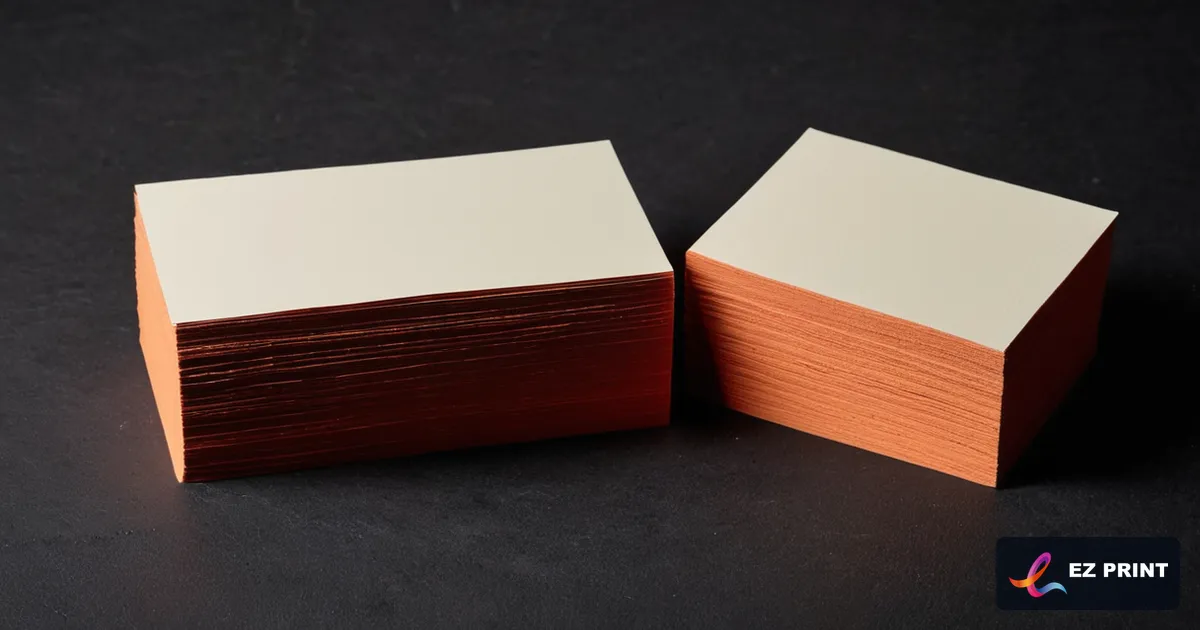
Premium business cards in Singapore rely on substantial paper stocks running from 260 gsm up to 600 gsm. Available substrates include matt and gloss art card, uncoated natural, pure cotton, brown kraft board, textured papers, and bonded multi-ply boards designed to provide exceptional rigidity and weight without buckling.
310 gsm and 350 gsm cover most corporate work. 400 gsm reads as premium in the hand, and 450 gsm cotton and 600 gsm bonded duplex are the top of the range:
- Bonded Duplex (600 gsm): Duplexing bonds two individual sheets together under pressure to achieve a caliper that no single stock in the range can provide. It typically features a contrasting coloured seam visible along the edge. The face takes ink normally, while the edge serves as the core aesthetic feature.
- Triplex Construction: Bonds a third sheet and sits above duplex, for a card chosen almost entirely for its edge.
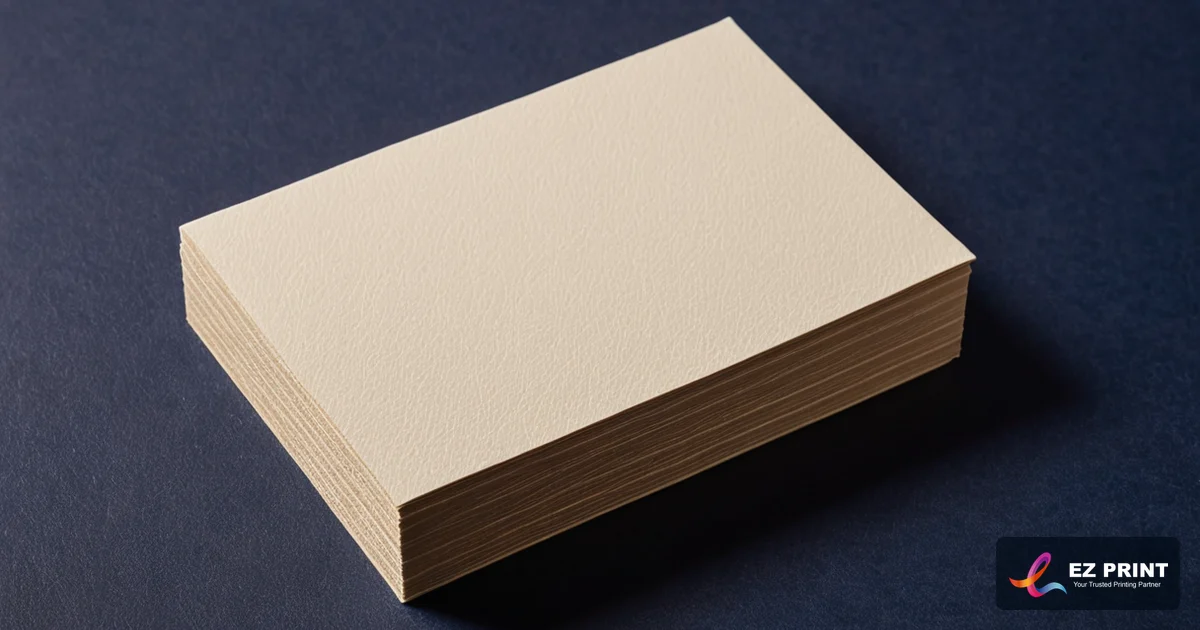
- Pure Cotton Paper (450 gsm): Dense, quiet, and slightly compressible, 450 gsm cotton stock makes a dull sound on a table rather than a sharp click. Because it lacks synthetic coating, it yields comfortably under relief dies to take a deep, tactile letterpress bite.
- Natural Brown Kraft Board: Held at 300 gsm and 350 gsm weights, brown kraft board introduces an earthy, tactile texture that pairs naturally with crisp foil stamping or heavy black typography.
- Matt Art Card: Running at 350 gsm with dual-sided matt lamination, this coated stock provides a smooth, satin foundation that pairs cleanly with spot UV gloss highlights.
Understanding these paper characteristics is essential before selecting specialty tooling. For guidance on foundational card dimensions, consult our business card size and bleed guide or compare general stock weights in our business card paper selection overview.
How do letterpress, hot foil stamping, and blind embossing create tactile contrast?
Specialty finishing methods transform flat card faces through mechanical pressure, heat, and relief tooling. Letterpress presses inked relief plates into soft cotton fibre; hot foil stamping fuses metallic pigment using heated brass blocks; and blind embossing pushes paper into three-dimensional sculptural relief without ink, creating understated architectural contrast across executive stationery.
Rather than relying purely on multi-colour offset printing, luxury cards employ bespoke mechanical processes that manipulate the physical surface of the stock:
Letterpress Printing
Letterpress is a relief process where raised metal or photopolymer type is inked and driven directly into the sheet under pressure. On soft 450 gsm cotton paper, letterpress creates a permanent debossed impression that catches raking room light. Because cotton fibres are absorbent, fine lines can spread under heavy pressure; artwork files should keep all fine rules at 0.5 pt or heavier to ensure crisp letterforms.
Hot Foil Stamping
Hot foil stamping uses an engraved brass block heated to high temperatures to fuse a thin layer of metallic or pigmented foil directly onto the substrate. Unlike metallic inks, hot stamping foil delivers an opaque, specular mirror reflection that reads clearly on dark or coloured paper. It requires no white underprint, making it the premier method for branding brown kraft boards and dense coloured stocks.
Blind Debossing and Blind Embossing
Blind finishing presses paper between matched male and female dies without adding ink or foil. Blind debossing presses the image downward into the surface, creating an understated indent, whereas blind embossing raises the design outward into crisp three-dimensional relief. When executed on 450 gsm cotton with no ink on the reverse, blind deboss creates a quiet, minimalist statement that outperforms crowded multi-colour cards across corporate boardrooms.
Which specialty finishing combinations work reliably and which fail on press?
Proven luxury card combinations balance substrate compressibility with finishing mechanics, such as 350 gsm matt card with spot UV, 450 gsm cotton with blind deboss, or 600 gsm duplex with painted edges. Incompatible pairings—such as soft-touch film under spot UV or foil stamped over rough laid textures—inevitably lift, flake, or skip on press.
Not every finishing effect can be combined indiscriminately. Physical tolerances dictate which treatments complement each other and which lead to production failures:
| Finishing Pairing | Technical Behaviour | Production Assessment |
|---|---|---|
| 350 gsm Matt Card + Spot UV | Matt lamination on both sides provides an ideal smooth barrier; spot UV gloss keys perfectly over brand marks. | Proven Reliable: The most requested premium executive card in Singapore; reorders quickly. |
| 450 gsm Cotton + Blind Deboss | Compressible cotton fibres compress cleanly under pressure without tearing; no ink on reverse prevents show-through. | Proven Reliable: Minimalist, elegant tactile finish that delivers remarkable executive prestige. |
| 600 gsm Duplex + Painted Edge | Bonded card provides a thick, stable rim for edge pigments; keeping faces plain lets the edge seam shine. | Proven Reliable: Outstanding visual contrast; edge treatment highlights the substantial caliper. |
| Kraft Board + Single Hot Foil | Specular foil bonds cleanly to smooth kraft fibres, delivering crisp opacity without ink bleed. | Proven Reliable: Foil is the only embellishment that reads cleanly on brown stock without white underprint. |
| Soft-Touch Film + Spot UV | Spot UV varnish fails to key securely to soft-touch thermal films without a tie-coat. | Production Failure: Varnish lifts at the edges about a week later; specify gloss UV over matt lamination instead. |
| Hot Foil + Deep Laid Texture | Stamping block bottoms out on paper peaks and skips across deep textural valleys. | Production Failure: Broken, ragged foil edges; foil belongs strictly on smooth, lightly textured, or bonded stock. |
| Embossing + Heavy Solid Reverse | Heavy male die pushes through the paper, creating an unintended reverse indentation. | Production Failure: Emboss relief ghosts through reverse solids as an unsightly dent; keep backs plain or specify duplex. |
| Painted Edges + Uncoated Fibres | Liquid edge pigment wicks along loose, porous paper capillaries via capillary action. | Production Failure: Paint bleeds into card faces creating fuzzy borders; restrict painted edges to coated or bonded duplex. |
| Foil or Spot UV Near Trim | Registration tolerance on a 90 × 54 mm card is roughly half a millimetre. | Production Failure: Foil or UV placed within 3 mm of trim looks clipped unevenly across the stack; maintain 3 mm trim clearance. |
Decision checklist: specifying luxury business cards with custom finishing
Specifying premium business cards requires establishing your paper caliper, confirming mechanical clearances, and preparing separated vector finishing layers. Verify that fine rules meet the 0.5 pt minimum threshold, keep all specialty finishes at least 3 mm inward from the 90 × 54 mm trim, and select edge treatments suited to bonded stocks.
Follow this pre-production checklist before sending executive stationery to press:
- Substrate Weight Confirmed: Select an appropriate caliper, from single-sheet 350 gsm matt cards to 450 gsm cotton or 600 gsm bonded duplex.
- Die and Foil Layer Separation: Provide all specialty finishing elements (foil, emboss, spot UV) as separate vector layers coloured in solid K100 or spot colours.
- Trim and Safety Clearances: Ensure all foil, deboss, and spot UV details remain at least 3 mm away from the finished 90 × 54 mm trim boundary because registration tolerance on the card is roughly half a millimetre.
- Minimum Line Thickness: Verify that letterpress linework and debossed text strokes maintain a minimum rule weight of 0.5 pt to avoid ink spread or weak die impressions.
- Reverse Face Protection: If ordering blind debossing or deep relief on single-ply stock, ensure the reverse side contains no solid ink blocks that could ghost.
- Tooling Retention Verified: Confirm that brass stamping blocks and cutting dies will be archived safely on file for smooth reorders.
- Production Timeline: Standard turnaround is 7–14 working days for every finish on this page. A first foil run waits for the brass block to be cut; express is quoted per job.
Common mistakes to avoid when ordering premium business cards
The most frequent errors in luxury card production involve overcrowding multiple conflicting finishes, placing embellishments too close to trim margins, and applying edge paint to raw uncoated stocks. Over-embellishing cards weakens structural integrity, while failing to provide dedicated vector layers causes registration errors between ink and stamping dies.
Avoiding these critical production traps ensures your premium stationery looks intentional and polished:
- Overcrowding Specialty Finishes: Combining foil, emboss, spot UV, and multi-colour print on a single small card results in visual chaos. The most prestigious cards let one or two high-calibre finishes dominate, such as a 600 gsm duplex card where clean typography lets the coloured edge seam do the work.
- Placing Foil or UV Within 3 mm of the Trim: Registration tolerance on a 90 × 54 mm card is roughly half a millimetre, so foil or spot UV placed near the cut looks cut off on some cards and not others. Always maintain a strict 3 mm clearance.
- Painting the Edges of Raw Uncoated Paper: When liquid edge pigment is sprayed or rolled onto porous, absorbent single-ply paper, capillary action pulls the ink into the face of the card, creating messy, feathered rims. Painted edges should only be specified on dense, smooth coated stock or bonded duplex boards.
- Forgetting the Tooling on a First Order: A brass foil block or an embossing die has to be made before anything can be foiled or embossed, so a first run waits for it. The tooling is then kept with the approved artwork, and every reorder skips that wait.
Worked example: Specifying 300 duplex business cards with painted edges
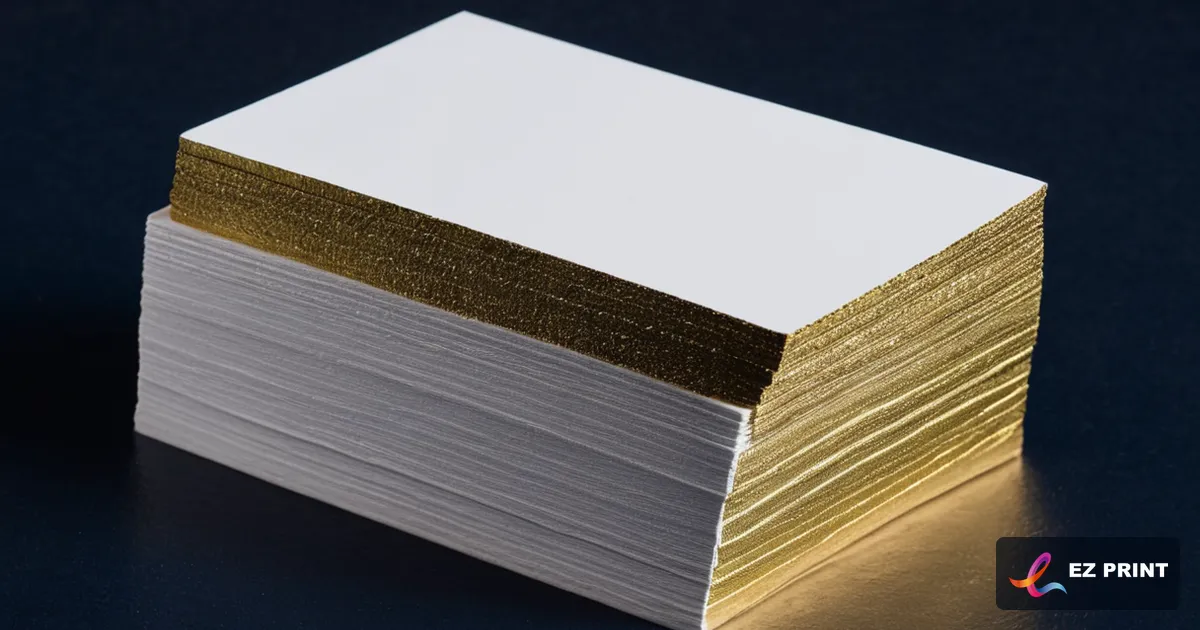
A firm that wants its cards to feel solid and discreet can specify 600 gsm bonded duplex with a coloured core, a blind deboss for the mark and a painted edge, and keep both faces plain so the edge does the work.
Hypothetical planning example. Actual production timing, paper availability, and logistics are confirmed individually upon artwork and specification review.
Suppose a small advisory firm wants 300 cards for its partners.
- Step 1: Stock. 600 gsm bonded duplex with a coloured core. The faces stay plain: one colour of type on the front, nothing heavy on the back.
- Step 2: Artwork. 90 × 54 mm trim, 3 mm bleed on a 96 × 60 mm artboard. The mark sits on its own K100 vector layer named EMBOSS, with fine strokes at 0.5 pt or heavier, and nothing within 3 mm of the trim.
- Step 3: Tooling. A die is made for the deboss. On duplex, the bond hides the relief, so it does not ghost through to the back.
- Step 4: Edge. After trimming, the edges are painted to match the core. Painted edges belong on coated or bonded duplex stock, which is why this card is duplex.
- Step 5: Timing. Standard turnaround is 7–14 working days. The die and the approved file are kept, so the next partner’s cards start from the tooling.
Frequently asked questions about premium business card printing in Singapore
What is the difference between duplex and triplex business cards?
Duplex bonds two sheets together, up to 600 gsm, for a caliper no single stock can reach, and usually shows a coloured core along the edge. Triplex bonds a third sheet and sits above duplex. Both are chosen for the edge as much as for the face.
Can custom brass stamping dies and embossing tools be reused for future reorders?
Yes. A brass foil block, an embossing die, a spot UV screen and a cutting die are made once and kept on file with the approved artwork. A repeat starts from the tooling rather than from the beginning, which is the part of a first run that takes the longest.
What is the minimum order quantity for luxury business cards?
Minimum run is 50 cards. Below 100 the setup dominates the job, so 100 is usually the sensible floor. Fifty cards and five thousand go through the same finishing passes.
How long does it take to produce custom duplex cards with painted edges?
Standard turnaround is 7–14 working days, and it is one window for the whole range: plain cards, foil, embossing, letterpress, duplex and painted edges are all quoted inside it. Where your date is tighter, ask for an express quotation with the specification.
Ready to elevate your corporate stationery? Explore our dedicated business card printing services or request a bespoke quote with your custom paper and finishing specifications. You can also reach the team through our contact page for advice on tactile stock pairings.
Same-day and urgent printing available. Subject to artwork approval, payment, print type and production availability. Timing confirmed per job.