
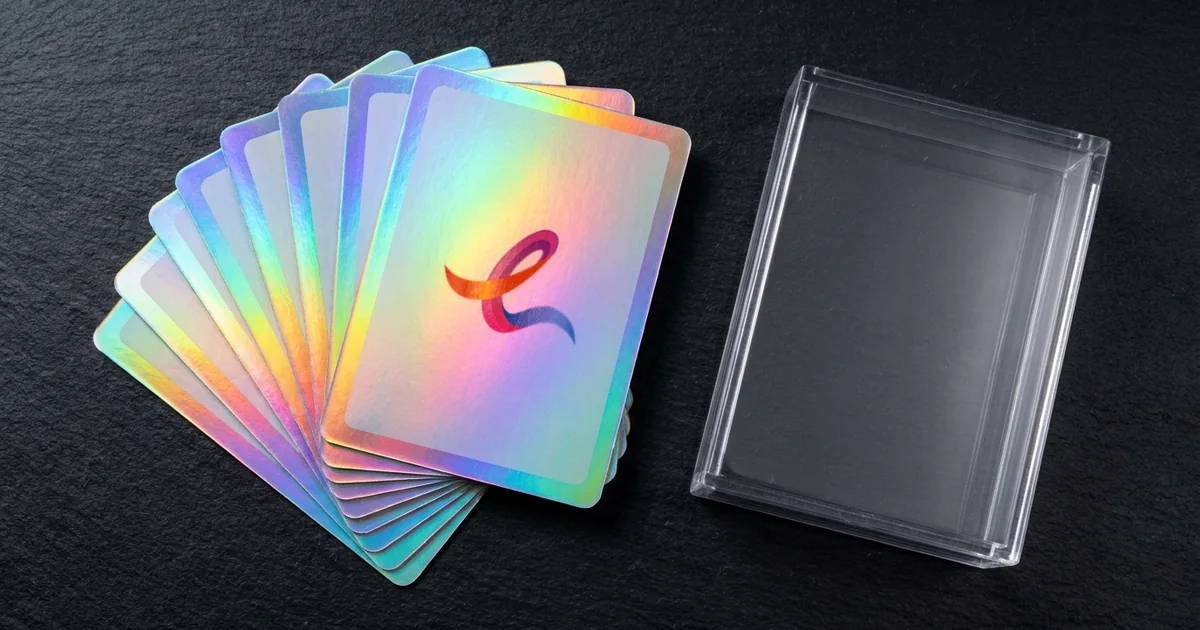
EZ Print makes custom collectible trading card sets in Singapore. The cards are poker size, printed on art card, and can carry a reflective holographic lamination or matt or gloss lamination, with foil, spot UV and round corners as options. Finished sets are supplied in a clear plastic case on request.
This guide explains what to decide for a trading-card-game style set or a collectible card series: the finishes, how each one affects the artwork, and what to put in the brief. Every set is quoted from its specification.
What goes into a custom collectible card set?
A collectible card set is specified as the card format, the stock, the lamination, any extra finishes and the packaging. At EZ Print that means poker size cards printed on art card, a reflective holographic or matt or gloss lamination, optional foil, spot UV and round corners, and a clear plastic case on request.
EZ Print has produced collectible card sets, and the specification follows the same pattern each time:
- Format. Poker size cards.
- Stock. Art card, a coated card that takes lamination and spot UV.
- Faces and backs. Many sets have a different design on each card face and one shared design on the backs, so the artwork is planned as a series rather than as a single card.
- Lamination. A reflective holographic lamination, or matt or gloss lamination.
- Extra finishes. Foil or a holographic effect, spot UV, and round corners.
- Case. Supplied in a clear plastic case on request. The case is sourced separately and supplied with the set; EZ Print does not print the case.
The common thread is that every finish is a separate decision, and most of them change the artwork. A holographic lamination changes how the whole face reads; foil and spot UV need their own artwork layers; round corners move the safe area. Deciding the finishes before the artwork is final saves rework later.
Which finishes can a collectible card carry?
The finishes available on collectible cards are round corners, matt or gloss lamination, a reflective holographic lamination, foil or a holographic effect, and spot UV. Lamination covers the whole face; foil and spot UV are applied to chosen areas from separate artwork layers; round corners are cut on a die already held.
| Finish | What it does | What the artwork needs |
|---|---|---|
| Holographic lamination | A reflective film whose surface shifts colour as the card is tilted | Nothing extra; say which faces are laminated |
| Matt lamination | Kills reflection and feels drier in the hand | Nothing extra; the better ground for spot UV |
| Gloss lamination | Lifts colour and makes photographs look sharper | Nothing extra |
| Foil | A metallic finish on chosen areas | A separate solid black vector layer named FOIL |
| Spot UV | A gloss finish on chosen areas | A separate solid black vector layer named SPOTUV |
| Round corners | A 3 mm or 6 mm radius on every corner | Artwork kept 6 mm clear of a rounded corner |
Two details are worth knowing before choosing. Foil needs a brass foil block cut before anything can be foiled, and that block is made once and kept on file with the approved artwork, so a reprint of the same set skips that step. For spot UV, matt lamination is the better ground, because the contrast between dull and shiny is the whole effect.
For the full list of card finishes and how each is specified, see the name card printing service, which covers lamination, spot UV, foil and round-cornering on card stock.
Matt, gloss or holographic: which lamination suits a card set?
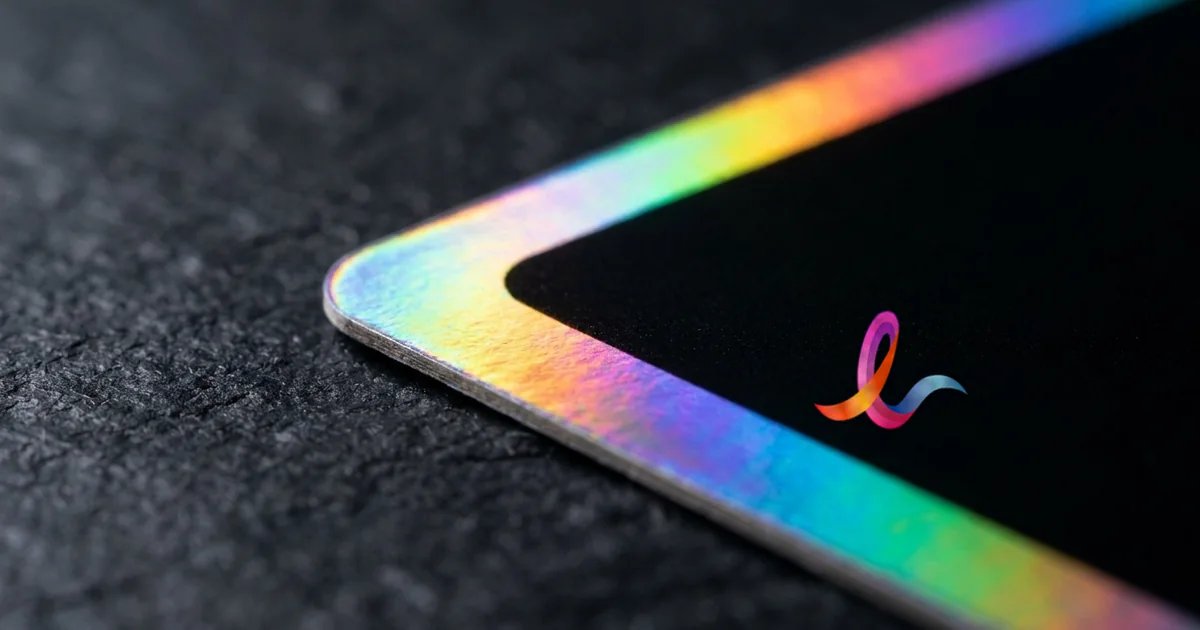
Matt and gloss lamination are both thin films bonded to the printed sheet. Gloss lifts colour and makes photographs look sharper; matt kills reflection and is the better ground for spot UV. A reflective holographic lamination shifts colour as the card is tilted, so it makes chosen cards stand out from the rest of a set.
Each choice suits a different kind of set:
- Gloss lamination suits artwork built on rich colour and photography, because it lifts colour and sharpens images.
- Matt lamination suits sets that use spot UV, because a gloss UV area only reads against a dull surface. It also kills reflection, which helps where the cards carry text that is read under light.
- Reflective holographic lamination turns the card face itself into the effect. One approach is to reserve it for chosen cards in a series, with matt or gloss on the rest, so the holographic cards are visibly different in the hand.
Laminate both faces of the card. Single-sided lamination is the usual reason cards curl in Singapore humidity: film on one face and bare stock on the other take up moisture at different rates, and the card bends towards the unlaminated side. Laminate both sides, or laminate neither. Lamination is a separate pass over every printed sheet, which is why it is specified rather than assumed.
Why round the corners, and what does it change in the artwork?
Round corners are cut at a 3 mm or 6 mm radius on a die already held, so there is no new tooling to make. The radius cuts into the area a straight corner would have kept, so artwork near a corner moves in: keep it 6 mm clear of a corner that is being rounded, not 3 mm.
Round corners change the artwork in one specific way. On a square-cut card the safe area is a margin in from the trim. On a rounded card, the corner itself is removed, so anything placed close to a corner is clipped by the curve. In practice:
- Pick the radius early. 3 mm and 6 mm are both cut on dies already held. The larger radius removes more of each corner.
- Move corner elements in. Values, symbols, logos or borders that sit in the corners of a card design should be 6 mm clear of a corner being rounded.
- Check frames and borders. A thin printed border that runs into the corner will be cut by the curve. Either round the border to match the corner, or keep it inside the safe area.
How should card artwork and finish layers be set up?
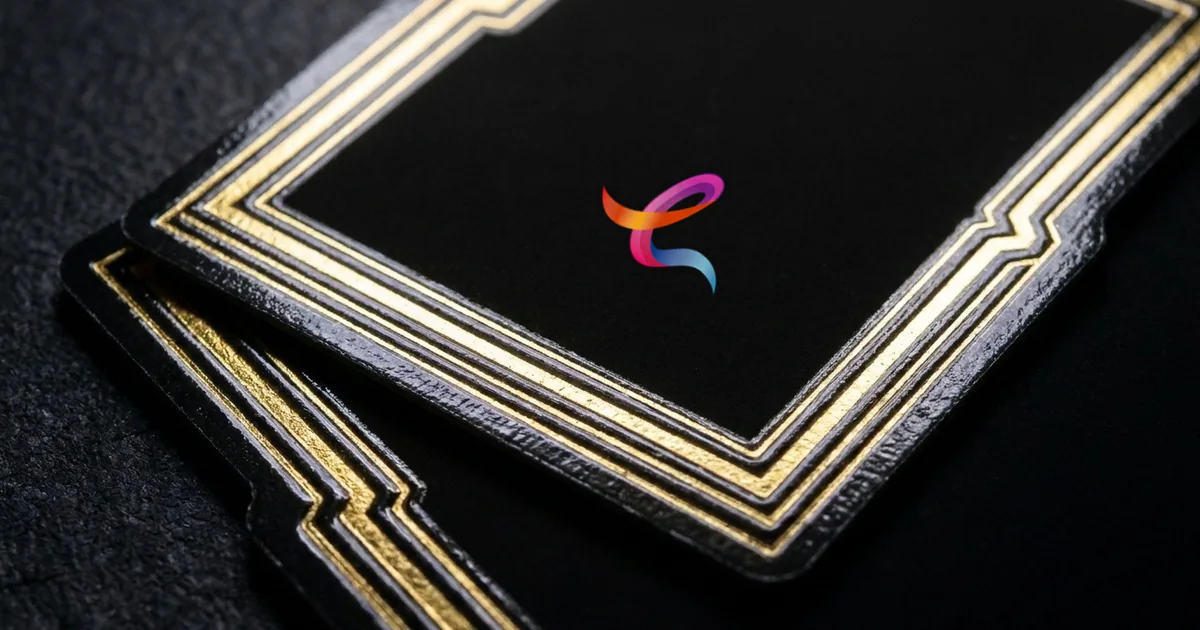
Supply each card as single pages, front first, not spreads, with 3 mm bleed on all four sides and a 4 mm safe margin inside the trim, moving to 6 mm at a rounded corner. Placed images are 300 dpi at final size. Foil and spot UV go on separate solid black vector layers, named FOIL and SPOTUV, at the same trim.
The checks that matter most for a card set:
- Pages, not spreads. Double-sided artwork goes as two single pages, front first. A double-sided file supplied as spreads is one of the usual reasons a card comes back wrong.
- Bleed and safe area. 3 mm bleed on all four sides; a 4 mm safe margin in from the trim; 6 mm clear of a corner that is being rounded.
- Images. 300 dpi at final size.
- Finish layers. Spot UV and foil each on a separate vector layer filled in solid black, at the same trim as the artwork, named SPOTUV and FOIL, and in register with the front artwork.
- Keep finishes off the edge. Foil or spot UV within 3 mm of the trim looks cut off on some cards and not others, so keep both further in.
What should a collectible card quote request include?
A quote request for a card set states the number of different designs, whether the backs are shared, the lamination for each card, which cards carry foil, spot UV or a holographic effect, the corner radius, whether a clear plastic case is wanted, and the date. Every set is quoted from that specification.
Work through this list before sending artwork:
- Designs. How many different card faces, and whether the back is one shared design.
- Lamination. Holographic, matt or gloss, and whether it differs between cards in the set.
- Extra finishes. Foil or a holographic effect, and spot UV, with the cards and areas each applies to.
- Corners. Square, or rounded at 3 mm or 6 mm radius.
- Case. Whether finished sets should be supplied in a clear plastic case.
- Timing. Standard turnaround is 7–14 working days, and lamination, spot UV and foil are all quoted inside it. Express is quoted per job. Same-day and urgent printing available. Subject to artwork approval, payment, print type and production availability. Timing confirmed per job.
Worked example: Planning a commemorative card set for a company anniversary
Hypothetical illustration. Figures are assumptions for explanation, not a real transaction or advice. A company’s marketing team wants a commemorative card set for its anniversary, with one card per milestone and a shared back carrying the company logo. Working through the finishes before the artwork is final keeps the set consistent from the first card to the last.
- Step 1: Format and stock. The cards are poker size on art card, with a different face for each milestone and one shared back.
- Step 2: Lamination. Most cards take matt lamination on both faces. A few headline milestones take the reflective holographic lamination instead, so they stand out in the set.
- Step 3: Spot UV. On the matt cards, the milestone year is picked out in gloss spot UV, supplied on a separate SPOTUV layer and kept more than 3 mm from the trim.
- Step 4: Foil on the back. The logo on the shared back is foiled, from a separate FOIL layer. The foil block is kept on file for any reprint.
- Step 5: Corners. The team chooses a 3 mm radius and moves every corner element 6 mm clear of the corners.
- Step 6: Case and timing. Sets are supplied in a clear plastic case on request, and the job runs inside the standard turnaround of 7–14 working days.
How can EZ Print help with a collectible card set?
EZ Print has produced collectible card sets and makes them in Singapore, poker size on art card, with holographic, matt or gloss lamination, foil, spot UV and round corners, supplied in a clear plastic case on request. EZ Print has been trading since 2017, and every set is quoted from its specification.
For branded keepsakes and merchandise beyond cards, see corporate gift printing. For membership or loyalty cards with signature strips or QR codes instead, the membership and loyalty card guide covers that brief. Send the designs, finishes and case requirement through request a quote to get a quotation for the set.
Frequently asked questions about custom trading cards in Singapore
Does EZ Print print custom collectible trading cards in Singapore?
Yes. EZ Print has produced collectible card sets and makes them in poker size, printed on art card, with a reflective holographic lamination or matt or gloss lamination, plus foil, spot UV and round corners as options.
What finishes are available on collectible cards?
Round corners, matt or gloss lamination, a reflective holographic lamination, foil or a holographic effect, and spot UV. Each is specified per card set, and foil and spot UV are supplied as their own artwork layers.
What corner radius can the cards have?
Round corners are 3 mm or 6 mm radius, cut on a die already held, so there is no new tooling to make. Keep artwork 6 mm clear of a corner that is being rounded.
Is a case supplied with the card set?
Yes, on request. Finished sets can be supplied in a clear plastic case. The case is sourced separately and supplied with the set; EZ Print does not print the case.
How long does a collectible card set take?
Standard turnaround is 7–14 working days, with lamination, spot UV and foil all quoted inside that window. Express is quoted per job.
Same-day and urgent printing available. Subject to artwork approval, payment, print type and production availability. Timing confirmed per job.