

Training academies, corporate HR teams, professional institutes, and conference organisers in Singapore regularly produce course workbooks, annual reports, and graduation certificates across run lengths ranging from thirty copies to five thousand. Balancing short-run digital printing, multi-page booklet printing, fine-paper certificate printing, companion folded brochures, and presentation folders lets you match the press technology and binding method to your exact headcount and delivery schedule.
When should you choose digital printing versus offset lithography for booklets and documents in Singapore?
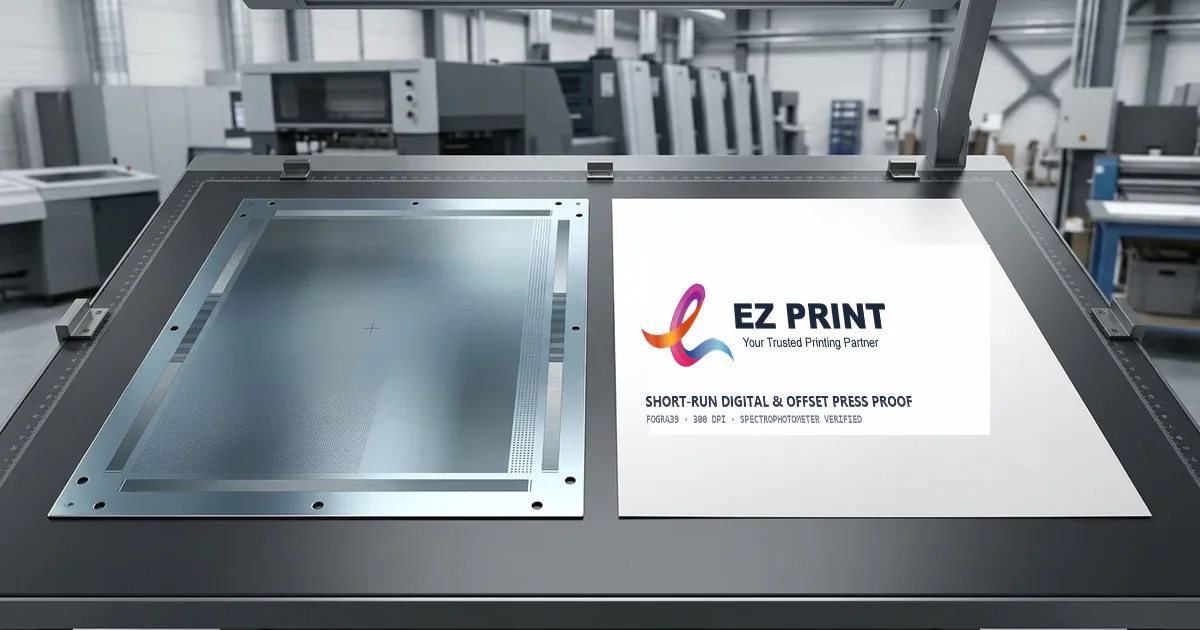
Choose commercial digital printing for short-to-medium runs (20 to 500 booklets or 50 to 1,000 certificates), variable-data personalised recipient names, or urgent turnaround schedules; switch to sheet-fed offset lithography when producing 1,000+ identical booklets or large-volume catalogues where plate setup is spread across a large print run.
Modern commercial digital production presses fuse dry toner or liquid electro-ink directly from your preflighted PDF without etching aluminium offset plates. That means a training institute running a 45-delegate leadership workshop can print exact headcount quantities of a 48-page workbook—and pre-print every graduate’s individual name, course title, and serial number onto textured fine-paper certificates in the same database pass—without paying for minimum 1,000-sheet offset make-ready waste.
| Production Parameter | Commercial Digital Production Press | Four-Colour Sheet-Fed Offset Press |
|---|---|---|
| Economical Run Quantity | 20 to 500 booklets; 25 to 1,000 certificates |
1,000 to 20,000+ identical booklets, catalogues, or brochures |
| Press Setup & Make-Ready | Direct PDF-to-press RIP; zero metal plates required | Four CMYK aluminium printing plates etched and registered per signature |
| Variable Data Personalisation | Native support: unique student names, serial codes, and QR badges per sheet | Static artwork across the entire press run (unless overprinted in a second pass) |
| Paper & Fine Stock Compatibility | Coated art paper (100–350gsm), uncoated woodfree, and digital-compatible textured stocks |
Full spectrum of coated, uncoated, ultra-thin bible papers, and deep-textured cotton boards |
How do you choose between saddle-stitched, perfect-bound, and wire-o binding for booklets?
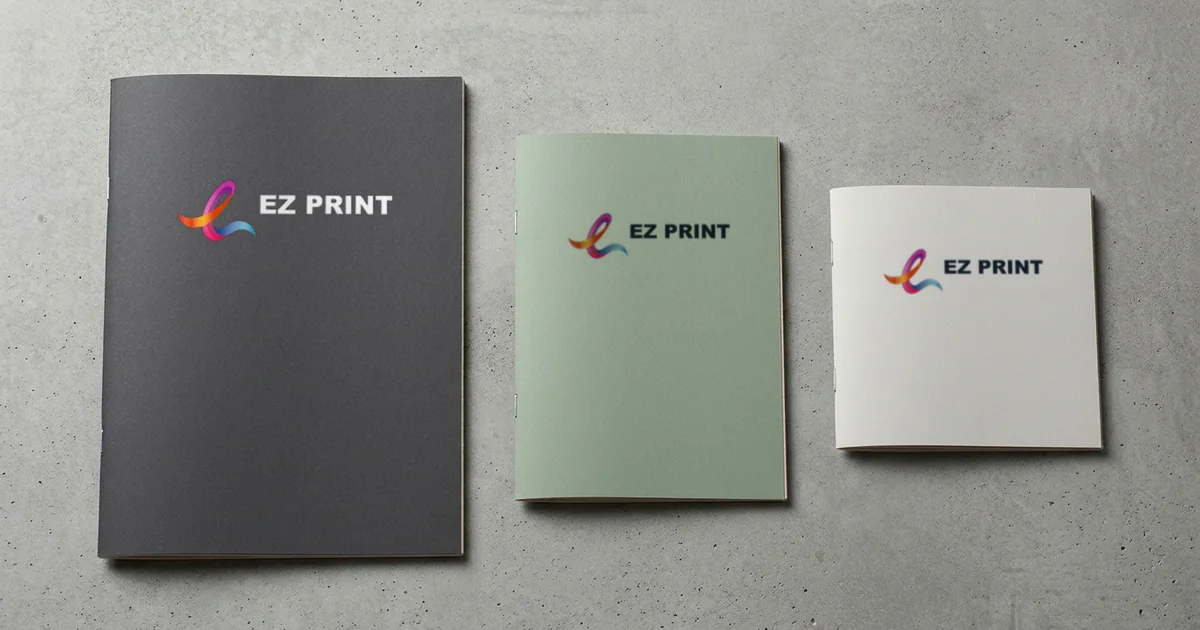
Specify two-staple saddle-stitching for slim booklets between 8 and 64 pages (in exact multiples of 4 pages); choose square-spined EVA or PUR perfect binding for thick company profiles, annual reports, and course manuals from 48 to 300+ pages; and select twin-loop Wire-O binding whenever a training workbook must fold back 360 degrees flat on a desk.
Every binding method imposes different geometry on your inner page margins. Saddle-stitched booklets fold full double-page spreads in half and stitch through the spine crease, whereas perfect-bound books mill the spine edge and glue the text block into a wrap-around 260gsm or 310gsm cover—requiring an extra 6 mm to 8 mm of inner gutter margin so text near the spine does not curve into the glue line. For hands-on technical workshops where trainees write notes while referencing a laptop, Wire-O binding punches along a single cut edge so every sheet lies completely flat without springing shut.
Which paper weights and textured fine stocks suit graduation and corporate award certificates?
Unlike glossy marketing flyers, official graduation and accreditation certificates require an uncoated or lightly textured fine paper between 220gsm and 300gsm—such as natural cream laid, linen-embossed, or crisp cotton-feel wove card—so wet hand-signed fountain pen ink, company rubber stamps, and dry embossing seals bite cleanly into the paper fibres.
Coated gloss art card causes liquid signature ink and stamping pads to smudge and makes a certificate look like a promotional postcard under frame glass. Selecting a 240gsm to 300gsm uncoated fine stock from our materials library gives the certificate archival stiffness inside a die-cut presentation folder and pairs naturally with metallic gold or silver hot-foil stamping on the institution’s crest.
How should multi-page booklet and variable-name certificate files be supplied for production?
For booklets, export a single-page sequential PDF (Page 1 through Page N, never reader’s two-page spreads) with a 3 mm bleed on all four edges and a page count divisible by 4 for saddle-stitching. For variable-data certificates, supply either a multi-page PDF with one recipient per page or the master vector template plus a clean UTF-8 CSV spreadsheet.
Standard production turnaround is 7–14 working days, and Same-day and urgent printing available. Subject to artwork approval, payment, print type and production availability. Timing confirmed per job. Upload your booklet page count, binding preference, or certificate specification on our request a quote page for an itemised commercial quotation.
Frequently asked questions
Why must a saddle-stitched booklet’s total page count always be a multiple of four?
Saddle-stitching folds each double-width parent sheet in half down the centre crease and staples through the fold. Because every folded parent sheet creates four readable pages (two on the front and two on the back), any saddle-stitched booklet must contain 8, 12, 16, 20, 24, 28, 32, or up to 64 pages.
How do I calculate the spine width for a perfect-bound book cover?
Spine width equals the number of inner leaves (total inner pages ÷ 2) multiplied by the bulk thickness (caliper in millimetres) of your chosen inner paper stock, plus 0.5 mm to 1.0 mm for the cover hinge and adhesive layer. Confirm your inner paper GSM and page count with our preflight team before locking your final cover spread width.
Can you apply gold foil stamping or blind embossing onto short-run digital certificates?
Yes. A popular workflow for training academies and professional institutes is to offset-print or hot-foil stamp a master batch of 500 or 1,000 certificate shells carrying the metallic gold seal, border, and embossed emblem, and then digitally overprint variable graduate names and dates per cohort intake.
Same-day and urgent printing available. Subject to artwork approval, payment, print type and production availability. Timing confirmed per job.