

Across Singapore’s retail storefronts, corporate reception galleries, executive boardrooms, and medical congresses, high-resolution large-format posters represent one of the most immediate visual mediums for commercial display. Whether unveiling an architectural development rendering in Tanjong Pagar, presenting scientific research at a Suntec medical symposium, or displaying seasonal promotional graphics across Orchard Road retail windows, an expertly printed poster demands exceptional color fidelity and photographic sharpness.
However, event coordinators and agency designers frequently face acute turnaround deadlines: presentation data finalized late in the evening, overseas exhibition graphics delayed in transit, or sudden retail marketing adjustments. Managing an urgent poster order requires an understanding of large-format substrates, ink systems, and viewing distance resolutions. This technical guide outlines how urgent photo satin poster printing operates in Singapore.
How Are Large-Format Posters Printed on Express Schedules?
Express poster printing in Singapore typically uses wide-format pigment inkjet printers with eight or more ink channels, running photo paper from the roll. The printheads place very small ink droplets onto a micro-porous receiving layer, so prints dry quickly enough to be trimmed and packed on a short schedule.
Understanding wide-format print technologies allows print buyers to select the appropriate equipment workflow for their application:
Aqueous Pigment Inkjet vs Eco-Solvent and UV Printing
- Aqueous Pigment Inkjet: Uses water-based pigment inks, often CMYK plus extra channels such as photo black, light cyan, light magenta and grey. Pigment inks deliver exceptional color gamut volume and razor-sharp tonal gradations across photographic skin tones and technical illustrations. On micro-porous photo media, prints are usually dry to the touch soon after printing. It is a common choice for presentation posters, retail window displays, and scientific conference presentations.
- Eco-Solvent and UV Large Format: Engineered primarily for heavy outdoor vinyl banners, vehicle graphics, and industrial building signage. While highly durable against rain and direct UV sunlight, solvent inks feature wider droplet sizes and chemical outgassing periods, making pigment inkjet the superior choice for high-resolution indoor presentation posters. For architectural technical drawings and site blueprints, explore our guide on urgent A1 and A0 plan printing.
Why Is 200gsm Photo Satin the Preferred Commercial Substrate?
Photo satin (semi-gloss or pearl luster) at 200gsm is the commercial standard for presentation posters because its micro-textured surface diffuses harsh overhead lighting while preserving saturated black densities and vibrant color gamuts. High-gloss papers produce distracting specular mirror reflections under exhibition spotlights, whereas satin finishes maintain readability from all viewing angles.
Singapore convention centres and corporate offices rely on bright, multi-directional LED and halogen ceiling spotlights. Substrate finish directly affects how viewers interact with the poster:
Large Format Substrate Comparison
| Paper Substrate | Weight / Caliper | Surface Texture | Reflection Profile | Best Application |
|---|---|---|---|---|
| 180gsm High-Grade Matte | Medium bulk | Smooth dead-matte | Zero glare (diffuse) | Scientific research posters, legal exhibits |
| 200gsm Photo Satin / Luster | Heavyweight | Micro-pearl sheen | Low glare, high contrast | Corporate presentations, retail marketing |
| 240gsm Premium Gloss | Heavyweight | Mirror-smooth gloss | High specular reflection | Photographic art prints under soft lighting |
| 190gsm Polypropylene (PP) | Tear-resistant film | Matte or Satin synthetic | Moisture-resistant, low curl (typical) | High-humidity environments, pop-up frames |
To evaluate viewing distances, visual acuity, and minimum font heights across large format displays, consult our technical guide on poster artwork reading distance guidelines.
What Resolution and Preflight Rules Ensure Razor-Sharp Poster Output?
Large-format poster artwork requires 150 to 300 DPI resolution at 100% full scale, 3mm perimeter bleed for borderless edge trimming, and FOGRA39 CMYK or Adobe RGB 1998 color profiles. Maintaining at least 150 DPI prevents visible bitmap pixelation when viewers inspect complex charts and fine typography from close reading distances.
A frequent prepress mistake in urgent poster procurement is submitting low-resolution artwork scaled up from web graphics:
1. Resolution Scaled to Viewing Distance
- Close Viewing (Under 1 Metre): Academic research posters, medical data charts, and retail cosmetic displays require a minimum of 200 to 300 DPI at full output dimensions (e.g., A1 594 × 841 mm).
- Medium Viewing (1 to 3 Metres): Promotional event posters and corporate foyer displays maintain photographic clarity at 150 to 200 DPI at full scale.
- DPI Calculation Rule: Never supply artwork at 72 DPI hoping the printer will “enhance” the resolution. If an image is 72 DPI at A4 size, blowing it up to A0 on a commercial plotter will result in severe blurriness and jagged pixel blocks.
2. Full-Bleed Trimming and Safe Margins
- When ordering borderless posters, supply 3mm bleed on all four outer edges. Industrial roll plotters print slightly oversized onto roll stock, which is then sliced to exact finished dimensions using automated XY optical slitting cutters.
- Keep all critical text, corporate logos, and footnotes at least 10mm inside the trim line, especially if the poster will be mounted inside snap frames or display poster hangers where frame edges overlap the paper perimeter by 5 to 8mm.
How Are Printed Posters Packed and Transported Without Creasing?
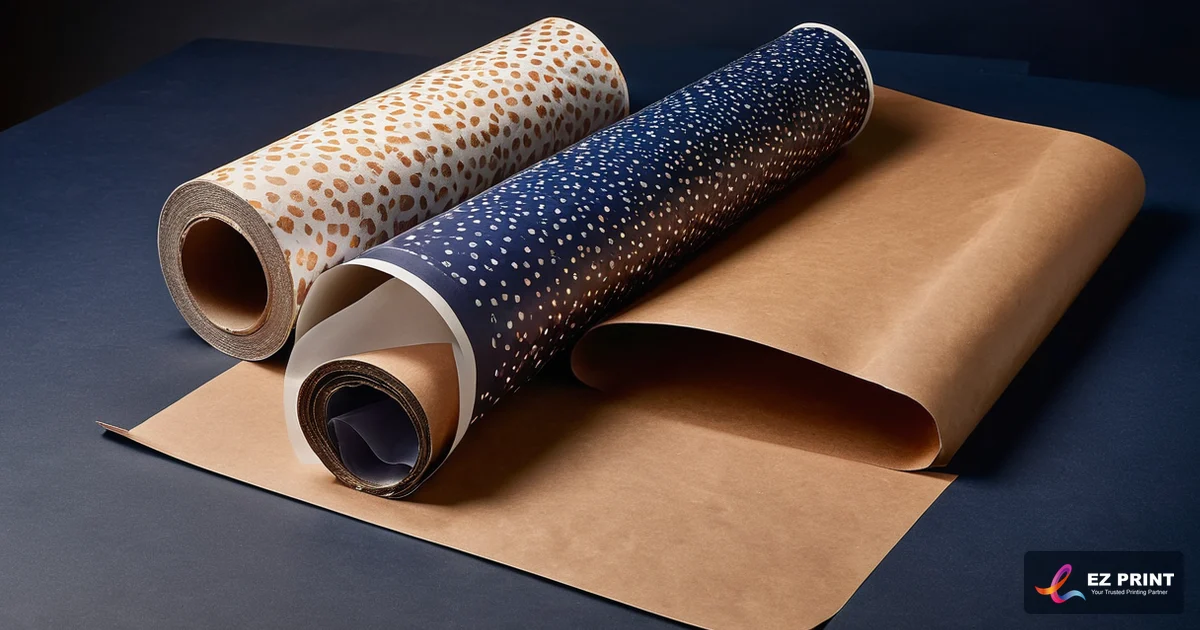
Finished large-format posters are usually rolled with a protective tissue interleave and packed into rigid spiral-wound cardboard tubes with end caps. Rolling the print face-out helps it sit flat against a wall when unrolled, and a rigid tube protects the paper edges from crushing during courier transit.
Transporting large-format paper prints in a tropical, high-traffic city requires robust protective packaging:
- Graphic-Face-Outward Rolling: Rolling with the printed surface outside means the poster curls towards the wall when it is hung, which helps it sit flat. If your frame or stand needs a different rolling direction, say so in your brief.
- Glassine Tissue Interleaving: Placing a sheet of smooth, acid-free tissue paper over the printed face before rolling prevents mechanical friction between the front surface and the rear paper liner during vehicular transport.
- Spiral-Wound Heavy Kraft Tubes: Flexible plastic sleeves or thin envelopes offer inadequate protection against accidental bending. Commercial 76mm diameter kraft tubes with snug plastic end-caps provide rigid crush resistance, ensuring posters arrive pristine at convention halls or corporate suites.
To explore all large-format printing capabilities, review our complete catalogue of commercial poster printing services. For urgent production policies, consult our same-day printing guidelines.
Worked Example: Urgent Scientific Poster Production for a Suntec Medical Congress
Hypothetical illustration. Figures are assumptions for explanation, not a real transaction or advice. Consider a medical research team presenting study findings at Suntec Singapore that discovers a data revision on their presentation poster shortly before the poster session. This scenario outlines the operational decisions and checks made to produce and deliver an A0 replacement poster when timing is agreed upon confirmation.
A research coordinator in Singapore requires an emergency replacement A0 presentation poster featuring complex high-density graphs and photographic microscopy images. This walkthrough details the sequential decisions and checks made to achieve prompt completion.
Step 1: Specification and Substrate Selection
The coordinator selects specifications that keep the job simple to schedule:
- Dimensions: Standard ISO A0 (841 × 1,189 mm).
- Substrate: 200gsm Premium Photo Satin Media. Satin finish ensures glare-free readability under convention halogen lights while rendering microscopy figures with deep contrast.
- Printing: Aqueous pigment inkjet on roll media.
- Packaging: Interleaved with tissue paper and sealed in a rigid kraft tube with end caps.
- Quantity: 1 presentation print.
Step 2: High-Resolution File Intake and Preflight
The researcher exports a compliant PDF/X-4 document directly from scientific layout software at 100% full size, verifying that embedded microscopy images maintain 200 DPI resolution. The file is uploaded through the request a quote portal. Prepress technicians confirm that vector text and mathematical symbols are fully embedded.
Step 3: Production Capacity & Schedule Confirmation
The production team verifies wide-format pigment inkjet printer queues and roll stock availability. Timing is agreed when the job is confirmed. High-precision plotters output the A0 layout onto satin roll media.
Step 4: Trimming and Protective Tube Packing
Once the print is dry, technicians trim the perimeter bleed using an optical rotary trimmer. The poster is rolled with glassine tissue interleave, inserted into a rigid cardboard tube, and sealed with plastic caps.
Step 5: Dispatch and Venue Handover
The sealed tube is handed to an express courier for priority delivery. Confirm the delivery point and contact with the venue or conference organiser in advance.
Frequently Asked Questions
Is same-day printing available for large-format photo satin posters?
Same-day printing available. Subject to artwork, stock and production capacity confirmation. Timing is agreed for each job. Standard turnaround is 7–14 working days. Express feasibility depends on file readiness, standard 200gsm satin roll stock availability, and confirmed wide-format plotter queue slots.
What is the difference between A1 and A0 poster sizes?
Standard ISO A1 measures 594 × 841 mm, making it ideal for retail window displays, corporate reception boards, and executive briefings. ISO A0 measures 841 × 1,189 mm (exactly double the surface area of A1), which is the standard international format for academic congresses, scientific research presentations, and engineering diagrams.
Can printed posters be laminated with matte or gloss film?
Yes. Posters can receive thermal matte or gloss lamination to add protection against splashes and scuffs. For indoor conferences, unlaminated 200gsm photo satin is usually durable enough, which saves a production step when time is short.
Why do poster prints look different from computer monitor displays?
Computer screens display artwork using transmitted RGB light, whereas printed posters reflect ambient light using CMYK physical ink pigments. Extremely vibrant RGB neon shades fall outside the physical CMYK pigment gamut and will reproduce as slightly deeper, more natural tones on paper.
How are completed poster orders dispatched or collected?
Finished posters are packed in rigid mailing tubes and dispatched via direct courier across Singapore. Confirm the delivery point and contact with the venue or organiser in advance. Alternatively, collection is available: Collection by arrangement — tell us when you would like to collect and we will confirm the time.
Summary Checklist for Urgent Poster Orders
Before submitting urgent large-format poster artwork for commercial production, verify this technical quality checklist. Confirming 150 to 300 DPI resolution, 3mm perimeter bleed, 10mm internal safe margins, photo satin substrate selection, and rigid tube packaging prevents prepress halts and ensures pristine presentation across Singapore conference venues.
Before submitting your poster artwork to press, verify these essential production parameters:
- Finished dimensions confirmed (A2, A1, A0, or a custom size; ask us about the maximum width).
- Image assets prepared at a minimum of 150 to 300 DPI at 100% full scale.
- 3mm perimeter bleed provided beyond all four outer edges for borderless trimming.
- Critical text and institutional logos positioned at least 10mm inside the cut line.
- Typography converted to vector curves or fully embedded in the PDF document.
- Substrate specified as 200gsm photo satin to prevent convention hall spotlight glare.
- Packaging confirmed as rigid cardboard postal tube for safe courier transport.
To request an immediate quotation for large-format poster printing, visit our commercial poster service page or submit your files through our request a quote form. To find out more about EZ Print, see our about page.
Same-day printing available. Subject to artwork, stock and production capacity confirmation. Timing is agreed for each job.