
Compiling academic course readers, lecture notes, and corporate training manuals requires balancing reader comfort with mechanical binding integrity. While lightweight booklets function well with folded and stapled spines, thicker course materials present distinct structural challenges. When a syllabus expands beyond several dozen leaves, standard saddle stitching fails to hold the sheets flat.
Selecting the right binding architecture—whether adhesive perfect binding or mechanical wire-o binding—ensures that course packs withstand intensive semester use, lay flat during note-taking, and fit neatly onto academic library shelves.
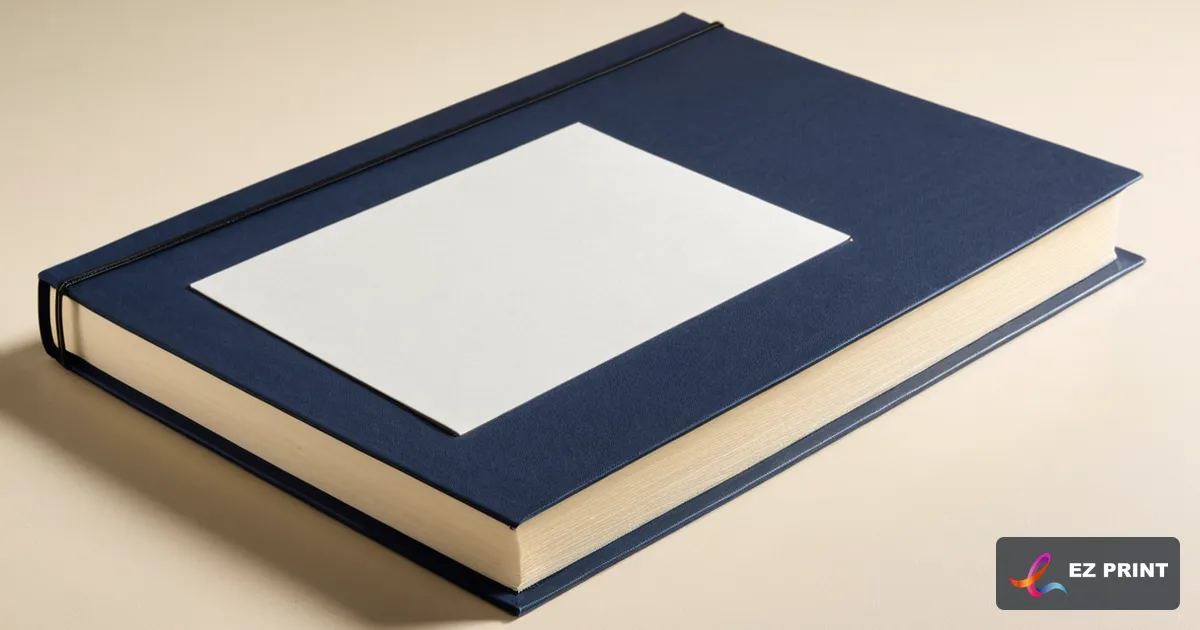
At what page threshold does saddle stitching stop closing properly?
Saddle stitching takes page counts in multiples of 4, running reliably from 8 pages up to about 64 pages. Beyond approximately 64 pages on 157 gsm text stock, folded sheets wedge against the wire staples, preventing the booklet from closing flat and causing severe page creep across outer trim edges.
A booklet is the one printed object governed by an unyielding physical rule: every saddle-stitched book must have a page count divisible by 4, because a single folded sheet creates 4 distinct pages. Everything else follows directly from the binding method:
- The 64-Page Mechanical Ceiling: As inner sheets nest inside outer sheets, the bulk of paper accumulated along the spine pushes outward. On heavy 157 gsm or 128 gsm paper, a saddle-stitched booklet past 64 pages bulges open like a wedge rather than resting flat on a desk.
- The Creep Phenomenon: Creep describes how inner spreads push outward past the cover rim when folded. On a thick saddle-stitched book the outer margin of the centre spread trims narrower than the cover. It is compensated in the imposition, not in your file, so keep generous outer margins rather than trying to correct it yourself.
- Unplanned Page Counts: Submitting a document with an arbitrary page count like 22 pages creates awkward blank leaves. Because saddle stitching requires multiples of 4, a 22-page file becomes a 24-page booklet with 2 blank pages at the back. It is far better to plan those extra pages deliberately for study notes than to discover them after printing.
When a course reader approaches or exceeds 64 pages, shifting from saddle stitching to adhesive perfect binding or wire-o binding provides a vastly superior reading experience.
How does adhesive perfect binding compare with twin-loop Wire-O for thick books?
Perfect binding mills the spine edge of gathered pages and secures them into a wraparound card cover with thermal adhesive, creating a printable square spine starting at about 40 pages. In contrast, twin-loop wire-o punches circular holes along the edge, allowing pages to rotate completely and lay flat on desks.
Choosing between adhesive binding and mechanical wire loops depends on how students interact with the material:
| Binding Characteristic | Adhesive Perfect Binding | Twin-Loop Wire-O Binding |
|---|---|---|
| Minimum Page Count | Starts at about 40 pages to create sufficient spine width. | Takes any page count from thin sheets to thick manuals. |
| Desk Usability | Holds pages firmly in a square block; resists opening fully flat. | Opens completely flat and folds back smoothly for easy writing. |
| Spine Archiving | Provides a printable square spine displaying title and course codes on shelves. | Open wire teeth cannot be printed; difficult to read on library shelves. |
| Inner Margin Clearance | Requires a generous 15 mm safe margin from the glue gutter. | Requires an 18 mm safe margin to clear punched holes. |
| Turnaround and Curing | 7–14 working days; requires dedicated curing hours before trimming. | 7–14 working days; trimmed before mechanical punching and binding. |
| Best Academic Application | Comprehensive course readers, reference textbooks, and archival syllabi. | Lab manuals, training workbooks, and calculation exercise books. |
The Role of Spine Curing in Perfect Binding
Standard turnaround is 7–14 working days for every binding format. On perfect-bound volumes, a crucial portion of this window is dedicated to adhesive curing. The thermal glue on a perfect-bound spine requires a fixed number of curing hours before the block can be trimmed. That cure is a fixed number of hours no schedule shortens, which is why it sits inside the standard window rather than on top of it.
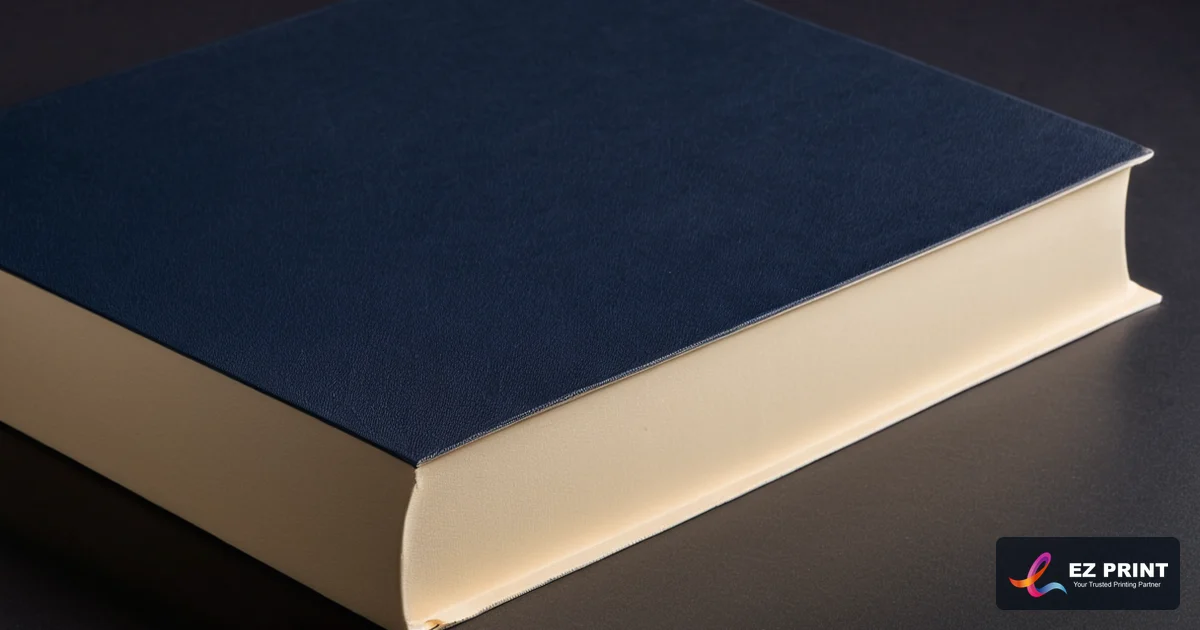
Why is simili text paper preferred for high-page-count academic course packs?
Simili is the light uncoated text paper most manuals, workbooks and training materials are actually run on. It is absorbent, so ink sinks into it rather than sitting on top: type stays crisp and photographs go flat. That is the right trade for a book that is read and written in rather than displayed.
While promotional brochures rely on 128 gsm or 157 gsm gloss art paper to maximize photograph saturation, academic course books prioritize reading comfort and tactile utility:
- Made for Reading and Writing: Simili is uncoated, so it takes notes and exercises the way a coated sheet does not. Coated art paper is for image-led pages; a dense photographic solid never looks dense on simili.
- Light Enough to Hold Open: Simili is lighter than any cover stock and is meant to be, which matters most on high page counts that must stay light enough to hold open. It is ordered in by named weight for the job, so the weight is settled on the quote against your page count and finished size.
- Durable Cover Construction: To protect interior simili pages, course books utilize heavy 250 gsm, 310 gsm, or 350 gsm art card covers. Applying protective lamination to the outside face stops the spine from scuffing, cracking, or tearing during daily commutes.
- Standard Standardized Formats: Course readers are primarily produced in A4 format (210 × 297 mm) for extensive two-column lecture slides, or A5 format (148 × 210 mm) for compact, portable study guides.
For related insights into brochure specifications and binding types, see our comprehensive booklet binding guide or compare single-sheet options in our business card size and bleed article.
Decision checklist: specifying binding and text stocks for thick course readers
Specifying thick academic books requires verifying total page multiples, adjusting inner gutters for binding swallow, and selecting compatible cover lamination. Keep type 15 mm clear of perfect-bound spines, maintain 18 mm clearance for wire-o hole punches, and ensure cover lamination is restricted strictly to the outer face.
Review this production checklist before submitting course materials for print:
- Page Count Geometry: Confirm that saddle-stitched projects strictly follow multiples of 4 (such as 16, 24, 32, or 64 pages). For perfect-bound books, verify that page count exceeds 40 pages to create a viable spine.
- Safe Margin Calibration: Set inner spine margins to 12 mm for saddle stitch, 15 mm for perfect binding, and 18 mm for wire-o to prevent text disappearing into the gutter curve or punching dies.
- Page Numbers Outside the Spine Margin: A folio 8 mm from the spine disappears into a perfect-bound gutter. Keep page numbers outside the spine margin.
- Bleed Allowance: Provide a standard 3 mm bleed across all outer trim edges on both covers and interior pages.
- Cover Lamination Single-Side Rule: Specify protective gloss or matt lamination exclusively on the outer cover face. Never laminate the inside cover face of a perfect-bound book, as adhesive will not key to film.
- Text Substrate Selected: Choose between 128–157 gsm coated art paper for photo-heavy materials or lightweight simili text paper for writable workbooks.
- Production Schedule: Allow 7–14 working days for complete printing, folding, binding, and spine curing.
Common mistakes to avoid when printing thick academic course books
Frequent errors in course book printing include laminating both sides of perfect-bound covers, placing page numbers too close to the spine gutter, and forcing saddle stitching past 64 pages. Double-sided cover lamination prevents adhesive bonding, while inadequate gutter margins trap reading content inside the binding curve.
Avoid these common technical oversights when preparing semester course readers:
- Laminating the Inside of a Perfect-Bound Cover: Glue does not key to lamination film, so when a cover is laminated on both faces the text block eventually pulls away from the spine. Always specify lamination on the outside cover face only.
- Placing Content Within 12 mm of the Spine: On a perfect-bound book, the spine swallows several millimetres directly into the adhesive channel, while the curvature of thick pages hides adjacent content. Setting text or numbers within 12 mm of the inner edge forces readers to pry the book open aggressively, straining the glue.
- Forcing Saddle Stitching on High-Page-Count Manuals: Past about 64 pages on 157 gsm the book stops closing, and a heavier staple does not fix it. Perfect binding is the honest answer.
- Omitting Course Details on Spines: Perfect-bound books offer a valuable structural asset: a flat, printable spine. Leaving the spine blank makes course packs impossible to identify when stacked vertically on bookshelves.
Worked example: Specifying 100 course readers of 128 pages
A 128-page reader is past what a saddle stitch can hold, so the choice is perfect binding for a shelf-findable spine or wire-O for a book that must lie open. For a reading pack that students annotate but do not work flat on, perfect binding with a printed spine is the usual answer.
Hypothetical planning example. Actual production timing, paper availability, and logistics are confirmed individually upon artwork and specification review.
Suppose a training institute needs 100 copies of a 128-page A4 reader for one semester.
- Step 1: Binding. 128 pages rules out saddle stitching. Perfect binding gives a printable square spine for the course title and module code, so the book is findable on a shelf.
- Step 2: Stocks. Text on 128 gsm, the same text weight as the shelf-ready A4 example on our booklets page; simili is the alternative if the pages are mainly written in. Cover on 310 gsm matt art card, laminated on the outside face only, because glue does not key to film.
- Step 3: Margins. A4 210 × 297 mm with 3 mm bleed. 15 mm clear of the spine for perfect binding, and page numbers outside that margin.
- Step 4: Spine. The spine width is set from the final page count and text stock at quotation, and the title is laid out on the cover spread to that width.
- Step 5: Timing. Standard turnaround is 7–14 working days, including the glue cure on the spine. Express is quoted per job.
Frequently asked questions about thick course book printing in Singapore
At what page count should I switch from saddle stitching to perfect binding?
Saddle stitching works reliably from 8 pages up to about 64 pages on 157 gsm paper. When page counts exceed 64 pages, the booklet ceases to close flat. Perfect binding becomes practical starting at about 40 pages, providing a rigid, printable spine.
Can students write and take notes easily on perfect-bound course books?
Yes, provided uncoated simili text paper is specified for inner pages. For documents that must lay flat on desks or fold back completely, such as laboratory manuals and calculation workbooks, twin-loop wire-o binding is often preferred over adhesive binding.
Why must cover lamination be applied to only one side of perfect-bound books?
Adhesive glue requires raw paper fibres to create a permanent mechanical bond. If the inside of the cover is laminated, thermal film acts as a barrier, preventing glue penetration and causing the inner text block to detach from the cover over time.
How much safe margin should I leave along the binding edge?
Leave at least 12 mm clear on saddle-stitched booklets, 15 mm on adhesive perfect-bound books to clear the glue gutter, and 18 mm on wire-o bindings to ensure text and diagrams are not perforated by hole punches.
Planning an academic course reader, technical syllabus, or corporate training pack? Visit our dedicated booklet and book printing services or request a custom quote tailored to your required page counts and binding styles. You can also consult our production advisors through our contact page for guidance on spine gutters and paper weights.
Same-day and urgent printing available. Subject to artwork approval, payment, print type and production availability. Timing confirmed per job.