
For a corporate uniform logo in Singapore, the fabric decides between embroidery and print. Embroidery is the natural decoration on woven corporate shirts, while a dri-fit polyester polo is decorated by direct-to-film transfer, which bonds to synthetic fabric and prints full colour. Embroidery is measured in stitch count, and nothing finer than about 3 mm survives a needle.
This guide compares the two for uniforms specifically. The wider comparison of silkscreen, direct-to-film, direct-to-garment and embroidery on t-shirts is in the t-shirt printing method comparison, and collecting names and sizes from staff is covered in the team apparel brief.
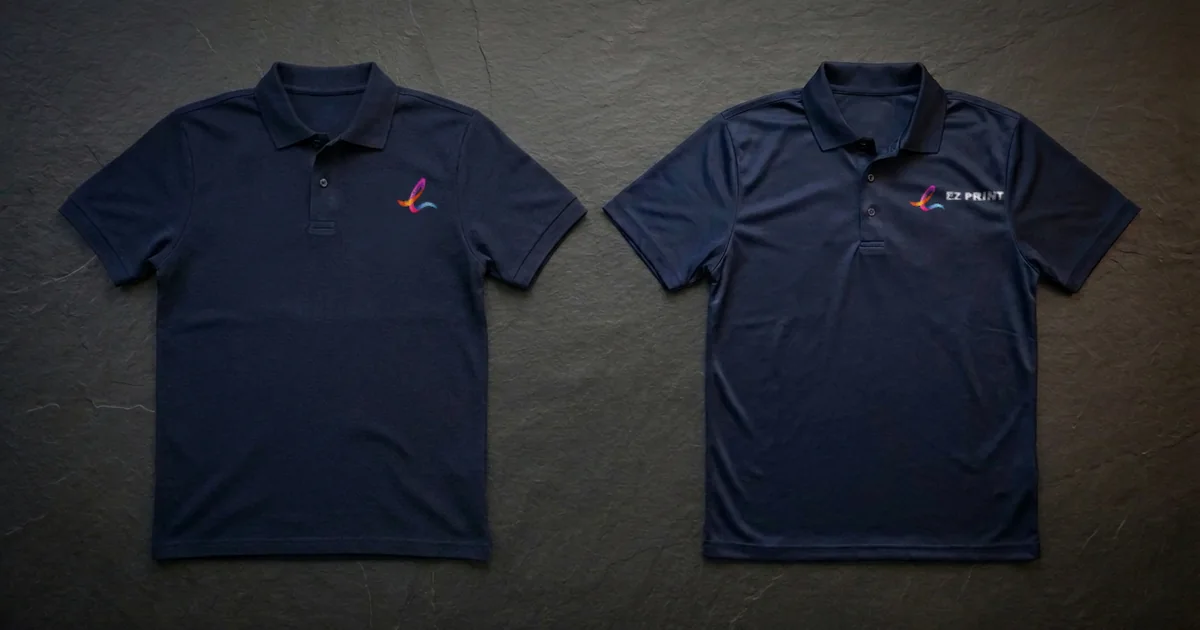
How do embroidery and a direct-to-film transfer differ?
Embroidery stitches the design in thread and is measured in stitch count rather than in colours. Direct-to-film is a printed film bonded to the cloth: full colour on any fabric including polyester, with no screens and no minimum. Embroidery reads as part of a uniform; a transfer carries full-colour artwork.
The two are different processes with different limits:
| Embroidery | Direct-to-film transfer | |
|---|---|---|
| What it is | The design stitched in thread | A printed film bonded to the cloth |
| Measured in | Stitch count, not colours | Full colour, no screens |
| Colour | Thread comes in a fixed palette; a Pantone reference is matched to the nearest thread | CMYK, so full colour and gradients are fine |
| Finest detail | About 3 mm; about 1.5 mm as a stitched line; lettering about 5 mm tall | Full colour at final size with a clean cut edge and no soft drop shadows |
| Fabric | Woven corporate shirts, where it is the natural decoration | Any fabric, including dri-fit polyester |
| Minimum run | 10 | 1 |
| For a reorder | Digitised once and kept | No screens to make |
The colour row is the one that surprises most brand teams. A printed transfer is built in CMYK, and gradients are fine on a transfer. Thread does not work that way: it comes in a fixed palette, and a Pantone reference is matched to the nearest thread rather than reproduced exactly. If a brand colour has to be precise, that is an argument for a transfer; if the logo has to read as a uniform, that is an argument for embroidery on a fabric that suits it.
Which fabric takes which method on a uniform?
Woven corporate shirt fabric is structured and non-stretch, and embroidery is its natural decoration; a printed transfer on stiff woven cloth reads as a patch. A dri-fit polyester polo is a smooth synthetic knit that does not absorb ink the way cotton does, and direct-to-film is the reliable full-colour method on it.
The three garments used for uniforms behave differently:
- Woven corporate shirts. Also sold as poplin, oxford or twill shirting. Used for formal corporate shirts and jackets, front-of-house staff and anything worn with a collar. Embroidery is the natural decoration. Large printed areas are a mistake on woven cloth: they crack along the fold lines within a few washes, because the cloth does not stretch with the print.
- Dri-fit polyester polos. A synthetic knit designed to move moisture away from the skin, chosen for sports events, outdoor staff uniforms and anything worn in Singapore heat. Direct-to-garment does not work on it; direct-to-film bonds to the surface. The press temperature is tested on the garment before the run.
- Cotton and cotton-blend t-shirts. Event shirts and casual staff tees, decorated by silkscreen, direct-to-garment or direct-to-film.
One combination to avoid at the specification stage is embroidery on a light knit. It is described on the apparel service page as a mistake that is not visible until the sample, alongside direct-to-garment on polyester. If an embroidered polo is wanted, say the exact garment and fabric with the enquiry, and the method is chosen against it rather than assumed.
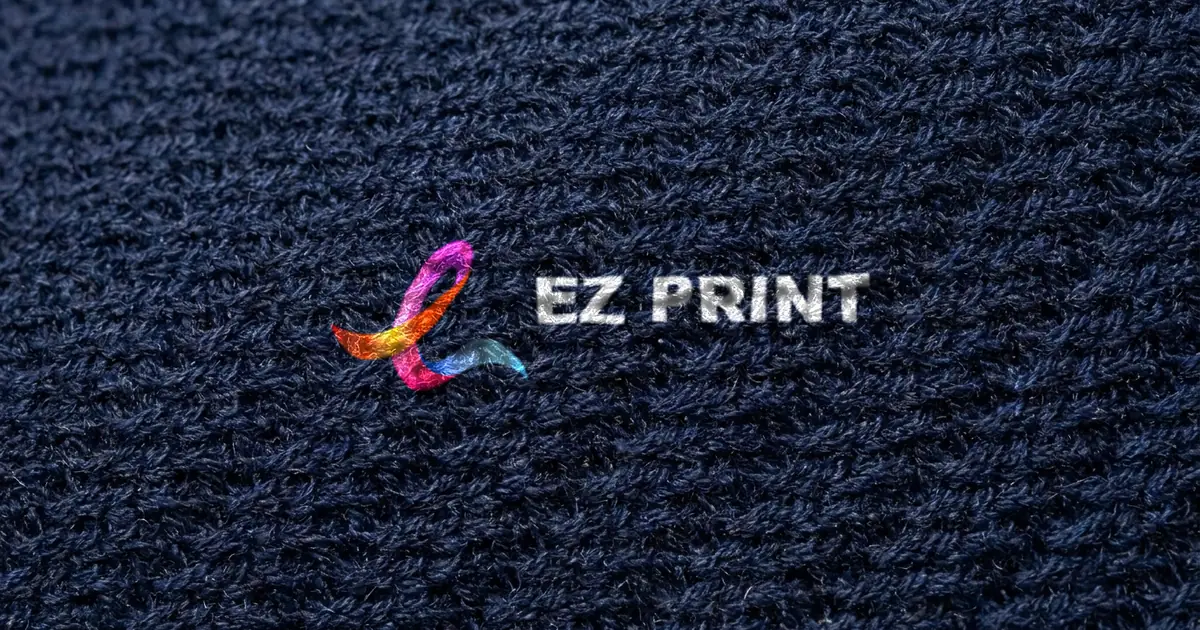
What can and cannot be embroidered in a logo?
Embroidery resolves nothing finer than about 3 mm. A stitched line needs to be about 1.5 mm, and embroidered lettering about 5 mm tall. Text below about 3 mm fills in as a solid block of thread, so fine detail in a logo usually has to be simplified before it can be digitised.
Most corporate logos were drawn for a screen or a letterhead, not for a needle. Before a logo is embroidered, check it against these limits at its finished size:
- Taglines and small type. A strapline under the logo is often the first casualty. At left chest size it can fall below about 3 mm tall, and then it fills in as a solid block of thread. Dropping it from the embroidered version is usually better than shrinking it.
- Hairlines. Thin outlines and rules need to be about 1.5 mm as a stitched line. Below that, the stitches fill in.
- Small enclosed shapes. Counters inside letters and tiny details close up for the same reason that small text does.
- Colours. Each colour is matched to the nearest thread in a fixed palette, so check the closest thread against the brand colour rather than expecting an exact Pantone match.
A logo with fine detail does not have to be abandoned. The usual answer is a simplified embroidery version for woven shirts and the full artwork, unchanged, as a transfer on dri-fit polos, so each garment carries the logo in the form its fabric suits.
Why are embroidery files kept for reorders?
An embroidery design is digitised once into a stitch file and kept on file with the artwork. A repeat order in the same sizes has no digitising left to make. That is also why embroidery has a minimum of about ten: the design has to be digitised before the first garment is stitched.
Digitising turns the supplied vector artwork into stitches. It is done once per design, which makes the first order and every later one different jobs:
- First order. The vector logo is supplied, digitised into stitches, and the stitch file is approved, ideally on a single sample garment before the full order.
- Reorder. The stitch file already exists. New staff in the same sizes are decorated from the kept file, with nothing to set up again.
- Transfers. Direct-to-film needs no screens and has no minimum, so there is no tooling to keep; a reorder needs only the same artwork.
Uniform orders often repeat as new staff join, so it helps to know at the start which decoration keeps its set-up and which has none to keep.
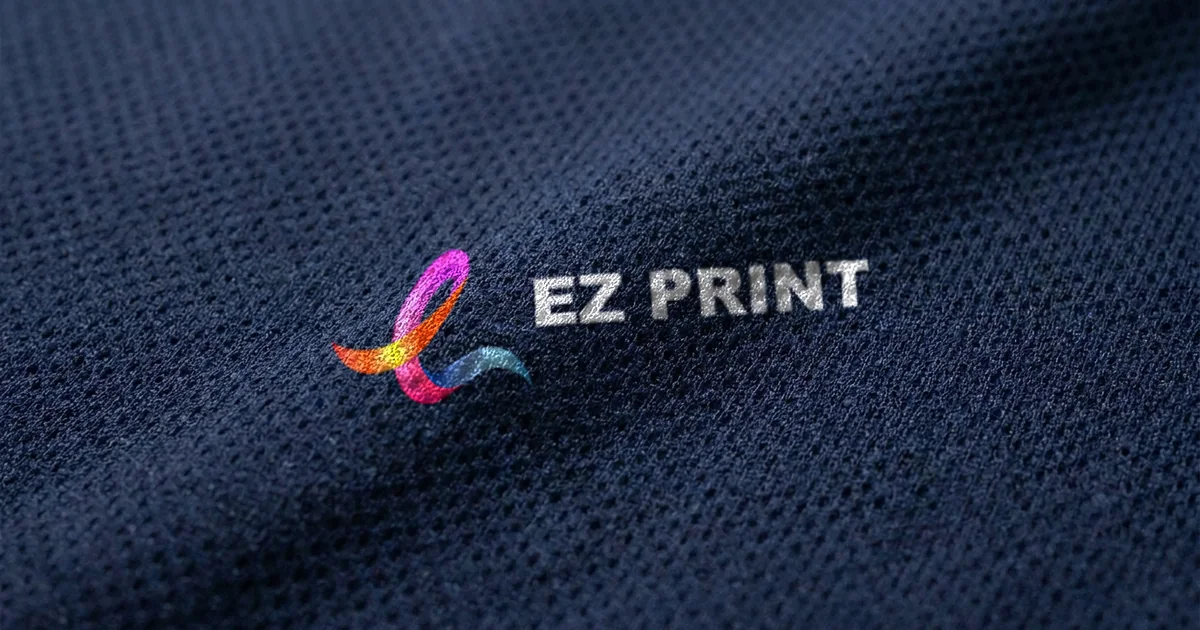
What should a uniform decoration brief include?
A uniform brief names each garment and its fabric, the logo position and size, the number of thread or print colours, the size breakdown and whether a reorder is likely. The left chest at about 90 mm wide is the standard corporate position, for embroidery or a small print. Garments are sourced in the sizes ordered before decoration begins.
Work through these before asking for a quote:
- Garment and fabric. Woven corporate shirt, dri-fit polyester polo, or cotton t-shirt. The fabric decides the method.
- Position and size. Left chest is about 90 mm wide. A back print, common for staff roles, runs up to about 280 × 380 mm and is a second pass.
- Logo detail. Check lettering against about 5 mm tall for embroidery, and lines against about 1.5 mm.
- Colours. Named Pantone references for thread; CMYK for transfers.
- Quantity. Embroidery from about ten; direct-to-film from one.
- Size breakdown. Garments are ordered as stock in the sizes requested, so send the breakdown with the enquiry.
- Timing. Standard turnaround is 7–14 working days, including sourcing the garments and any first-time digitising. Express is quoted per job. Same-day and urgent printing available. Subject to artwork approval, payment, print type and production availability. Timing confirmed per job.
Worked example: Decorating woven shirts and dri-fit polos with one logo
Hypothetical illustration. Figures are assumptions for explanation, not a real transaction or advice. A company needs uniforms for two teams: woven shirts for front-of-house staff and dri-fit polyester polos for outdoor staff. Its logo has three colours and a small tagline. The fabric of each garment decides the method, and the logo is prepared twice.
- Step 1: Split by fabric. The woven shirts take embroidery, the natural decoration on woven cloth. The dri-fit polos take a direct-to-film transfer, the reliable full-colour method on polyester.
- Step 2: Size the position. Both garments carry the logo on the left chest at about 90 mm wide.
- Step 3: Simplify for thread. At that size the tagline would be under about 3 mm tall, so the embroidered version drops it. The three logo colours are matched to the nearest threads.
- Step 4: Keep the full logo for the transfer. The polos carry the complete logo, tagline included, as a full-colour transfer.
- Step 5: Sample both. One woven shirt is embroidered from the digitised file and one polo is pressed, after the press temperature is tested on the garment.
- Step 6: Run and keep. Both run inside the standard turnaround of 7–14 working days, and the stitch file is kept for new staff later.
How can EZ Print help with corporate uniforms?
EZ Print produces custom apparel in Singapore and has done since 2017. Woven corporate shirts, dri-fit polyester polos and cotton t-shirts are decorated by embroidery, direct-to-film transfer, silkscreen or direct-to-garment, with the method chosen from the fabric and the artwork, and garments sourced in the sizes and colours ordered.
The custom apparel printing service sets out the fabrics, stitch limits, print sizes and minimums in full. For branded items beyond garments, see corporate gift printing. Send the garments, the logo and the size breakdown through request a quote, and each job is quoted from its specification.
Frequently asked questions about uniform embroidery and printing in Singapore
Should a corporate polo logo be embroidered or printed?
It depends on the fabric. A dri-fit polyester polo is decorated by direct-to-film transfer, which bonds to the surface and prints full colour. Embroidery is the natural decoration on woven corporate shirts. Say the fabric with the enquiry and the method is chosen against it.
How small can embroidered text be?
About 3 mm tall for a letterform, and 5 mm is safer. A needle cannot resolve finer detail, so small lettering fills in as a solid block of thread.
What is the minimum order for embroidered uniforms?
About ten, because the design has to be digitised into stitches first. Direct-to-film transfer has a minimum of one, so a single sample garment can be made.
Is the embroidery file kept for reorders?
Yes. An embroidery design is digitised once into a stitch file and kept on file. A repeat in the same sizes has no digitising left to do.
Why does a large printed logo crack on a woven shirt?
Woven shirt fabric is structured and does not stretch with the print, so a large printed panel cracks along the fold lines within a few washes. Embroidery is the natural decoration on woven cloth.
Same-day and urgent printing available. Subject to artwork approval, payment, print type and production availability. Timing confirmed per job.