
For a printed event t-shirt in Singapore, choose the fabric first and the printing method second. Cotton jersey absorbs ink and takes silkscreen, direct-to-garment and direct-to-film; polyester dri-fit moves moisture away from the skin, does not absorb ink the way cotton does, and is decorated by direct-to-film transfer.
This guide is about that fabric decision. A full comparison of the four decoration methods is in the t-shirt printing method comparison, and gathering sizes and names from a team is covered in the team apparel brief.
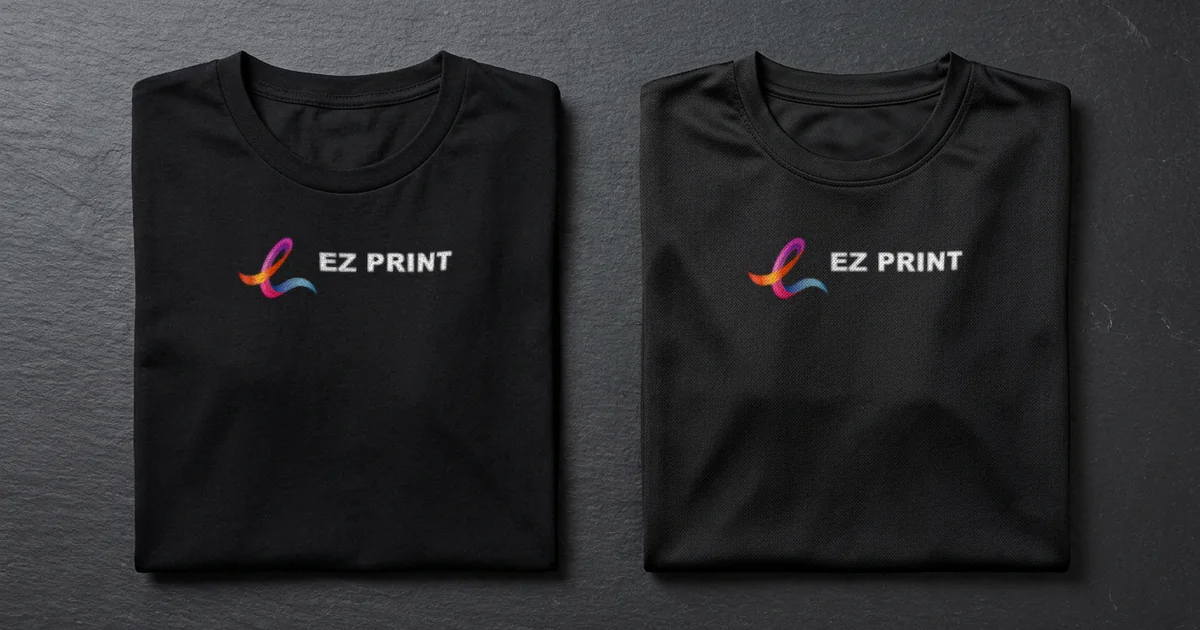
Why choose the fabric before the printing method?
The fabric decides which printing methods are possible, so it has to be named first. Direct-to-garment on polyester is a mistake made at the specification stage, and it is not visible until the sample. The method is then chosen from the fabric, the artwork and the quantity, in that order.
It is common to pick a printing method first, often from the quantity alone, and then choose a shirt. That order causes the problem. A garment is not a neutral surface: what the fibre does with ink decides whether a print sinks in, sits on top or fails to bond at all. Quantity alone is the wrong reason to choose a method, and it is the reason most often given.
The right order is short:
- Name the garment and the fabric. Cotton or cotton-blend t-shirt, or dri-fit polyester.
- Describe the artwork. One or two flat colours, or full colour with gradients or a photograph.
- Then the quantity. It matters, because silkscreen has a minimum of 20, but it comes third.
Send the garment, the fabric, the colour and the size breakdown with the artwork, and the method is recommended against all four rather than against the quantity alone.
How does cotton jersey take a print?
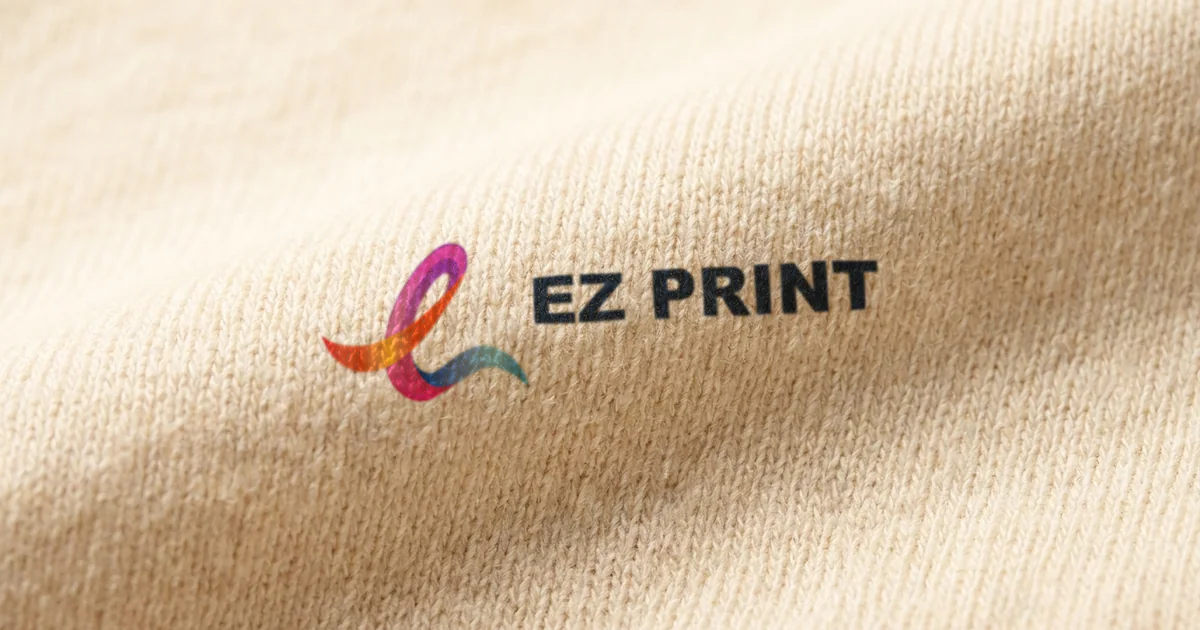
Cotton jersey is a knitted cotton fabric with a soft hand and a visible loop structure. It absorbs ink, which is why it takes screen and direct-to-garment printing so well. Screen ink sits in the fibre and softens with washing; direct-to-garment ink is absorbed into it and feels like nothing at all.
Cotton is the usual choice for shirts worn casually. Its strengths and limits, as set out for the apparel service:
- Best for: event shirts, staff tees, and anything worn casually and washed often.
- Methods that suit it: silkscreen for one or two flat colours in quantity, which is the most durable method on cotton and keeps its screens for the reorder; direct-to-garment for short runs where the softest hand-feel matters; and direct-to-film, which prints full colour on any fabric.
- Avoid it for: sportswear. Cotton holds moisture, which is the opposite of what a dri-fit garment is for.
- Supply: cotton jersey is held in common colours and sizes. Every method needs a curing or pressing pass after printing.
Because cotton absorbs ink, it is also the only fabric of the two where direct-to-garment works. Direct-to-garment prints into cotton fibre with no minimum, so a single cotton sample in full colour is always possible before a larger order.
How does polyester dri-fit take a print?
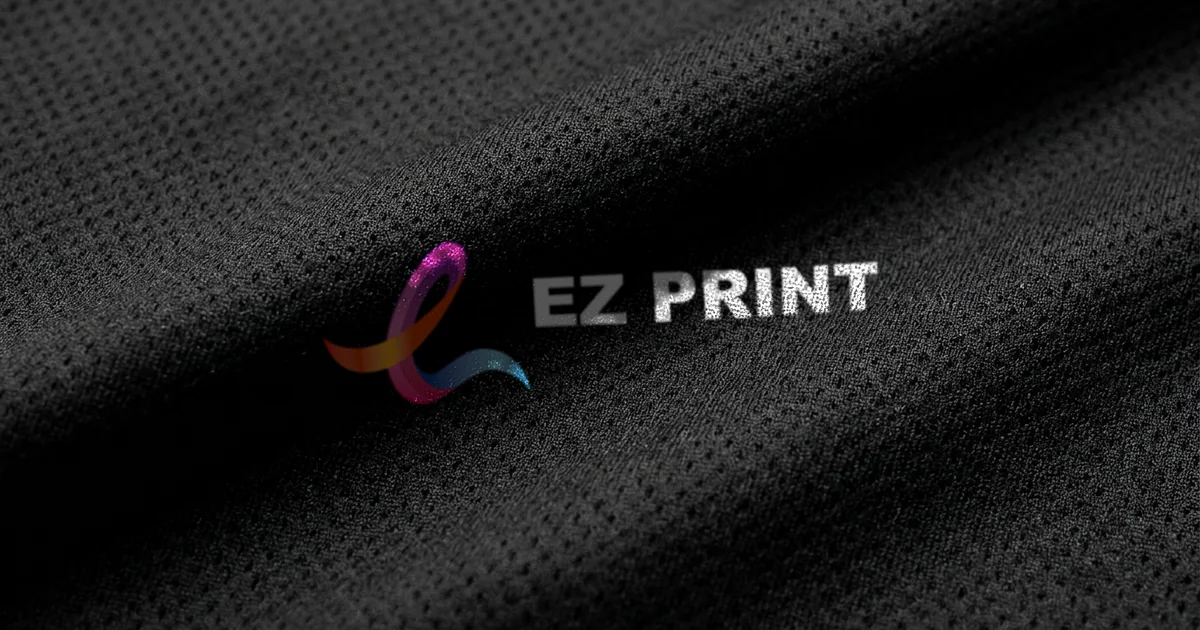
Polyester dri-fit is a synthetic knit designed to move moisture away from the skin. It is smooth, slightly slippery, and it does not absorb ink the way cotton does. Direct-to-garment does not work on it. Direct-to-film transfer bonds to the surface and is the reliable full-colour method on this fabric.
Dri-fit is chosen for what the wearer is doing rather than for how the print looks:
- Best for: sports events, outdoor staff uniforms, and anything worn in Singapore heat.
- The method: direct-to-film transfer. It prints full colour on any fabric including polyester, needs no screens and has no minimum.
- Avoid: direct-to-garment printing, and high-temperature pressing without a test.
- Why direct-to-garment fails here: the ink is formulated for cotton fibre and it will not bond to a synthetic knit.
The practical effect is that a dri-fit order has one decoration route, not several. That is not a drawback for a full-colour design, because direct-to-film handles full colour well. It does mean that a design planned for direct-to-garment on cotton has to be re-specified as a transfer if the fabric changes to dri-fit, and the change is best made before artwork is approved.
| Feature | Cotton jersey | Polyester dri-fit |
|---|---|---|
| What it is | A knitted cotton fabric with a soft hand and a visible loop structure | A synthetic knit designed to move moisture away from the skin |
| What it does with ink | Absorbs it | Does not absorb ink the way cotton does |
| Methods | Silkscreen, direct-to-garment, direct-to-film | Direct-to-film transfer |
| Not suitable | Sportswear, because cotton holds moisture | Direct-to-garment printing |
| Best for | Event shirts, staff tees, anything worn casually and washed often | Sports events, outdoor staff uniforms, anything worn in Singapore heat |
Why is the press temperature tested on dri-fit first?
On dri-fit polyester, decoration is by transfer only, and the press temperature is tested on the garment before the run. High-temperature pressing without a test is listed as something to avoid on this fabric. A single sample garment can be run before the full order, so the transfer is checked on the actual shirt.
The test is a step in the order rather than an extra. Direct-to-film has a minimum of one, so the same transfer that will run on the full order can be pressed onto one garment of the fabric and colour chosen. That sample answers the questions a screen proof cannot: how the print sits on that particular knit, and how the colours read on that particular garment colour.
Two points make the sample more useful:
- Use the real garment. The sample is only useful if it is the garment being ordered, in the colour being ordered.
- Say if the shirt is dark. On any dark garment a white layer is printed first, because ink on cloth is translucent. The underbase is generated from your artwork, so it does not need to be drawn, but the sample should be on the dark garment so that the result is checked as it will be worn.
What should an event shirt brief say about the fabric?
An event shirt brief names the fabric, the garment colour, the conditions the shirt is worn in, the artwork type and the print positions with sizes. With those stated, the method follows: direct-to-film on dri-fit, and silkscreen, direct-to-garment or direct-to-film on cotton, then a sample before the full run.
Work through these before asking for a quote:
- Where it is worn. Indoors and casually, cotton suits. Outdoors in Singapore heat or for a sports event, dri-fit suits.
- The fabric, in words. “Cotton t-shirt” or “dri-fit polyester”. Not “event shirt”.
- The artwork. One or two flat colours on cotton point to silkscreen; full colour points to direct-to-film on either fabric, or direct-to-garment on cotton.
- Print positions and sizes. Left chest about 90 mm wide; front and back up to about 280 × 380 mm. Each additional position is a separate pass.
- Garment colour. A dark garment takes a white underbase, whatever the method.
- Quantity and minimums. One for direct-to-garment and direct-to-film; 20 for silkscreen.
- Timing. Standard turnaround is 7–14 working days, including sourcing the garments in the sizes ordered. Express is quoted per job. Same-day and urgent printing available. Subject to artwork approval, payment, print type and production availability. Timing confirmed per job.
Worked example: Choosing the fabric for an outdoor community run
Hypothetical illustration. Figures are assumptions for explanation, not a real transaction or advice. An organiser is planning shirts for an outdoor community run in Singapore, plus a smaller set of shirts for volunteers working indoors at the registration desk. The design is full colour with a gradient. Choosing the fabric for each group first settles the method for each.
- Step 1: Runners. Outdoors, active and in the heat, so the runners’ shirts are dri-fit polyester, which is designed to move moisture away from the skin.
- Step 2: Method for dri-fit. Direct-to-garment does not work on polyester, so the full-colour design is printed by direct-to-film transfer.
- Step 3: Volunteers. Indoors and worn casually, so the volunteers’ shirts are cotton, and the same full-colour design is printed by direct-to-garment for a soft hand-feel.
- Step 4: Positions. Both groups carry the design on the front, inside the front maximum of up to about 280 × 380 mm.
- Step 5: Test. One dri-fit sample is pressed first, because on this fabric the press temperature is tested on the garment before the run.
- Step 6: Run. With the sample approved, both groups run inside the standard turnaround of 7–14 working days.
How can EZ Print help with a cotton or dri-fit order?
EZ Print produces custom apparel in Singapore and has done since 2017. Garments are cotton and cotton-blend t-shirts, dri-fit polyester polos and woven corporate shirts, decorated by silkscreen, direct-to-film, direct-to-garment or embroidery, and sourced in the sizes and colours ordered before anything is printed.
The custom apparel printing service sets out each fabric, method, print size and minimum. Send the garment, the fabric, the colour and the size breakdown with your artwork through request a quote, and the method is recommended against the fabric and the artwork rather than the quantity alone.
Frequently asked questions about cotton and dri-fit t-shirt printing in Singapore
Can direct-to-garment printing be used on dri-fit polyester?
No. Direct-to-garment ink is formulated for cotton fibre and will not bond to a synthetic knit. On dri-fit polyester, direct-to-film transfer bonds to the surface and is the reliable full-colour method.
Is cotton or dri-fit better for an outdoor event in Singapore?
Dri-fit polyester is designed to move moisture away from the skin and suits sports events, outdoor staff uniforms and anything worn in Singapore heat. Cotton holds moisture, so it suits shirts worn casually and washed often.
Can a cotton t-shirt be printed in full colour?
Yes. Direct-to-garment prints full colour into cotton fibre with the softest hand-feel, and direct-to-film transfer prints full colour on any fabric. Silkscreen suits one or two flat colours on cotton.
Why is the press temperature tested on dri-fit before the run?
Dri-fit is decorated by transfer only, and the press temperature is tested on the garment before the run. High-temperature pressing without a test is listed as something to avoid on this fabric.
What is the minimum order for printed cotton or dri-fit shirts?
One for direct-to-garment and direct-to-film, so a single dri-fit or cotton sample can be made. Silkscreen has a minimum of 20, because each colour needs a screen made first.
Same-day and urgent printing available. Subject to artwork approval, payment, print type and production availability. Timing confirmed per job.