
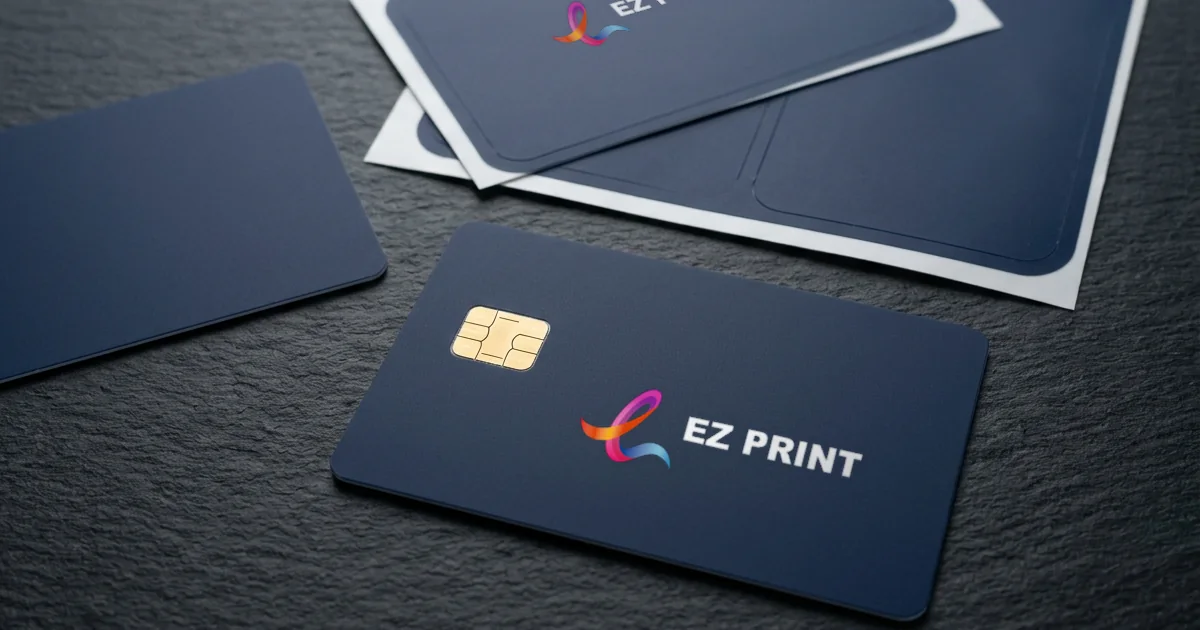
Commuter transit cards, campus access passes, and stored-value membership cards across Singapore all share the international ID-1 CR80 plastic card footprint. Ordering custom vinyl stickers and sticker sheets as removable card skins lets brands, event organisers, and clubs customise existing cards without replacing the underlying credential or interfering with contactless tap readers.
What are the exact dimensions of a CR80 transit or access card skin sticker?
A standard ID-1 CR80 plastic card measures 85.60 by 53.98 mm with rounded corners set to a 3.18 mm radius. For a hand-applied card skin sticker, the kiss-cut dieline is typically inset by 0.3 to 0.5 mm per edge—around 85.0 by 53.4 mm—so the vinyl edge sits inside the plastic card bevel and resists peeling inside a wallet.
Designing a skin to the exact outer millimetre of the plastic card is the most common cause of premature corner lift. When a recipient applies a sticker by hand, even a tiny horizontal shift pushes one edge of an exact-size sticker beyond the card boundary, where pocket friction catches the exposed adhesive. Setting a slight perimeter inset gives the person applying the sticker a practical alignment margin while keeping the full graphic framed cleanly on the card face.
| Specification Element | Standard Plastic Card Body | Recommended Card Skin Cut Line | Artwork With Bleed |
|---|---|---|---|
| Width × Height | 85.60 × 53.98 mm | 85.00 × 53.40 mm (inset fit) or 85.60 × 53.98 mm (flush) | 91.60 × 59.98 mm (3 mm bleed per side) |
| Corner Radius | 3.18 mm | 3.00 to 3.18 mm | Bleed extends past rounded corners |
| Safe Text Margin | Not applicable | At least 3.0 mm inside the cut line | Keep logos and fine type inside safe zone |
| Smart-Chip Window | 11.5 × 9.0 mm (only on contact-chip bank cards) | Optional die-cut window or full-face for contactless cards | 1.5 mm ink clearance around chip window |
Does a vinyl card skin block NFC or RFID contactless tap readers?
Standard non-metallic polymeric or cast PVC vinyl films paired with a matt or gloss overlaminate do not block high-frequency RFID or NFC contactless signals used by Singapore transit gates and office door readers. Avoid real aluminium-foil or heavy metallised substrates over the internal antenna loop, as conductive metal layers attenuate radio-frequency fields during a tap.
Contactless transit and office access cards operate by inductive coupling between the reader pad and a coiled copper antenna laminated inside the PVC card body. Because ink, polymeric vinyl, and clear polypropylene or PVC overlaminates are non-conductive dielectrics, they add negligible distance between the card and the reader pad. Full-face skins therefore tap normally through wallets and cardholders, provided the card is only used on tap pads and does not need to be fed into a motorised mechanical slot reader with tight thickness rollers.
If the skin is intended for a dual-interface card that is occasionally inserted into a physical contact-chip terminal, the dieline must include a die-cut rectangular window over the metallic contact pad, and the back of the card over any magnetic stripe must remain uncovered.
Which vinyl adhesive and lamination finish suit a wallet card skin?
Specify a thin polymeric or cast self-adhesive vinyl with a removable low-tack acrylic adhesive and a protective cold overlaminate. The removable adhesive anchors firmly to smooth PVC card stock without leaving sticky residue when peeled off later, while the overlaminate shields the CMYK print from thumb abrasion, wallet leather dye transfer, and tropical humidity.
Paper-based sticker stocks such as mirrokote or uncoated woodfree paper should never be used on a transit or access card that lives in a pocket: paper scuffing, moisture absorption, and fibre tearing make removal messy once the campaign ends. Explore our CR80 card skin sticker print idea and materials library to compare film constructions before finalising your brief.
| Finish & Format Option | Surface Behaviour | Best Application |
|---|---|---|
| Matt Overlaminate on Vinyl | Low-glare, smooth satin touch that hides fingerprints and overhead lighting reflections | Commuter giveaways, QR-coded event skins, and minimalist corporate branding |
| Gloss Overlaminate on Vinyl | High-contrast surface that deepens dark blacks and saturated illustration colours | Illustrated character skins, retail loyalty editions, and vibrant campaign graphics |
| Individual Kiss-Cut Singles | Trimmed square or rectangular backing liner around a rounded-corner peelable skin | Event registration handouts, mailers, and individual retail pack inserts |
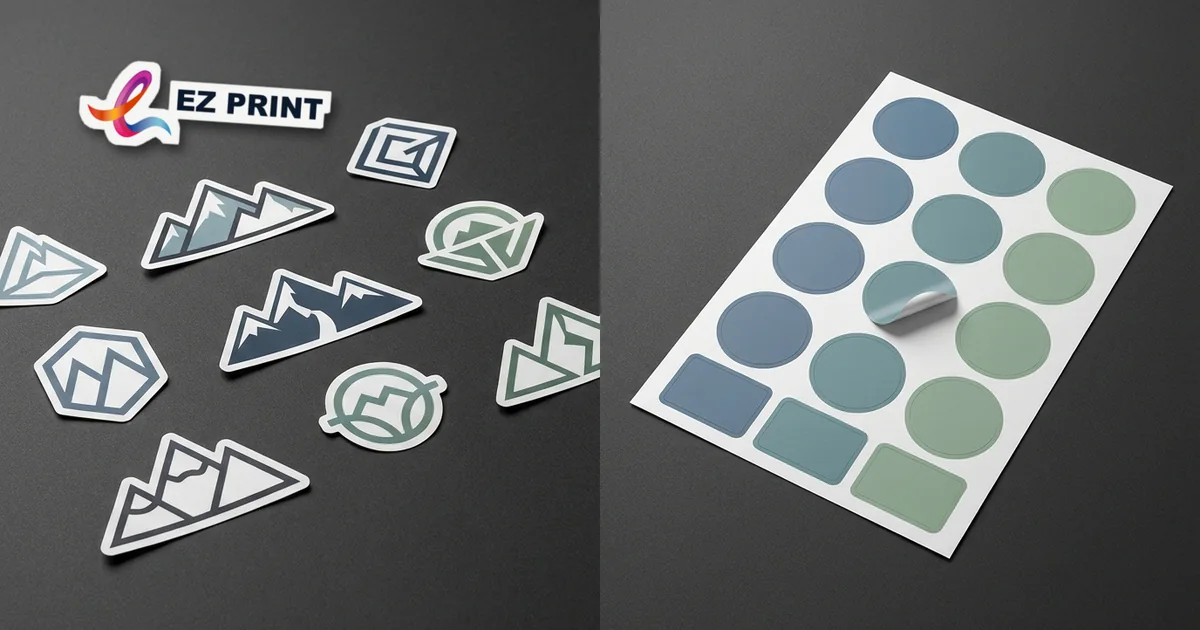
| Multi-Skin Collector Sheet | Multiple CR80 skins kiss-cut onto a single A5 or A4 printed backing sheet | Merchandising packs, multi-tier member kits, and commemorative sets |
How should you prepare dieline artwork for CR80 card skin printing?
Supply a print-ready PDF at 1:1 scale in CMYK colour mode with at least 300 DPI resolution for raster imagery, a 3 mm bleed outside the cut contour, and the rounded-corner dieline on a separate spot-colour vector layer set to overprint. Keep all critical text and border frames at least 3 mm inside the cut path.
Avoid placing a thin, high-contrast hairline border right beside the rounded cut edge. Even tiny mechanical tolerances during kiss-cutting make a 1 mm perimeter frame look slightly thicker on one side than the other; a full-bleed background that runs cleanly off the rounded corners always looks sharper in the hand. Standard production turnaround is 7–14 working days, and Same-day and urgent printing available. Subject to artwork approval, payment, print type and production availability. Timing confirmed per job. When your file is ready, submit your quantity and finish on our request a quote page.
Frequently asked questions
Are transit card stickers printed directly onto new transit cards or supplied as peel-and-stick skins?
Card skin printing produces custom self-adhesive vinyl overlays that recipients peel from a backing liner and apply onto their own existing transit or access cards. If you require rigid printed plastic cards for internal membership or loyalty programmes without stored-value transit chips, specify rigid PVC card printing separately.
Should I order full-face card skins or skins with a chip cutout?
For pure contactless transit cards and office proximity access cards that are only tapped against a reader pad and have no exposed gold contact pad on the front face, order a full-face CR80 skin with no cutout. Only specify a chip window when the sticker is meant for cards with an exposed metallic contact chip.
Will a removable vinyl card skin leave glue residue when peeled off?
Removable acrylic adhesive on polymeric or cast PVC film is formulated to peel away cleanly in one piece from smooth rigid plastic surfaces without leaving tacky residue, unlike permanent paper label adhesives that shred upon removal.
Can multiple card skin designs be combined in a single print run?
Yes. Because digital print and contour kiss-cutting read registration marks per sheet, you can gang several artwork designs across a single run—either as individual kiss-cut singles sorted by design or as a multi-design collector sheet on an A5 or A4 carrier.
Same-day and urgent printing available. Subject to artwork approval, payment, print type and production availability. Timing confirmed per job.