
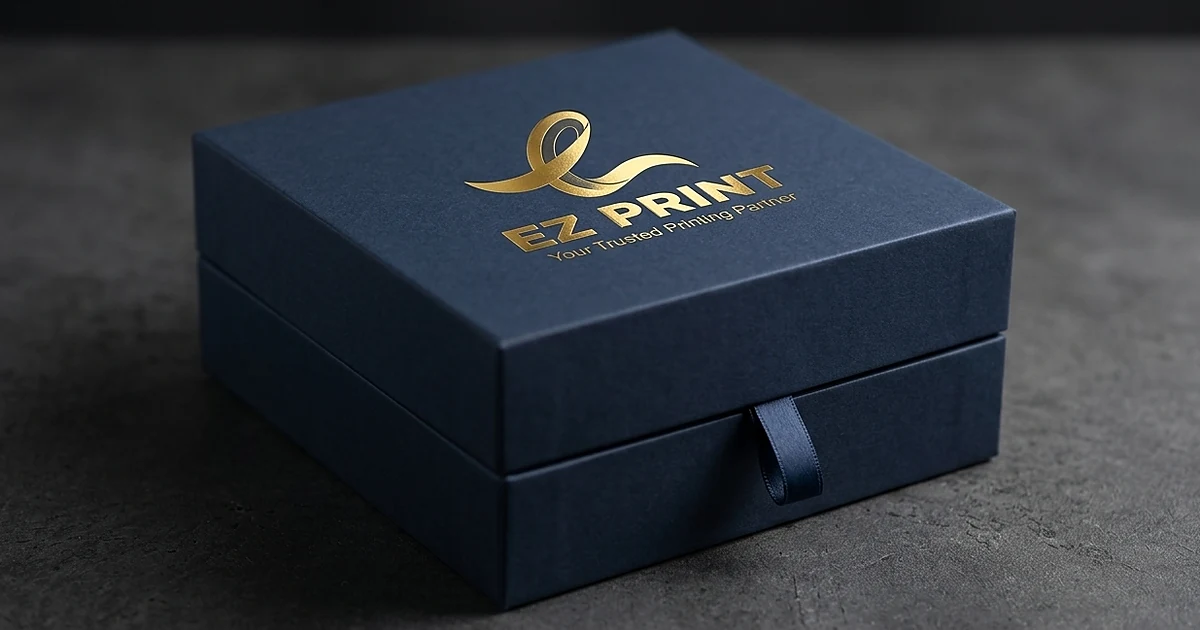
Food, bakery, café and beverage brands in Singapore rely on structural print to brand takeaway containers, retail cartons, pouches and hot cups without re-tooling every container from scratch. EZ Print produces custom packaging boxes and sleeves across 300–400 gsm folding boxboard, 310 gsm art card and foil card moulds, 350 gsm kraft board, 50–297 mm belly-band sleeves, and 262 × 50 mm coffee cup sleeves. Matching each piece to whether it touches food directly or wraps an inner container keeps the specification practical and accurate.
How do food-contact rules shape F&B box and sleeve printing?
Food-contact packaging has specific requirements regarding the board and coatings used, determined by the food product itself rather than by the outer print. In commercial F&B packaging, brands either state the exact contents on the enquiry so the board is specified accordingly, or place printed outer cartons, sleeves and bag toppers over a sealed inner container.
Separating structural branding from the primary food barrier gives F&B operators three reliable packaging routes:
- Outer folding cartons and gift boxes: tea tins, bottled sauces, wrapped pastries, mooncake sets and confectionery packs sit inside a sealed pouch, jar or tray, while the outer 300–400 gsm folding boxboard carton or 310 gsm art card box carries full-colour CMYK print, matt lamination, Spot UV or hot foil.
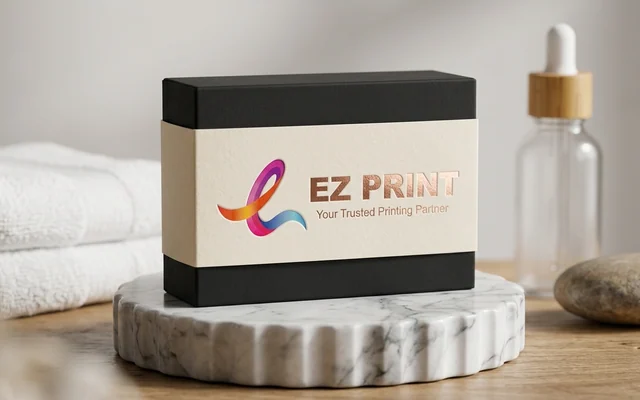
- Wrap-around belly bands and packaging sleeves: a printed band from 50 to 297 mm wide slides around an unprinted bento tray, takeaway tub, bakery box or rigid gift box, turning a stock food container into branded retail packaging with a single flat print run.
- Inner wraps vs outer structure: light printed wrapping paper carries no structural load and ink can show through on the reverse of a thin uncoated sheet, so printed wraps and tissue liners are used on the outside of sealed items or with repeating patterns.
What are the specifications for food boxes, cartons and kraft board?
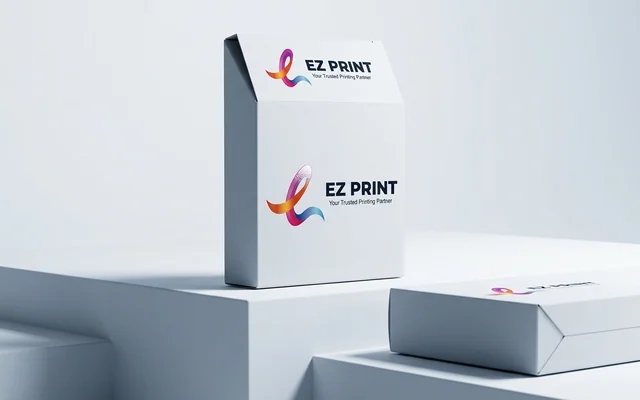
Custom folding cartons are printed flat on 300–400 gsm folding boxboard or 350 gsm unbleached brown kraft board, die-cut to a vector net, creased and glued from a minimum run of 100 boxes. Five held box moulds (GB 01 to GB 05) also run on 310 gsm art card or 310 gsm foil card from 100 to 3,000 pieces.
When specifying a custom product box, always supply internal dimensions (L × W × H in millimetres) together with the product weight, because board thickness sits on the inside of the fold:
| Packaging Format | Board & Material Options | Finishes & Structural Notes | Typical F&B Use |
|---|---|---|---|
| Custom folding carton | 300–400 gsm folding boxboard (350 gsm matt or gloss art card) | Straight or reverse tuck-end, crash-lock base, window patching; min run 100 | Packaged dry goods, tea, coffee, bottled condiments, retail bakery |
| Held-mould box (GB 01–GB 05) | 310 gsm art card or 310 gsm foil card | 2-side matt lam (with or without 1-side Spot UV) on art card; 1-side gloss lam or sandblast + Spot UV on foil card (100–3,000 pcs) | Seasonal gift sets, confectionery packs, corporate F&B hampers |
| Brown kraft carton | 350 gsm unbleached brown kraft board | Brown throughout; best with 1–2 spot colours, 100% K WHITE underprint layer or hot foil (CMYK alone goes muddy on brown) |
Artisanal bakery, organic snacks, eco-positioned takeaway packs |
| Corrugated mailer | E-flute single-wall corrugated board | Crash-lock or tuck construction printed on outer liner; min 8 pt type | Subscription food boxes, multi-jar delivery kits |
Avoid specifying gloss lamination on a food carton that staff or customers will handle with wet or chilled hands: gloss film becomes slippery when damp and shows every fingerprint. Specify matt lamination instead, and always leave the glue flap unlaminated and unvarnished so adhesive bonds to the board fibre.
How do packaging sleeves, cup sleeves and bag toppers work for takeaway F&B?
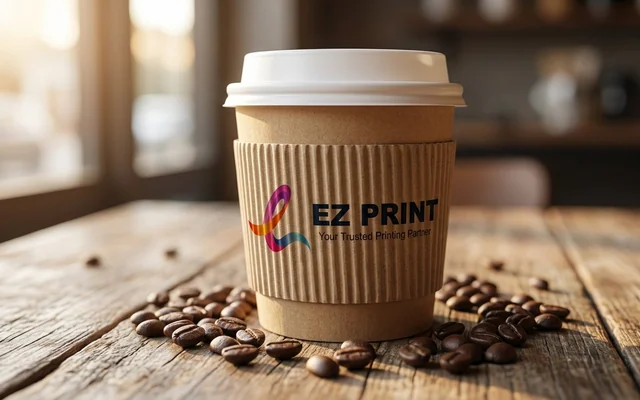
For takeaway trays, pouches and hot cups, three flat-printed items brand the container without custom box tooling: packaging sleeves (50–297 mm wide on 310 gsm art card or 128 gsm art paper), coffee cup sleeves (262 × 50 mm on 310 gsm two-side matt-laminated art card), and folded bag toppers (50–297 mm wide with optional hanging hole).
Each of these three items has exact mechanical tolerances in production:
- Packaging sleeves & belly bands (
50–297 mmwidth): printed on 310 gsm art card (unlaminated, gloss OPP or matt OPP) or 128 gsm art paper, with optional custom-shape die-cutting. Sleeves arrive flat without pre-scored fold lines and without double-sided tape so you can wrap them snugly around the filled food tray or box. Include at least 3 mm bleed (10 mm on large-format sheets) and avoid narrow perimeter borders because cutting requires about 3 mm of tolerance. - Coffee cup sleeves (
262 × 50 mm): printed full colour on one side (4C + 0C) on 310 gsm art card with two-side matt lamination in runs from 300 to 15,000 sleeves. Always check the 262 × 50 mm band against your physical cup before ordering a full run. - Bag toppers & header cards (
50–297 mmwidth): folded over the top of clear polybags for cookies, coffee beans, dried snacks or spices, with an optional punched hanging hole for retail hooks. Specify both the flat open card size and the width and height after folding.
Which labels and table mats suit chilled drinks, jars and dining trays?
Chilled beverage bottles, takeaway tubs and refrigerated jars require a laminated vinyl or synthetic label face rather than paper, because paper absorbs condensation at the cut edge and lifts within days. For dine-in trays and tables, menu placemats are printed in full colour on uncoated 80 gsm woodfree paper in A4 or A3 (420 mm width).
Complete the F&B pack by matching the adhesive label or table sheet to the temperature and moisture exposure:
- Waterproof and refrigerated bottle/jar labels: specify white vinyl, clear vinyl (with a 100% K
WHITEvector underbase behind opaque colours) or synthetic stock with matt or gloss lamination, supplied kiss-cut on A4/A3 sheets or wound on 40 mm or 76 mm roll cores. Keep die-cut labels at 15 × 15 mm minimum with a 2 mm internal corner radius, 2 mm bleed and 3 mm safe margin. - Disposable dining tray and table mats: printed on 80 gsm woodfree paper in A4 or A3 (420 mm width) or custom dimensions, with 10 mm perimeter bleed at 150–300 DPI in CMYK. Avoid tight perimeter borders on placemats so normal guillotine tolerance never looks uneven.
Worked example: launching a bakery & café takeaway packaging set
A Singapore bakery-café launching a retail pastry and cold-brew line needs 1,000 takeaway pastry box sleeves, 3,000 hot coffee cup sleeves, and 500 gift boxes. Combining a 50–297 mm matt-laminated 310 gsm sleeve, the standard 262 × 50 mm cup sleeve and a GB 01 held-mould 310 gsm box keeps tooling costs down across all three SKUs.
Hypothetical planning example. Actual production timing, paper availability, and logistics are confirmed individually upon artwork and specification review.
The café team structures its specification brief:
- Pastry box belly bands: 1,000 packaging sleeves at 120 mm width on 310 gsm art card with matt OPP lamination, supplied flat with 3 mm bleed and no perimeter border.
- Hot beverage sleeves: 3,000 coffee cup sleeves at 262 × 50 mm on 310 gsm art card with two-side matt lamination, printed 4C + 0C.
- Retail gift boxes: 500 boxes using held mould GB 01 on 310 gsm art card with two-side matt lamination and one-side Spot UV on the bakery crest.
- Turnaround: produced within the standard 7–14 working day window with island-wide courier delivery.
Frequently asked questions
How are food-contact considerations handled when printing custom food boxes?
Food-contact packaging has requirements about the board and coatings used, which are set by the product rather than the print. State the food contents on your enquiry so the board or outer sleeve is specified against that requirement, or pair an outer printed carton or belly band over a sealed inner food container.
What sizes and materials are used for packaging sleeves and food tray belly bands?
Packaging sleeves and belly bands run from 50 mm to 297 mm wide on 310 gsm art card (unlaminated, gloss OPP or matt OPP laminated) or 128 gsm art paper, with optional custom-shape die-cutting. They are supplied flat without fold lines or double-sided tape.
What is the standard specification for printed coffee cup sleeves?
Standard coffee cup sleeves measure 262 × 50 mm and are printed in full colour on one side (4C + 0C) on 310 gsm art card with two-side matt lamination, quoted in batch runs from 300 up to 15,000 pieces.
Should F&B cartons and takeaway sleeves use matt or gloss lamination?
Matt lamination is generally preferred on F&B cartons and cup sleeves handled with damp or chilled hands because gloss lamination becomes slippery when wet and shows fingerprints under retail lighting.
What labels survive chilled, freezer or wet beverage bottles?
Choose a vinyl or synthetic label face with lamination rather than paper. Paper labels absorb moisture at the cut edge and curl in refrigerators within days, whereas laminated vinyl or synthetic labels resist condensation and handling.
How do you quote food boxes, sleeves and F&B packaging with EZ Print?
EZ Print has produced custom boxes, packaging sleeves, cup sleeves and waterproof F&B labels in Singapore since 2017. Send your internal box dimensions (L × W × H in mm) or sleeve width (50–297 mm), board choice, finish, quantity and delivery date. Standard turnaround is generally 7–14 working days with island-wide courier delivery.
When your packaging dimensions are ready, request a quote to get a written specification and dieline check.
Same-day and urgent printing available. Subject to artwork approval, payment, print type and production availability. Timing confirmed per job.