
At a glance · Singapore Corporate Name Card Printing
EZ Print provides urgent corporate business card (name card) printing in Singapore’s Central Business District for executives, trade delegates, and networking summits. Standard turnaround is 7–14 working days. Express is quoted per job. Same-day and urgent printing available. Subject to artwork approval, payment, print type and production availability. Timing confirmed per job. Collection is at Centennial Tower by arrangement, or via direct CBD courier.
In Singapore’s financial and commercial core—spanning Marina Bay Financial Centre, Raffles Place, Shenton Way, and the Suntec convention corridor—the physical business card remains an indispensable instrument of professional protocol. Despite widespread digital networking tools, exchanging a tangible, heavyweight corporate name card during high-level meetings, bilateral trade summits, or private investor briefings conveys organizational pedigree, institutional permanence, and mutual respect.
Yet, high-stakes corporate card emergencies occur regularly:
- An overseas executive lands at Changi Airport for a morning summit at the Sands Expo only to discover their luggage containing their name cards was misrouted.
- A private equity firm finalizes a partner promotion or board appointment late in the evening and requires updated credentials before an early morning client pitch.
- A regional trade delegation runs out of printed collateral midway through a multi-day international convention at Suntec Singapore.
When an executive requires business cards on urgent timelines, navigating Singapore’s commercial printing landscape demands an understanding of card stocks, finishing and pre-press standards. This guide provides a technical briefing on procuring urgent name cards in Singapore’s CBD without compromising corporate brand guidelines.
1. The Express Print Framework: What Sets an Urgent Date
Print buyers under time pressure often assume that any product displayed in a commercial catalogue can be expedited on demand. In practice, the finishing — not the quantity — is what sets the date.
How Express Name Cards Are Quoted
Express product limits are not published. Express is quoted per job: send the specification and the date the cards are needed, and urgent availability is confirmed against that specification in the quotation.
Fifty cards and five thousand go through the same passes; a foil block, an embossing die, a spot UV screen or a painted edge is what adds one. A reorder skips the slowest part of a first run, because the tooling and the approved file are kept on record.
Why Specialty Finishes Add Time
Clients frequently ask whether urgent business cards can include luxury embellishments such as Hot Foil Stamping, Spot UV, Blind Embossing / Debossing, or Painted Edges.
Each of these needs tooling or a separate pass, so ask about them with the specification rather than assuming they fit a tight date:
- Hot Foil Stamping: A brass foil block has to be cut before anything can be foiled. The first foil run waits for the block; every run after it skips that wait.
- Spot UV: Needs a spot UV screen, with the spot UV artwork supplied on its own vector layer. Matt lamination is the better ground for it. Spot UV over soft-touch lamination is not reliable, because the varnish will not key to the film without a tie-coat.
- Embossing / Debossing: Needs an embossing die. A heavy solid on the reverse can ghost through as a visible dent, so keep the back light.
- Painted Edges: Adds its own pass. Paint wicks into uncoated fibrous stock and the line goes fuzzy, so painted edges are for coated or bonded duplex stock only.
Standard turnaround is 7–14 working days whether the card is plain or carries foil, embossing, letterpress or a painted edge. When the date is tight, a dependable choice is a 310gsm matt art card with matt lamination. Matt art card is the default stock for corporate cards and anything with fine type, and matt lamination kills reflection. The schedule is confirmed per job.
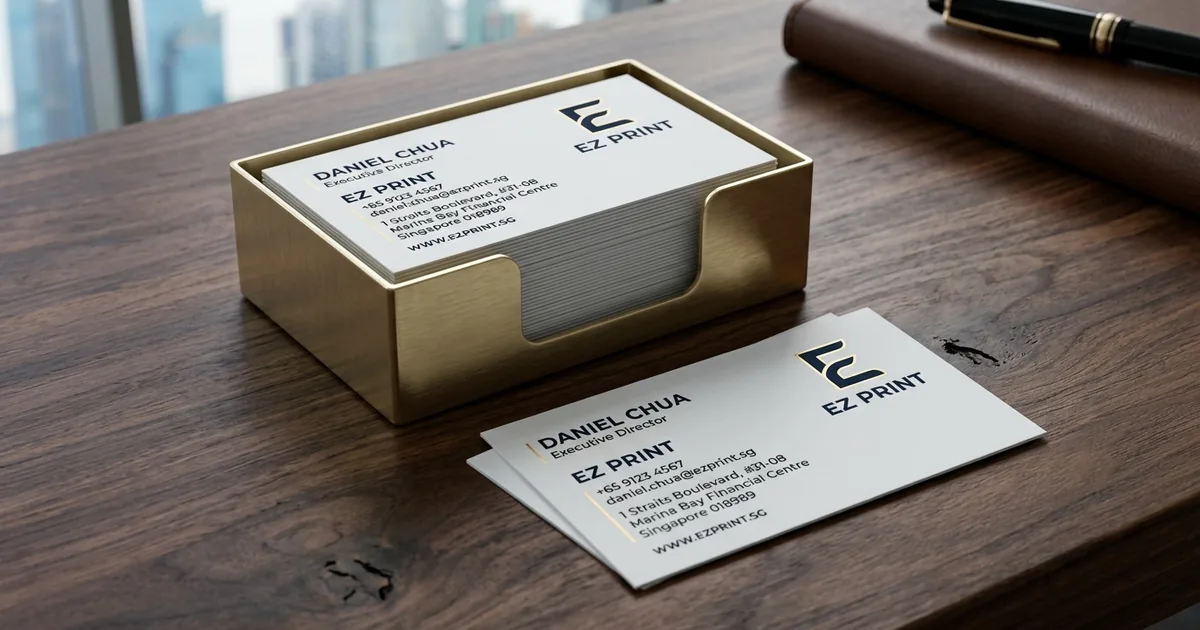
Figure 1: Executive 310gsm art cards with matte lamination, trimmed to 90 × 54 mm.
2. Express Name Card Substrates: Weight, Texture & Handfeel
The tactile weight and surface texture of a business card communicate brand positioning before a single word is read. The stocks below are held for name cards:
Substrate Comparison Matrix
| Substrate Option | Weight | Surface Texture | Tactile Experience | Best Corporate Application |
|---|---|---|---|---|
| 310gsm Matt Art Card (Matte Lamination) | 310 gsm (also held at 350 and 400 gsm) | Velvet, non-reflective | Smooth, substantial, no glare | Banking, private equity, management consultancy, legal |
| 310gsm Gloss Art Card (Gloss Lamination) | 310 gsm (also held at 260 and 350 gsm) | High-shine, polished | Saturated colors, reflective | Creative agencies, hospitality, luxury retail, media |
| 300gsm Uncoated Woodfree | 300 gsm (also held at 350 and 400 gsm) | Natural, fibrous tooth | Warm, organic, takes a pen | Architecture, sustainability firms, bespoke advisory |
| Textured Papers | Within the 260–600 gsm name card range | Woven or laid surface | Classic heritage, tactile | Traditional law firms, family offices, diplomatic corps |
The Value of Matte Lamination
For 310gsm art card, lamination is not merely an aesthetic choice; it serves practical functions:
- Scuff Protection: Matt and gloss lamination are both thin films bonded to the printed sheet, and both stop a card scuffing in a wallet.
- Humidity and Curl: In Singapore humidity, single-sided lamination is the usual reason name cards curl. Film on one face and bare stock on the other take up moisture at different rates, and the card bends towards the unlaminated side. Laminate both sides, or laminate neither.
- Diffused Light Reading: Under office lighting or convention hall spotlights, glare from a gloss card eats the legibility of dense small type. Matte lamination kills reflection, so executive names and contact details remain readable.
Lamination is a separate pass over every printed sheet, which is why it is specified rather than assumed.
3. Dimensional Standards: Singapore (90 × 54 mm) vs. International Formats
A frequent error made by multinational corporations and visiting delegates is designing cards to foreign regional dimensions. Other sizes are possible, but every deliberate choice has a consequence — in the holder, on the sheet, or on the calendar — so adopting the standard regional size ensures seamless protocol:
[ Outer Bleed Canvas: 96 × 60 mm ]
┌────────────────────────────────────────────────────────┐
│  3mm Bleed Allowance (Color extends here)              │
│  ┌──────────────────────────────────────────────────┐  │
│  │  Actual Finished Trim Line: 90 × 54 mm           │  │
│  │  ┌────────────────────────────────────────────┐  │  │
│  │  │  Safe Area: 4 mm in from the trim          │  │  │
│  │  │  (All text, titles & logos stay inside)    │  │  │
│  │  └────────────────────────────────────────────┘  │  │
│  └──────────────────────────────────────────────────┘  │
└────────────────────────────────────────────────────────┘
Regional Size Breakdown
- Singapore and Regional Standard (90 × 54 mm):
- Dimensions: 90 mm wide by 54 mm high.
- Why It Matters: It fits every card holder sold in Singapore, so it sits correctly in the holders, desk trays and wallets your counterparts already carry.
- European Standard (85 × 55 mm):
- Dimensions: 85 mm wide by 55 mm high.
- Region: United Kingdom, Germany, France, Switzerland, and Italy.
- Handling: Marginally shorter and taller than the Singapore card. Choose it if a parent company brand manual specifies it, not otherwise.
- North American Standard (89 × 51 mm):
- Dimensions: 89 mm wide by 51 mm high.
- Region: United States, Canada, and multinational US financial institutions.
- Handling: Noticeably slimmer than the Singapore card. Common on cards for firms headquartered in the United States.
- Square and Mini Formats (55 × 55 mm and 85 × 27 mm):
- Square: Distinctive, and it does not fit standard holders, so tell recipients it is deliberate.
- Mini: Half height. Works for a name and a QR code, and very little else.
Recommendation for Singapore Summits: Unless your corporate branding strictly mandates US or European dimensions, always format artwork to 90 × 54 mm for events in Singapore.
4. Pre-Press Anatomy: Bleed, Trim & Safe Zones
Precision is paramount in business card printing. On a card that measures only 90 × 54 mm, a small shift at the cutting stage is easy to see.
The 3-Tier Boundary Architecture
- The Outer Bleed Boundary (96 × 60 mm):
- Measurement: Exactly 3 mm of additional graphic image extending beyond the cut line on all four sides.
- Function: Cutting is never perfectly exact. If your artwork ends precisely at the 90 × 54 mm cut line and the cut drifts slightly, an unsightly white paper sliver will appear along one edge.
- Rule: All full-bleed background colors, corporate color bars, and photographic textures must extend to 96 × 60 mm.
- The Actual Trim Line (90 × 54 mm):
- Measurement: The physical line where the card is cut.
- Rule: Never place a decorative border on or close to this line. Minor cutting drift will cause the border to appear visibly off-center. For the same reason, keep foil or spot UV at least 3 mm from the trim: registration tolerance on a 90 × 54 mm card is roughly half a millimetre, so anything closer looks cut off on some cards and not others.
- The Inner Safe Area (4 mm in from the trim):
- Measurement: A safe margin positioned 4 mm in from the trim on all four sides.
- Rule: Keep all text elements, job titles, mobile numbers, email addresses, corporate logos, and QR codes out of this margin, inside the safe area. Any element placed in the margin risks being clipped during trimming.
5. Color Science: Rich Black vs. 100% K for Fine Typography
A common defect in rushed business card production is blurry or fuzzy corporate typography caused by incorrect color channel assignments.
The Problem of 4-Color “Rich Black” on Small Text
In desktop publishing software (such as Adobe InDesign, Illustrator, or Canva), selecting default black often generates a “Rich Black” composed of all four CMYK channels.
While Rich Black produces deep, lustrous tones on large background patches, applying it to 7 pt executive body text creates print issues:
- The press must register four separate colours on very fine letter strokes.
- Four-colour black on 7 pt type fringes if registration moves half a millimetre, producing noticeable color fringing (cyan or magenta halos ringing the text) that makes small typography appear blurry and unprofessional.
The Professional Pre-Press Solution
- Small Text & Thin Line Work: Set color strictly to K100 only: $$\text{Body Text Black} = 0%\text{ Cyan} + 0%\text{ Magenta} + 0%\text{ Yellow} + 100%\text{ Black}$$ This ensures that only one colour images the typography, so there is no colour registration to shift.
- Large Dark Background Solids: Large blacks need a support build rather than K100 on its own. Use Rich Black for large solids: $$\text{Rich Black} = 60%\text{ Cyan} + 40%\text{ Magenta} + 40%\text{ Yellow} + 100%\text{ Black} \quad (\text{Total Ink: } 240%)$$
- Reverse Type: White type knocked out of a dark background needs to be 6 pt minimum on coated stock, and 7 pt on uncoated or textured stock.
6. Vector Curves & QR Code Preflight
Executive name cards frequently incorporate corporate brand crests, bilingual typography (such as Chinese characters alongside English names), and digital vCard QR codes.
Mandatory Vector Outlining (Curves)
When exporting artwork, corporate font files are not automatically embedded unless specific PDF/X parameters are met. If an exotic or proprietary corporate typeface is missing when the file is processed, a system fallback font (such as Arial or Times New Roman) can be substituted. This destroys line breaks, causes text to overlap logos, and ruins brand compliance. Outlined fonts, or fully embedded ones, avoid this; outlined is safer if you are unsure.
The Universal Pre-Press Fix:
- Adobe Illustrator: Select all (
Ctrl+A/Cmd+A), then pressCtrl+Shift+O(Cmd+Shift+Oon macOS) to execute Create Outlines. - Adobe InDesign: Select all text frames, navigate to
Type$\rightarrow$Create Outlines. - Canva / Web Tools: When exporting, select PDF Print, check “Flatten PDF”, and verify that all typography renders as clean vector paths. Say that the file is from Canva when you send it, so the trim, the bleed and the colour build are checked properly.
QR Code Best Practices on 90 × 54 mm Cards
Digital business cards and LinkedIn vCards are increasingly embedded as QR codes. To help smartphone cameras scan the code in dim networking environments or evening cocktail receptions:
- Physical Size: Do not shrink the code to fill a leftover corner. Give it room inside the safe area, and test-scan the proof at arm’s length before approving it.
- High Contrast Ground: Always print a dark QR code against a clean white or light-tint background. Inverting a QR code (white modules on a black background) can cause decoding failures on older smartphone scanners.
- Quiet Zone Clearance: Keep the quiet zone intact: an empty margin of unprinted white space around all four sides of the QR matrix. If surrounding background lines or text touch the QR module, scanning software can fail to identify the orientation markers.
- Vector Generation: Generate the QR code as an EPS or SVG vector file rather than taking a low-resolution screen capture from a generator website.
7. Express Digital Finishing: Cutting, Corners and Edges
How business cards are laminated, cut and finished after printing directly influences edge quality.
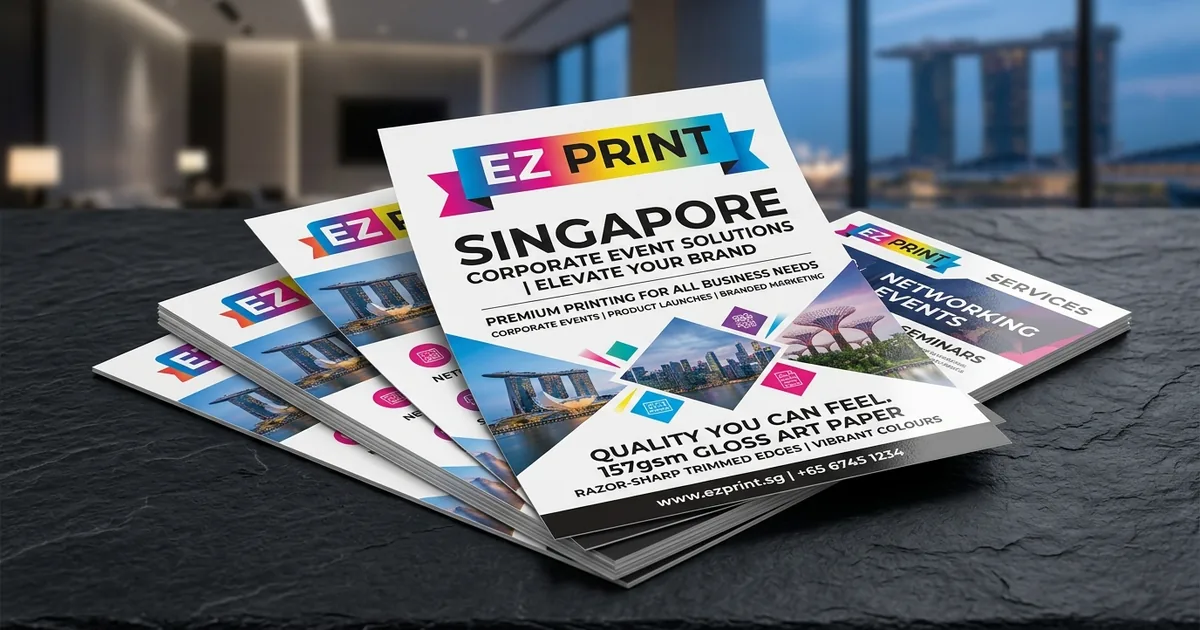
Figure 2: Printed sheets are laminated, cut and finished after printing, and each finishing operation is a separate pass.
What Happens After the Print
- Lamination: Matt or gloss lamination is a separate pass over every printed sheet.
- Cutting: The cut edge matters most on stocks where it shows. On kraft board the cut edge is part of the design, which is why it is worth guillotining well; on bonded duplex the coloured seam at the edge does the work, so keep the faces plain.
- Round-Cornering: Rounded corners are available, and on a standard card the corners cost nothing in time.
- Folded Cards: A 180 × 54 mm card folded to 90 × 54 mm gives four printable panels. It is creased and folded, not scored alone, and creasing is its own pass.
8. CBD Collection & Handover Logistics
Timing is the defining parameter of urgent business card production. EZ Print arranges handover directly within Singapore’s financial core:
[ Artwork Submission via Quote/WhatsApp ]
                   │
                   ▼
[ Pre-press Verification & Flight Check ]
                   │
                   ▼
        [ Print & Lamination ]
                   │
                   ▼
        [ Cutting & Packing ]
                   │
                   ▼
        ┌─────────────────────┐
        │  Handover Channel   │
        └──────────┬──────────┘
                   │
         ┌─────────┴─────────┐
         ▼                   ▼
[ Centennial Tower Hub ]   [ Direct CBD Courier ]
  · 3 Temasek Avenue         · MBFC / Marina Bay
  · Near Promenade MRT       · Raffles Place / Shenton
  · By arrangement           · Hotel Concierge Desks
Central CBD Collection Point: Centennial Tower
- Address: Centennial Tower, #21-00/01, 3 Temasek Avenue, Singapore 039190.
- Getting there: A short walk from Promenade MRT Station (Circle and Downtown Lines), and linked to Suntec City through Millenia Walk.
- Collection: Collection by arrangement — tell us when you would like to collect and we will confirm the time.
Point-to-Point Express Courier Handover
For executives confined to meetings or exhibition booths, point-to-point dispatch can be coordinated across key business nodes:
- Marina Bay Financial Centre (MBFC): Towers 1, 2, and 3, and Marina Bay Suites.
- Raffles Place Core: One Raffles Quay, Republic Plaza, Ocean Financial Centre, Singapore Land Tower, and CapitaGreen.
- Shenton Way & Tanjong Pagar: Guoco Tower, AXA Tower, and OUE Downtown.
- Convention Hotels: Direct delivery to the concierge or registration suites at The Ritz-Carlton Millenia, Conrad Centennial Singapore, Pan Pacific Singapore, Mandarin Oriental, and Marina Bay Sands Hotel.
9. How to Brief an Urgent Name Card Order
To keep pre-press checks and scheduling moving without administrative delays, send a single structured brief:
- Product: Corporate Business Cards (Name Cards).
- Finished Dimensions: 90 × 54 mm (or specify custom size).
- Paper Substrate: 310gsm Matt Art Card (Matte Lamination), 310gsm Gloss Art Card (Gloss Lamination) or 300gsm Uncoated Woodfree.
- Quantity Required: (e.g. 100 or 500 cards per name). The minimum run is 50 cards.
- Number of Unique Names: (e.g. how many executives, and how many cards each).
- Required Handover Time: Exact time and location (e.g. Collection at Centennial Tower for afternoon meeting).
- Artwork Attachment: Attach print-ready, bleed-compliant
PDF/X-4files with fonts converted to outlines.
Standard turnaround is 7–14 working days. Express is quoted per job.
Frequently asked questions
What size should a business card be in Singapore?
Format artwork to 90 × 54 mm for use in Singapore unless your corporate branding strictly requires another size. It is the Singapore and regional standard, and it fits every card holder sold here. The European standard is 85 × 55 mm, marginally shorter and taller, and the North American standard is 89 × 51 mm, noticeably slimmer. Choose another size only when a brand manual specifies it.
How much bleed does a 90 × 54 mm name card need?
Extend full-bleed background colours, colour bars and photographic textures 3 mm beyond the cut line on all four sides, so the artwork measures 96 × 60 mm. If artwork ends exactly at the 90 × 54 mm trim and the cut drifts slightly, a white paper sliver can appear along one edge. Keep text, job titles, contact details, logos and QR codes out of the 4 mm safe margin in from the trim, and never place a decorative border on the trim line.
Can urgent business cards have hot foil, spot UV or embossing?
Ask with the specification before assuming they fit a tight date. A brass foil block has to be cut before anything can be foiled, spot UV needs a screen, embossing and debossing need a die, and a painted edge adds its own pass. Standard turnaround is 7–14 working days whether the card is plain or carries these finishes, and express is quoted per job. When time is tight, this guide recommends 310gsm matt art card with matt lamination.
Should small text on a name card be rich black or 100% K?
Use K100 only for small text and thin line work. A rich black is built from all four CMYK channels, and four-colour black on 7 pt type fringes if registration moves half a millimetre, leaving cyan or magenta halos that make small type look blurry. Keep rich black, C60 M40 Y40 K100 with total ink 240%, for large dark solids.
What should I include in an urgent name card brief?
Send one structured brief: the product, a finished size of 90 × 54 mm or a custom size, paper and lamination, quantity per name, the number of unique names, and the exact handover time and location. Attach print-ready PDF/X-4 files with bleed and fonts converted to outlines. Standard turnaround is 7–14 working days, and express is quoted per job. Collection is at Centennial Tower: collection by arrangement — tell us when you would like to collect and we will confirm the time.
Immediate Corporate Assistance & Ordering
- Online Quote Builder: Submit an Urgent Name Card Brief
- Direct Express WhatsApp Desk: +65 8208 7778
- Urgent Printing Guidelines & Conditions: Review Urgent Printing Terms
- Marketing Collateral & Booklets: Flyer & Booklet Production Guide
Same-day and urgent printing available. Subject to artwork approval, payment, print type and production availability. Timing confirmed per job.
Same-day and urgent printing available. Subject to artwork approval, payment, print type and production availability. Timing confirmed per job.