
EZ Print — Your Trusted Printing PartnerUrgent & ExpressRequest a quote
A freestanding pull-up banner with printed colour graphics.

Banners

Banners, and the edge that decides whether one survives

The print is the easy half. What holds a banner up — the hem, the eyelet pitch, the pole pocket, the rope — is what decides whether it is still there after a week of weather, and it is the half most briefs leave out.

  • Standard7–14 working days
  • ExpressSame-day printing available

Banner printing in Singapore, in one paragraph

EZ Print prints banners in Singapore, and has done since 2017. Three materials cover almost every use: PVC vinyl for general outdoor work, mesh where wind has to pass through, and woven fabric for indoor banners that should not look plastic. Finished sizes are stated as width × height in millimetres, and the finished size is the size after the hem — a banner is hemmed inward, so the visible artwork is smaller than the cut material. Edge finishing is a welded or sewn hem with eyelets at a stated pitch, a pole pocket top and bottom, or rope through the hem. Resolution is set by viewing distance: 150 dpi at a metre, 72 dpi at five metres, and less than that above a building. Standard turnaround is 7–14 working days including the edge finishing; installation, where it applies, is scheduled separately. Express is quoted per job. EZ Print quotes from the specification and does not publish prices.

Products quoted on this page

Specifications, formats and enquiry details for each product quoted on this service.

8 formats
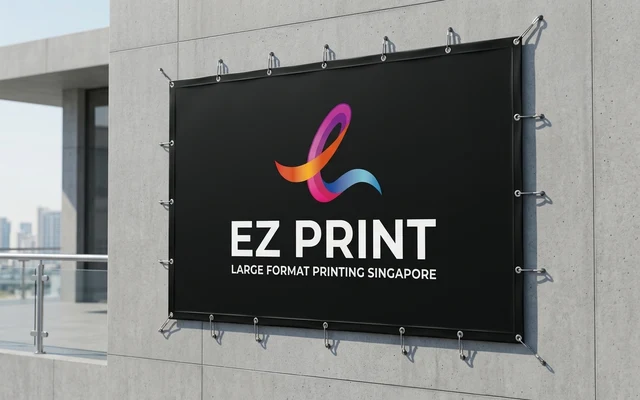
  • Weather-resistant PVC banners with reinforced hem and eyelets, with the EZ Print logo.
    Large format & signage

    PVC Banner

    A weather-resistant vinyl banner, hemmed and eyeleted to tie to a fence, rail or frame.

    Also ordered as: Vinyl Banner, Tarpaulin Banner, Outdoor Banner, Blockout Banner, Double-Sided Banner

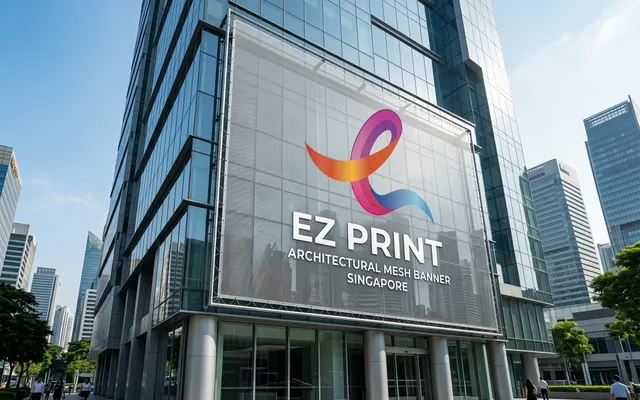
  • Wind-permeable mesh banners with perforated air-flow weave, with the EZ Print logo.
    Large format & signage

    Mesh Banner

    A perforated banner that lets wind pass through, for fences, scaffolding and exposed sites.

    Also ordered as: Wind-Through Banner, Perforated Banner, Fence Mesh Banner, Scaffold Banner

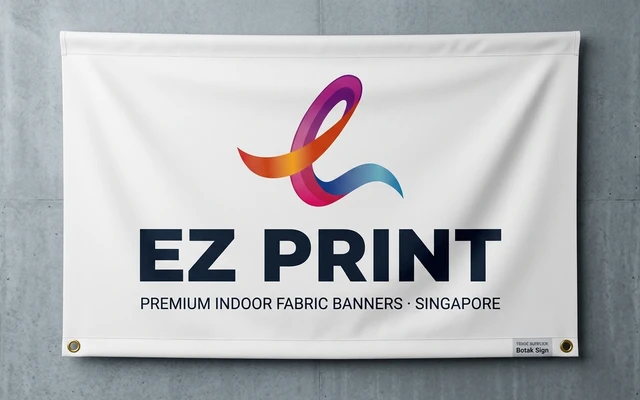
  • Seamless fabric banners with vibrant dye-sublimation print, with the EZ Print logo.
    Large format & signage

    Fabric Banner

    A woven polyester banner with a matt face and no glare, for halls, stages and indoor walls.

    Also ordered as: Cloth Banner, Polyester Banner, Canvas Banner, Indoor Banner

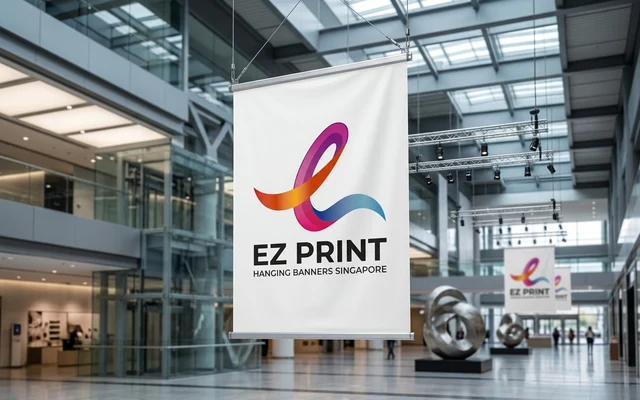
  • Hanging banners with top and bottom aluminium poster rails, with the EZ Print logo.
    Large format & signage

    Hanging Banner

    A banner with pole pockets top and bottom, hung from a ceiling, rail or post with a weighted lower pole.

    Also ordered as: Ceiling Banner, Suspended Banner, Wall Scroll, Atrium Banner, Lamp Post Banner

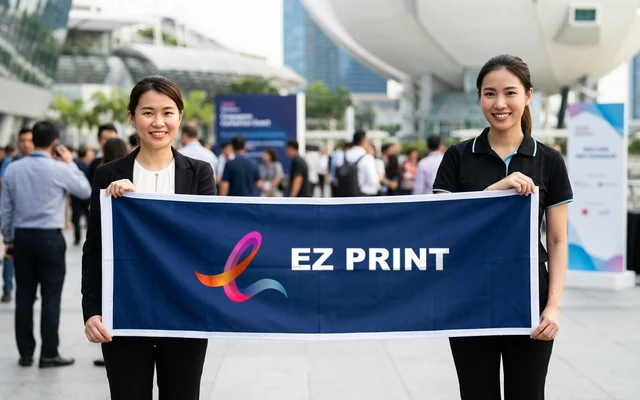
  • Hand banners for cheering and audience event engagement, with the EZ Print logo.
    Large format & signage

    Hand Banner

    A lightweight banner carried between two people, for welcomes, parades and supporters.

    Also ordered as: Handheld Banner, Cheer Banner, Supporter Banner, Welcome Banner

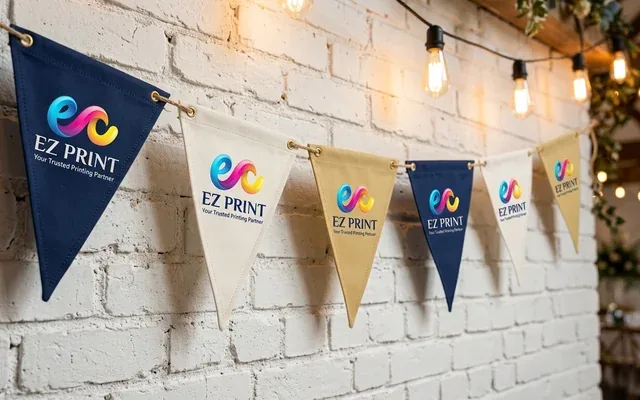
  • Triangular bunting flags strung along durable header ribbon, with the EZ Print logo.
    Large format & signage

    Pennant Bunting

    A string of printed pennant flags for a shopfront or hall. A banner on a stand is a pull-up banner.

    Also ordered as: Bunting, Pennant Banner, Pennant Flags, Flag Bunting, String Flags, Triangle Flags

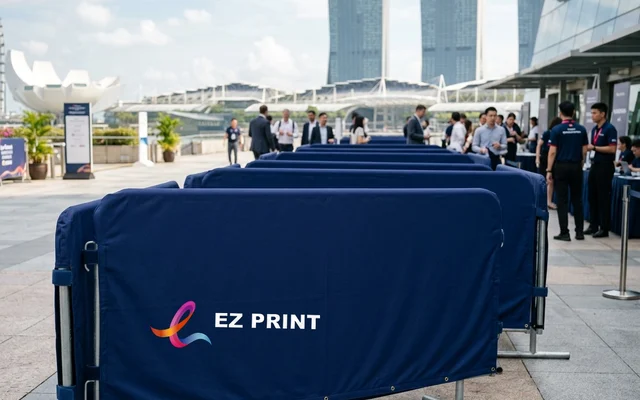
  • Crowd barrier banners fitted onto modular metal crowd control barriers, with the EZ Print logo.
    Large format & signage

    Barrier Banner

    A banner sized to wrap a crowd-control barrier, turning a queue line into branded space.

    Also ordered as: Crowd Barrier Cover, Barricade Banner, Fence Wrap, Railing Banner

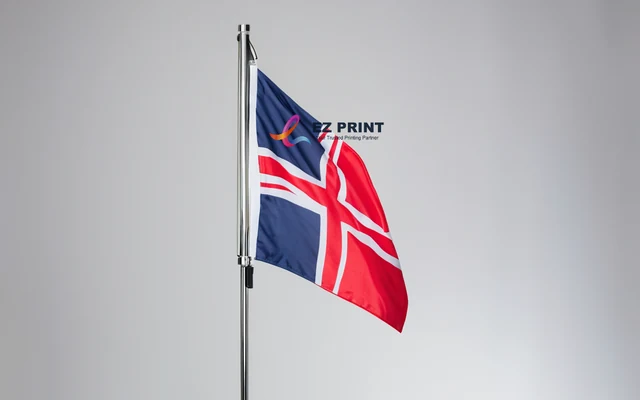
  • Custom flags on aluminium pole with vibrant printed fabric, with the EZ Print logo.
    Large format & signage

    Custom Flag

    A printed fabric flag for a mast, a desk stand or a hand-held pole, printed one or both sides.

    Also ordered as: Printed Flag, Hand Flag, Table Flag, Desk Flag, Spirit Flag, Company Flag

All 140 products, by family

The specification a banner is quoted from

Finished size, material, edge finish and where it is going. The last one is not a formality: a banner on a fence, a banner between two poles and a banner on a building are three different edge specifications for the same printed image.

A banner is not drawn here at true size. The estate draws at 1 mm = 22 px and it draws trims, and a three-metre banner has neither a trim that fits on a screen nor a useful proportion at any reduction — a picture of a rectangle labelled 3000 × 1000 mm teaches nothing that the figure does not. What matters at true size on a banner is the edge, and the edge is stated instead: a 25–30 mm hem turned inward, eyelets at 500 mm with one in every corner, and a 60 mm pole pocket where a pole is used. Those three figures are what a fabricator and a rigger actually work from.

500mm


Standard eyelet pitch on a hemmed banner, with one in every corner. Closer where wind is expected; wider is how a banner tears at the corner and takes the rest with it.

Sizes
Stated as finished width × height in millimetres. Single pieces to about 3 m wide; wider is welded.
Materials
PVC vinyl for outdoor, mesh where wind must pass through, woven fabric for indoor use.
Edge finish
Welded or sewn hem, eyelets at 500 mm pitch, pole pockets top and bottom, or rope through the hem.
Hem allowance
25–30 mm turned inward. Keep artwork clear of it — the hem is not visible when hung.
Sides
Single-sided is standard. Double-sided needs a blockout material or two banners back to back.
Resolution
150 dpi at a metre, 100 dpi at three metres, 72 dpi at five metres, at final size.
Minimum run
1.
Turnaround
Standard is 7–14 working days including hemming and eyeletting. Express is quoted per job.

What to ask for

1 outdoor banner, 3000 × 1000 mm finished
PVC vinyl, single-sided
Welded hem all round with eyelets at 500 mm pitch
Artwork at 100 dpi at final size, 30 mm clear inside the hem
Grommet in every corner
Print-ready PDF at final size or at a stated fraction
Needed by — your date

The material

Materials, and what each one is for

There are three materials and they are not interchangeable. One resists water, one lets wind through, and one exists so that an indoor banner does not look like an outdoor one. Nothing here is a sheet from the caliper table, so nothing here carries a caliper — these materials are described rather than measured.

PVC banner vinyl

Also sold as flex banner, PVC flex, frontlit banner material.

A coated woven scrim between two PVC faces. Waterproof, tear-resistant along the scrim, and it takes a welded hem, which is a heat seal rather than a stitch.

Under ink
Prints densely with good colour. Large solids are even and hold up under sunlight for a season.
Best for
Fences, hoardings, façades, anything outdoors for weeks rather than years.
Avoid for
Exposed high-wind positions without mesh or wind slits — a solid banner is a sail.
On the schedule
Printed, then hemmed and eyeletted before it will hang.

Mesh banner material

Also sold as mesh flex, wind-permeable banner, perforated banner.

The same construction with an open weave, so air passes through rather than pushing against it. That is the whole point of it.

Under ink
Colour reads slightly lighter than on solid vinyl, because part of the surface is not there. Build a little denser.
Best for
Building façades, scaffolding, exposed fences, anywhere wind load is a real concern.
Avoid for
Close viewing. The open weave is obvious at arm’s length.
On the schedule
Printed, then hemmed and eyeletted before it will hang.

Woven polyester banner fabric

Also sold as fabric banner, polyester banner cloth, soft signage.

A woven cloth printed by dye sublimation, so the colour is in the fibre rather than on it. It hangs softly, folds without creasing permanently and does not reflect.

Under ink
Sublimated dye. Colour is slightly softer than on vinyl, which is usually what an interior wants.
Best for
Indoor banners, hanging graphics, retail and hotel interiors, anything photographed.
Avoid for
Outdoor use in rain. It is a cloth, and it behaves like one.
On the schedule
Printed by sublimation, then sewn rather than welded at the hem.

Blockout banner material

Also sold as double-sided banner, blockout flex, opaque banner.

A banner with an opaque core so a print on one face does not show through to the other. It is what makes a genuinely double-sided banner possible.

Under ink
Prints on both faces independently. Heavier than single-sided material, so the rigging has to allow for it.
Best for
Banners seen from both sides — road frontage, hanging signs, event entrances.
Avoid for
Assuming an ordinary banner will do it. Print on one side of standard vinyl ghosts through to the other.
On the schedule
Printed on both faces independently, then hemmed and eyeletted.

Say where the banner is going and how long it has to last. Those two sentences choose the material, the hem and the eyelet pitch, and they are worth more than any amount of detail about the artwork.The materials library

Eyelets go in the hem, not in the material. An eyelet pressed through a single unhemmed layer tears out under load, which is why the hem exists at all.

Hems, eyelets and pockets

Edge finishing is the structural part of a banner and it is a separate operation from printing. A hem is a fold bonded or sewn back on itself; an eyelet is a metal ring pressed through it; a pole pocket is a wider hem left open at both ends. Each is a pass of its own, and each is what stops the banner tearing off the fence.

Banner finishing: what each edge operation needs, and whether its setup is kept for the reorder
FinishToolingWhat the reorder pays for
Welded or sewn hem25–30 mm turned inward on all four edges. Welded on vinyl, sewn on fabricNoneNothing to make, so nothing to remake.
EyeletsPressed through the hem at 500 mm pitch, one in every cornerNoneNothing to make, so nothing to remake.
Pole pocketsA 60 mm open hem top and bottom for a pole or a battenNoneNothing to make, so nothing to remake.
Rope in hemA rope sewn into the hem to spread load across a long edgeNoneNothing to make, so nothing to remake.
Wind slitsCut and hemmed vents on a solid banner in an exposed positionNoneNothing to make, so nothing to remake.
Panel weldingJoining widths for a banner wider than the rollNoneNothing to make, so nothing to remake.

Scroll the table sideways to see every column.

Every operation here is quoted inside the standard window. What changes between a first order and a second is the tooling: a die, a block or a screen is made once and then kept on file with your approved artwork, which is why the reorder of a job carrying one is a different job from the first.

A banner that fails does not fade. It tears at one corner in a squall and then it is a flag, and the corner it tore at is the one with no eyelet in it.

Pairings that work

  • PVC vinyl, welded hem all round, eyelets at 500 mm with one in every corner. The default outdoor banner and it survives a season.
  • Mesh on an exposed façade or on scaffolding. Wind passes through it instead of pulling on the fixings.
  • Woven fabric with a sewn hem for anything indoors. It hangs without reflecting and it folds for storage without creasing permanently.
  • Pole pockets top and bottom where the banner spans between two uprights. The load spreads along the whole edge instead of onto four grommets.

Combinations that fail

  • Artwork running into the hem. The hem is folded inward and bonded, so anything in the last 30 mm is not visible once the banner is hung.
  • A solid vinyl banner in an exposed wind position with corner eyelets only. It becomes a sail, and it takes the fixings with it.
  • Single-sided vinyl used for a double-sided banner. The print ghosts through and both faces read as a mess — a blockout material exists for this.
  • A 300 dpi file at three metres wide. It is four times the resolution the eye can use at that distance and it is usually too large to open on the day it is needed.

Sizes, joins and fixings

A banner is limited by the roll width before it is limited by anything else. Beyond that width it is welded from panels, which is normal and invisible at any real viewing distance.

Up to about 3 m wide
A single piece with no join. The usual maximum for one width of material.
Wider than 3 m
Welded from panels. The join runs vertically and disappears at any viewing distance over a metre.
Hem · 25–30 mm
Turned inward on every edge. Artwork is kept clear of it.
Eyelets · 500 mm pitch
One in every corner, closer where wind is expected.
Pole pocket · 60 mm
An open hem top and bottom, sized to the pole or batten being used.
Wind slits
Cut and hemmed vents. Specified where a solid banner sits in an exposed position.

Design inside the hem, and pick a resolution from the distance

Two numbers matter on a banner file and neither is a colour: how far in the hem takes the artwork, and how far away the banner will be read from. Both are stated on the specification and both can be got wrong without anybody noticing until it is hung.

The file

Format
PDF/X-4 at final size, or at a stated fraction with the scale in the file name.
Artboard
The finished size. Bleed of 30 mm where the material wraps a frame; otherwise the hem allowance covers it.
Safe margin
50 mm from every edge on a hemmed banner. The hem takes 30 mm and the eye needs the rest.
Resolution
150 dpi at a metre, 100 dpi at three metres, 72 dpi at five metres, at final size.
Fonts
Outlined. A banner file is often opened on a different machine at a different stage.
Scaled files
Half or quarter size at proportionally higher resolution. Say the scale in the file name.

The colour, and the detail

Colour mode
CMYK. Corporate colours are worth naming as Pantone references — large flat areas show any drift.
Rich black
A four-colour black on banner material. K100 alone reads as dark grey at three metres.
Minimum type
60 mm cap height at five metres; 25 mm at two metres. Smaller than that is decoration.
Mesh compensation
Build slightly denser on mesh — part of the surface is open, so colour reads lighter.
Gradients
Build large gradients in CMYK. An RGB gradient converted at three metres wide bands visibly.
Contrast
Outdoors, contrast matters more than colour accuracy. A banner is read in sunlight and in rain.

Send the finished size, the location and how long the banner has to stay up, and the material, the hem and the eyelet pitch come back as a specification you can check against the site.

Turnaround

The print is the easy half; the edge is the work

  • Standard

    Standard turnaround is 7–14 working days.

    Standard orders. The schedule for specialist finishing is confirmed in your quotation.

  • Express

    Same-day printing available.

    Subject to artwork, stock and production capacity confirmation. Timing is agreed for each job.

What sets the date
The edge, not the print. A hem is welded or sewn, eyelets are pressed through it at pitch, a pole pocket is left open at both ends, and a banner wider than the material is welded from panels. All of it is quoted inside the standard window.
What a reorder skips
The proved specification. Once the material, the hem, the eyelet pitch and the panel splits have been settled against a real site, a repeat is a reprint to a sheet of figures rather than a fresh set of decisions.
If the date is tight
Send the finished size, the material, the edge finish and where the banner is going, and ask for an express quotation. We confirm the specification, production schedule and next steps in the quotation.

Where a banner is being installed rather than delivered, the installation is scheduled on top of the production time and against site access rather than against the press.

Every answer here is in the page source at full opacity, open or closed. An answer engine has to be able to read it without executing anything.

Questions asked about banners

What material should an outdoor banner be?

PVC vinyl for general outdoor use, and mesh where wind is a real concern — mesh has an open weave so air passes through instead of pushing against it. Woven fabric is for indoors: it hangs softly and does not reflect, but it is a cloth and it behaves like one in rain.

How far apart should banner eyelets be?

500 mm as a standard pitch, with one in every corner. Closer where wind is expected. Eyelets go through the hem rather than through a single layer of material, because an eyelet in unhemmed material tears out under load.

How much does the hem take off my design?

25–30 mm on every edge, turned inward, so that band is not visible once the banner is hung. Keep artwork 50 mm clear of every edge — the hem takes 30 mm of it and the eye needs the rest.

What resolution does a banner file need?

It depends on the viewing distance, not the size. 150 dpi at a metre, 100 dpi at three metres, 72 dpi at five metres, measured at final size. A 300 dpi file three metres wide carries four times the detail anyone can see and is usually too large to open when it is needed.

Can you print a double-sided banner?

Yes, on a blockout material with an opaque core so one face does not show through to the other. Printing both sides of ordinary vinyl produces a ghost of each image on the opposite face, which is why blockout exists.

How wide can a banner be?

About three metres in a single piece, which is the usual roll width. Wider banners are welded from panels; the join runs vertically and is invisible at any real viewing distance.

Why did my banner tear?

Almost always at a corner, and almost always because a solid banner was hung in an exposed position with eyelets too far apart. The fixes are a closer eyelet pitch, a rope sewn into the hem to spread the load, wind slits, or mesh material instead of solid vinyl.

  • Trading since 2017 — EZ PRINT PRIVATE LIMITED, UEN 201706183R.
  • Standard turnaround is 7–14 working days. For urgent orders or express schedules, please check with EZ Print.
  • Artwork is checked before production.
  • Island-wide courier delivery within Singapore.
  • Collection can be arranged on request.

Ask for a quote on this banner

Every job is quoted from its specification — stock, quantity, sides, finish, size and deadline.

  • Quantity
  • Stock — or the feel you want, if you do not know the stock
  • Sides printed
  • Finish
  • Flat and finished size
  • The deadline

Artwork is welcome but not required to start. Email sales@ezprint.com.sg if you would rather attach files.