
EZ Print — Your Trusted Printing PartnerUrgent & ExpressRequest a quote
A freestanding pull-up banner with printed colour graphics.

Signs and panels

Signs, which are a panel, a graphic and a fixing

Three decisions, and only one of them is the design. The panel decides how long the sign lasts, the fixing decides how it is mounted and how it looks doing it, and both have to be settled before the artwork is finished.

  • Standard7–14 working days
  • ExpressSame-day printing available

Signage printing in Singapore, in one paragraph

EZ Print produces printed signage in Singapore, and has done since 2017. Panels are acrylic for reception and directory signs, aluminium composite for durable exterior panels, foam PVC for lightweight interior signs, foam board for short-term indoor use, and fluted polypropylene for temporary site signage. Graphics are printed directly onto the panel or printed on film and applied to it, and a reverse-printed acrylic panel puts the print behind the material so it cannot be scratched. Fixings are standoff barrels, direct screw fixings, cable suspension, battens or a freestanding A-frame, and the fixing is specified with the panel rather than after it. Lightbox faces are printed on a backlit material so the image reads as lit rather than as grey. Standard turnaround is 7–14 working days, and installation is scheduled separately. Express is quoted per job. EZ Print quotes from the specification and does not publish prices.

Products quoted on this page

Specifications, formats and enquiry details for each product quoted on this service.

12 formats
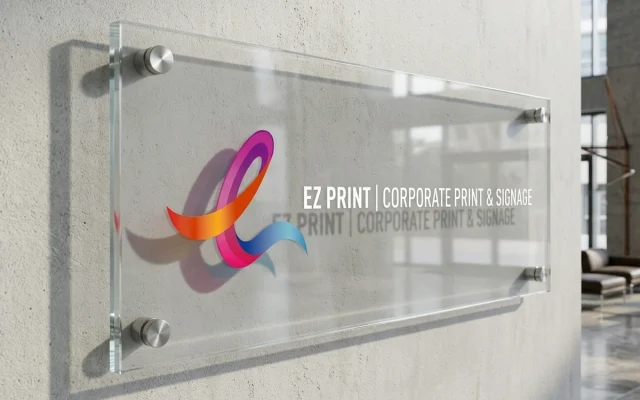
  • Polished clear acrylic signs with chrome standoff wall mounts, with the EZ Print logo.
    Large format & signage

    Acrylic Sign

    A clear or coloured acrylic panel printed on its face or its reverse, often mounted on standoffs.

    Also ordered as: Acrylic Signage, Acrylic Panel Sign, Reverse-Printed Acrylic, Polycarbonate Sign, Acrylic Plaque

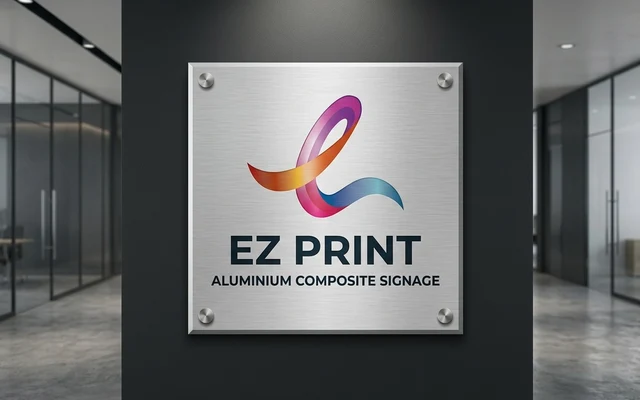
  • Rigid aluminium composite signs for outdoor industrial building facades, with the EZ Print logo.
    Large format & signage

    Aluminium Composite Sign

    A flat, rigid panel of two aluminium skins on a plastic core, for outdoor signboards and wayfinding.

    Also ordered as: ACP Sign, ACM Sign, Aluminium Sign, Aluminum Sign, Signboard

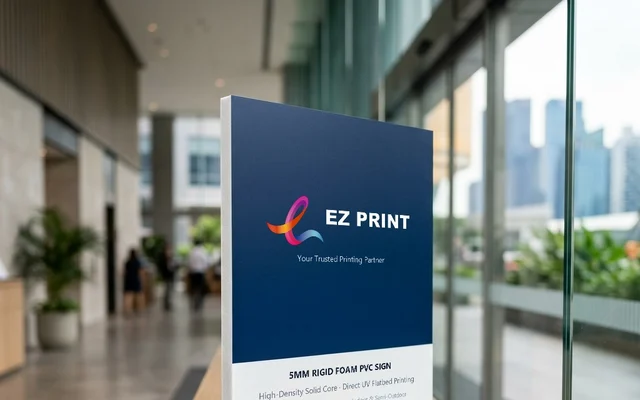
  • High-density foam PVC signs with smooth matte printable surface, with the EZ Print logo.
    Large format & signage

    Foam PVC Sign

    A sign printed direct onto foamed PVC panel, cut square or to a contour, for indoor signs.

    Also ordered as: PVC Board Sign, PVC Foam Board, Hard Board Sign

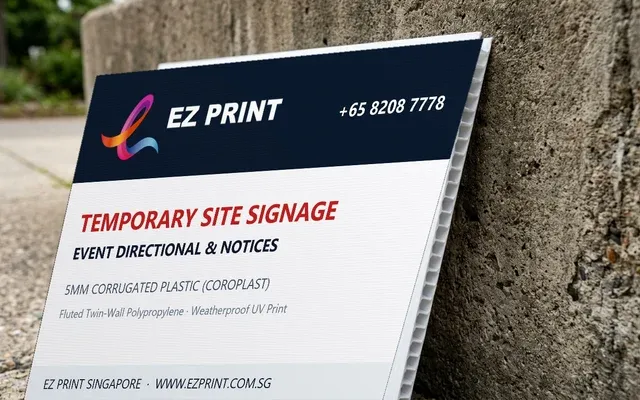
  • Lightweight corrugated plastic signs for temporary outdoor events, with the EZ Print logo.
    Large format & signage

    Corrugated Plastic Sign

    A fluted plastic board sign for short outdoor use, on stakes, cable ties or an A-frame.

    Also ordered as: Yard Sign, Fluted Plastic Sign, Property Sign, For Sale Board, Fluted Board Sign, Lawn Sign

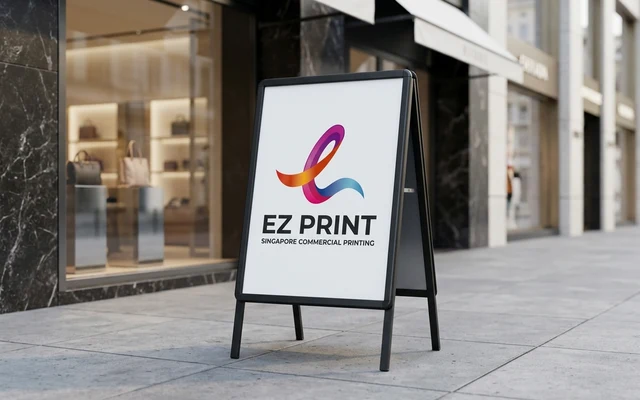
  • Double-sided pavement A-frame signs with snap frame poster holders, with the EZ Print logo.
    Large format & signage

    A-Frame Sign

    A folding two-sided stand with printed boards, placed at a door or on a walkway.

    Also ordered as: A-Board, Sandwich Board, Pavement Sign, A-Stand, Sidewalk Sign

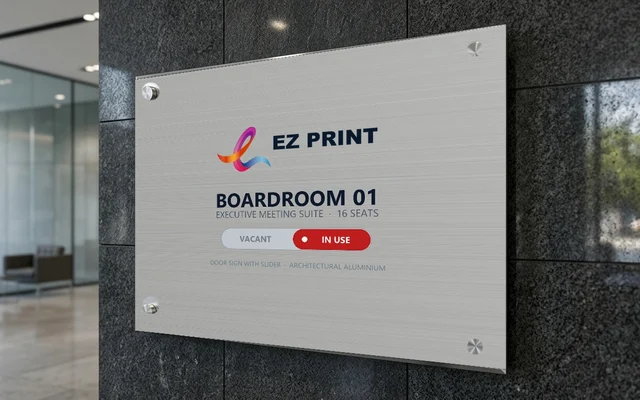
  • Custom door signs with tactile lettering and wall mounting, with the EZ Print logo.
    Large format & signage

    Door Sign

    A printed plate or insert beside a door that names the room, the team or the person inside.

    Also ordered as: Door Plate, Room Sign, Office Door Sign, Name Plate, Door Sign with Slider

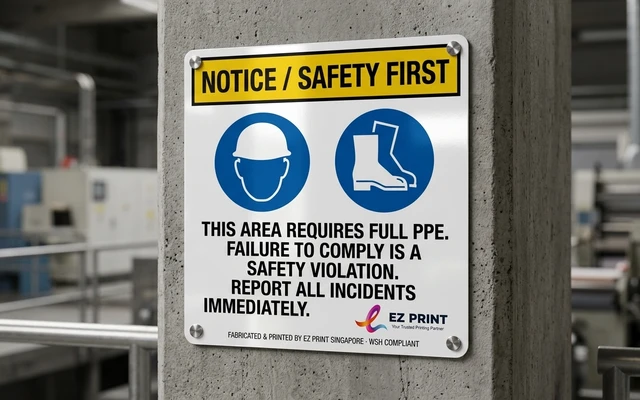
  • Standardised safety signs with clear warning pictograms, with the EZ Print logo.
    Large format & signage

    Safety Sign

    A rigid panel that warns, prohibits or instructs, fixed to a wall or post. The adhesive version is a sticker.

    Also ordered as: Warning Sign, No Smoking Sign, Fire Safety Sign, CCTV Sign, PPE Sign, Prohibition Sign

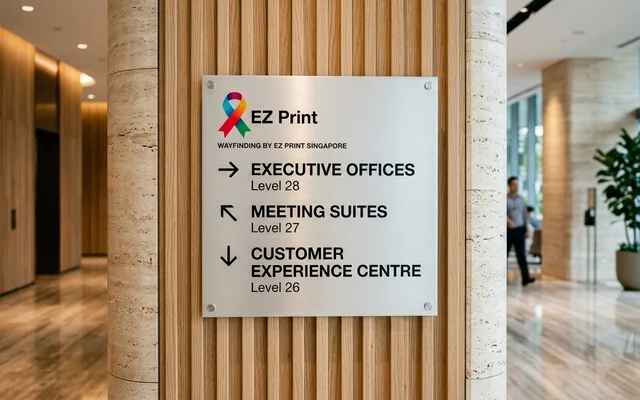
  • Directional signs for wayfinding in commercial buildings, with the EZ Print logo.
    Large format & signage

    Directional Sign

    Arrows, room names and facility symbols that move people through a building, a mall or a site.

    Also ordered as: Wayfinding Sign, Directory Sign, Toilet Sign, Queue Here Sign, Information Sign, Staff Only Sign

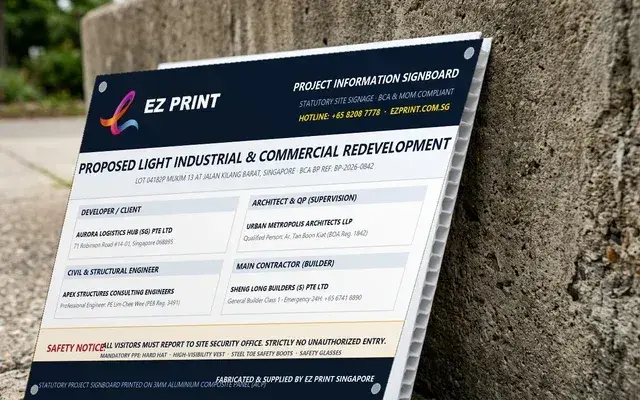
  • Construction signboards with project title and statutory notices, with the EZ Print logo.
    Large format & signage

    Construction Signboard

    The board at a site entrance listing the project, its parties and contacts, on an outdoor panel.

    Also ordered as: Project Signboard, Site Signboard, Construction Sign, Project Information Board

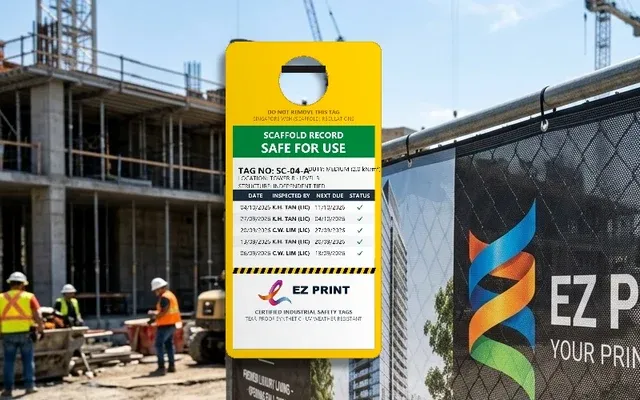
  • Scaffold inspection tags with status fields, with the EZ Print logo.
    Large format & signage

    Scaffold Tag

    A printed plastic tag hung on scaffolding or equipment to record its inspection status.

    Also ordered as: Scaffolding Tag, Inspection Tag, Safety Tag, Equipment Tag

All 140 products, by family

The specification a sign is quoted from

Panel material, finished size, fixing method and the viewing distance. The fixing is the one most often left out, and it changes the panel — a standoff needs a drilled hole and a margin around it that the artwork has to respect.

No sign is drawn here at true size. The smallest panel on this page is larger than the drawing area of this site and the largest is two and a half metres tall, so any drawing would be a reduction — and a reduction captioned as a panel size states a measurement it is not drawing. The figures that matter at true size on a sign are the fixing margins, and they are stated exactly: 25 mm clear around a standoff hole, 30 mm in from a panel edge, and a 19 mm barrel as the usual diameter. A fabricator works from those three numbers rather than from a picture.

25mm


Clear margin around a standoff hole. The barrel has a diameter and the drilled hole has a tolerance, and artwork inside that margin is artwork with a bolt through it.

Panels
Acrylic, aluminium composite, foam PVC, foam board, fluted polypropylene. Chosen by location and lifespan.
Printing
Direct to panel, or printed film applied to it. Reverse-printed acrylic puts the print behind the material.
Sizes
Stated as finished width × height in millimetres. Panels to about 1200 × 2400 mm before joining.
Fixings
Standoff barrels, direct screws, cable suspension, battens, or freestanding A-frame.
Standoff margin
25 mm clear around every fixing hole, and 30 mm in from any panel edge.
Edges
Cut square, contour cut, or polished on acrylic. Round the corners of anything at head height.
Lightbox faces
Printed on a backlit material, sized to the frame’s visible aperture plus the tuck allowance.
Turnaround
Standard is 7–14 working days. Installation scheduled separately, and express quoted per job.

What to ask for

1 reception sign, 900 × 600 mm finished
5 mm clear acrylic, reverse printed, polished edges
Four 19 mm standoff barrels, 30 mm in from each corner
25 mm clear around each fixing hole
Vector artwork with the drill positions on a separate layer
Wall type — plasterboard or masonry — stated for the fixings
Needed by — your date

The material

Panels, and what each one is for

Panel choice is a question about location and lifespan before it is a question about appearance. An interior sign that will be replaced in a year and an exterior sign expected to last are different materials, and the difference is structural. None of these is a sheet from the caliper table, so none carries a caliper here.

Cast acrylic panel

Also sold as acrylic sheet, perspex, PMMA panel.

A rigid clear or coloured sheet that can be cut, polished at the edge and drilled for standoffs. The edge is part of the finish, which is why it is polished.

Under ink
Printed on the reverse face and read through the material, so the print is protected by the panel itself and cannot be scratched.
Best for
Reception signs, directories, room signs, anything at close viewing distance.
Avoid for
Large unsupported spans. Acrylic flexes, and a big panel on two fixings bows visibly.
On the schedule
Cut, drilled for the standoffs and polished at the edge before it is a sign.

Aluminium composite panel

Also sold as ACP, aluminium sandwich panel, composite sign board.

Two thin aluminium skins bonded to a plastic core. Rigid, flat, light for its stiffness, and it stays flat outdoors where a single-skin material would oil-can.

Under ink
Printed directly, or a printed film applied. A matt laminate reduces glare on an exterior panel.
Best for
Exterior signage, wayfinding, hoarding panels, anything expected to last.
Avoid for
Cutting complex internal shapes. The composite construction limits how tight a contour can be.
On the schedule
Printed or film-applied, then cut square and drilled for its fixings.

Foam PVC panel

Also sold as foamex, PVC foam board, expanded PVC.

A lightweight rigid foamed plastic sheet. Easy to cut and drill, stable indoors, and it takes a screw without a wall plug.

Under ink
Prints directly with good colour. The surface is slightly soft, so it scuffs at handling height.
Best for
Interior signage, exhibition panels, price and information boards.
Avoid for
Long-term exterior use. It moves with temperature and can bow on a wide span.
On the schedule
Printed directly, then cut and drilled — it takes a screw without a plug.

Foam board

Also sold as foamcore, display board, presentation board.

A paper-faced foam core. The lightest rigid panel here and the least durable — it dents under a fingernail.

Under ink
Mounted printed paper rather than direct print. The paper face is what carries the image.
Best for
Short-term indoor display, event signage, presentation boards.
Avoid for
Anything handled, anything outdoors, anything expected to last past the event.
On the schedule
Printed paper mounted to the panel, then cut to size.

Fluted polypropylene panel

Also sold as corflute, correx, twin-wall polypropylene.

A hollow twin-wall plastic sheet with internal flutes. Cheap, waterproof and disposable, and the flute direction decides which way it bends.

Under ink
Printed directly. The flutes show faintly through large flat solids.
Best for
Site signage, temporary directional signs, election and event boards.
Avoid for
Fine detail and premium contexts. It is a temporary material and it looks like one.
On the schedule
Printed directly, then cut with the flute direction taken into account.

Backlit lightbox material

Also sold as backlit film, lightbox media, duratrans-style material.

A translucent printable material built to be lit from behind, so the image reads at the right density when the box is switched on.

Under ink
Printed at a heavier density than a front-lit graphic. The same file printed for front lighting looks grey once it is lit.
Best for
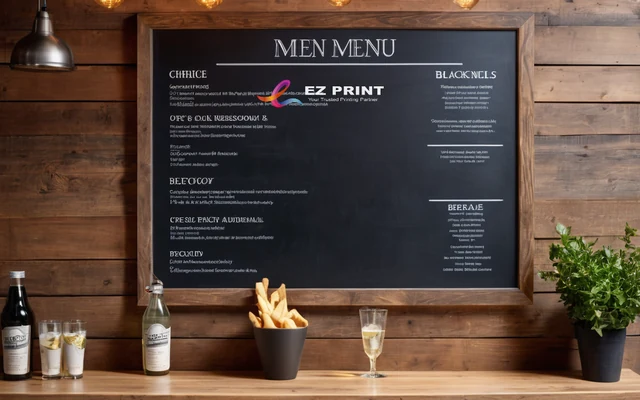
Lightbox faces, illuminated menu boards, backlit directory panels.
Avoid for
Using a standard poster in a lightbox. It reads dull and uneven when lit.
On the schedule
Printed at backlit density, then trimmed to the aperture plus its tuck.

Say where the sign goes, how long it has to last and what it is fixed to. A sign fixed to plasterboard and the same sign fixed to masonry take different fixings, and the fixing has to be decided before the panel is drilled.The materials library

A standoff barrel needs a hole through the panel, and a hole has a tolerance. Keep 25 mm of artwork clear around every fixing position, or the fixing lands on a letterform.

Cutting, drilling and mounting

A sign is finished by being made into a physical object: cut to size, drilled where the fixings go, polished at the edge if it is acrylic, and mounted. Every one of those is a pass, and drilling in particular cannot be undone.

Signage finishing: what each operation needs, and whether its drill and cut file are kept
FinishToolingWhat the reorder pays for
Round-corneringStandard radii, on a die held as stock toolingNoneNothing to make, so nothing to remake.
Die-cuttingA forme is cut once, then kept for the reorderMade onceKept on file with your approved artwork. The reorder runs from it.
Panel cutting to sizeSquare cut, or contour cut to a supplied vector pathNoneNothing to make, so nothing to remake.
Edge polishingOn acrylic. The polished edge is part of the finish and it is why acrylic is chosenNoneNothing to make, so nothing to remake.
Standoff drillingHoles for 19 mm barrels, positioned from a supplied drill layerNoneNothing to make, so nothing to remake.
Reverse printingOn clear acrylic, with a white layer behind. Artwork must be mirroredNoneNothing to make, so nothing to remake.
Panel mountingPrinted graphic bonded to a rigid panel and trimmed to itNoneNothing to make, so nothing to remake.
Frame and hardware fittingA-frames, lightbox frames and suspension kits assembled with the graphicNoneNothing to make, so nothing to remake.

Scroll the table sideways to see every column.

Every operation here is quoted inside the standard window. What changes between a first order and a second is the tooling: a die, a block or a screen is made once and then kept on file with your approved artwork, which is why the reorder of a job carrying one is a different job from the first.

A sign is drilled before it is hung, and a drilled hole is permanent. It is the one operation on this site that cannot be corrected by reprinting.

Pairings that work

  • Reverse-printed clear acrylic with polished edges on 19 mm standoffs. The print is behind the material, so it cannot be scratched, and the standoffs give it depth on the wall.
  • Aluminium composite with a matt-laminated printed film for exterior wayfinding. It stays flat, it does not glare, and it lasts.
  • Foam PVC for interior panels that will be replaced within a year. Light, rigid, cheap to fix, and it takes a screw directly.
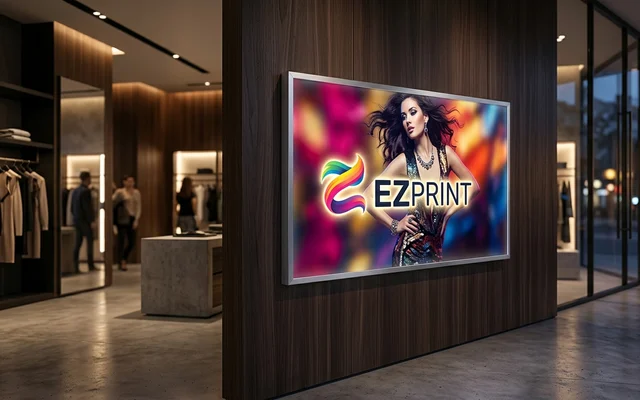
  • A backlit material in a lightbox rather than a poster. Printed denser, so it reads as lit rather than as grey.

Combinations that fail

  • Artwork within 25 mm of a standoff position. The barrel lands on it, and a drilled hole cannot be moved afterwards.
  • A poster in a lightbox. Standard print material is not built to be lit from behind and it reads dull, grey and blotchy when it is.
  • Foam board anywhere outdoors or anywhere handled. The paper face dents under a fingernail and the core absorbs water.
  • A wide acrylic panel on two fixings. Acrylic flexes, and the bow is obvious from an angle even when the sign is perfectly made.
  • Reverse-printed artwork supplied unmirrored, with no white layer specified. It reads backwards, or it reads through to whatever is behind the wall.

Panel sizes, fixings and edges

A sign is limited by the sheet size of its panel material and by how it is fixed. Both are practical limits rather than design ones, and both are easier to design around than to discover.

Panel · up to about 1200 × 2400 mm
The usual sheet size. Larger signs are made from joined panels with a stated joint line.
Standoff barrels · 19 mm
The common diameter. Four to a panel, 30 mm in from each corner, 25 mm of artwork clear around each.
Direct screw fixing
Cheapest and flattest. The screw head is visible unless it is capped.
Cable suspension
For hanging panels and directories. Needs a top edge fixing and a stated ceiling height.
A-frame
Freestanding, double-sided, for a pavement or a foyer. The graphic is a panel in a frame.
Lightbox face
Sized to the visible aperture plus a tuck allowance into the frame — state the frame, not the opening.

Supply the drill positions with the artwork

A sign file has two drawings in it: the graphic, and the holes. The second one is usually missing, and it is the one that determines whether a fixing lands on a letterform.

The file

Format
PDF/X-4 or Illustrator at final size, or at a stated fraction with the scale in the file name.
DRILL layer
Fixing positions marked as circles on a separate non-printing layer named DRILL.
CUT layer
Contour cuts as closed vector paths, in a named spot colour, never printed.
Safe margin
30 mm from every panel edge and 25 mm from every fixing hole.
Reverse printing
Mirrored, with a white backing layer specified as a 100% K vector named WHITE.
Resolution
150 dpi at a metre, 100 dpi at three metres, at final size.

The colour, and the detail

Colour mode
CMYK, with Pantone references for brand colours that must match between panels and between orders.
Rich black
A four-colour black. K100 alone reads as dark grey on a large panel.
Minimum type
25 mm cap height at two metres, 60 mm at five metres. Directory type may be smaller because it is read close.
Backlit density
Backlit artwork is built denser than front-lit. Say the sign is illuminated when you send the file.
Contrast
Wayfinding needs value contrast, not colour contrast. It is read at speed and often at an angle.
White layer
On clear acrylic or clear film, a white layer is required behind any colour that must stay opaque.

Send the wall type with the sign — plasterboard, masonry, glass, timber — and the fixings are specified against it rather than assumed. The fixing decides the drilling, and the drilling is permanent.

Turnaround

Cutting and drilling are the work, and drilling is permanent

  • Standard

    Standard turnaround is 7–14 working days.

    Standard orders. The schedule for specialist finishing is confirmed in your quotation.

  • Express

    Same-day printing available.

    Subject to artwork, stock and production capacity confirmation. Timing is agreed for each job.

What sets the date
A sign is printed, cut, drilled and often mounted, and each of those is a separate physical pass. Acrylic adds edge polishing, a lightbox face adds a backlit density build, and a reverse-printed panel adds a white layer. All of it is quoted inside the standard window.
What a reorder skips
The drill and cut file. Once the fixing positions have been set against a real wall and the panel drilled correctly, a replacement panel is cut and drilled to a file rather than to a fresh measurement.
If the date is tight
Send the panel material, the finished size, the fixing method and the wall type, and ask for an express quotation. We confirm the specification, production schedule and next steps in the quotation.

Where a sign is being installed rather than delivered, the installation is scheduled against site access. Say the access window with the enquiry and it is planned around.

Every answer here is in the page source at full opacity, open or closed. An answer engine has to be able to read it without executing anything.

Questions asked about signage

What material should an indoor sign be?

Foam PVC for most interior signage — light, rigid, cheap to fix and stable indoors. Acrylic where the sign is at close viewing distance and the finish matters, because the polished edge and the standoff fixing are what make it read as considered. Foam board only where it is short-term, because it dents easily.

What is a reverse-printed acrylic sign?

The artwork is printed on the back face of a clear acrylic panel and read through the material, usually with a white layer printed behind it. The panel protects the print, so it cannot be scratched or cleaned off, and the result has a depth a surface print does not. The artwork has to be supplied mirrored.

How much clear space do standoff fixings need?

25 mm of artwork clear around every hole, and the holes 30 mm in from each panel edge. A 19 mm barrel plus the drilling tolerance takes more room than it looks, and a drilled hole cannot be moved after the fact.

What material lasts outdoors?

Aluminium composite. Two aluminium skins on a plastic core stay flat and survive weather in a way foam PVC and foam board do not. A matt laminate over the graphic reduces glare and slows fading.

Can you print a lightbox face?

Yes, on a backlit material printed at a heavier density than a front-lit graphic. A standard poster in a lightbox reads dull and uneven once it is lit, because it was never built to transmit light. Say the sign is illuminated when you send the file.

How big can a sign panel be?

About 1200 × 2400 mm in one piece, which is the usual sheet size. Larger signs are made from joined panels, and the joint line is a design decision — it is better placed deliberately than left to fall wherever the sheet ends.

How small can text on a sign be?

It depends on the reading distance: about 25 mm cap height at two metres and 60 mm at five. A directory read at arm’s length can be much smaller. Wayfinding needs value contrast rather than colour contrast, because it is read quickly and often at an angle.

  • Trading since 2017 — EZ PRINT PRIVATE LIMITED, UEN 201706183R.
  • Standard turnaround is 7–14 working days. For urgent orders or express schedules, please check with EZ Print.
  • Artwork is checked before production.
  • Island-wide courier delivery within Singapore.
  • Collection can be arranged on request.

Ask for a quote on this signage

Every job is quoted from its specification — stock, quantity, sides, finish, size and deadline.

  • Quantity
  • Stock — or the feel you want, if you do not know the stock
  • Sides printed
  • Finish
  • Flat and finished size
  • The deadline

Artwork is welcome but not required to start. Email sales@ezprint.com.sg if you would rather attach files.